Every winter, low-income households and vulnerable individuals across the UK look forward to government-backed schemes designed to help with heating costs.
Among the most discussed are the Cold Weather Payment and the Warm Home Discount Scheme. While many people refer to the £140 support, it’s important to understand the distinction between the two schemes and when the payments or discounts are actually applied.
What is the £140 Cold Weather Payment and How is it Different from the Warm Home Discount?
Many people confuse the £140 support often discussed during winter with a specific government benefit.
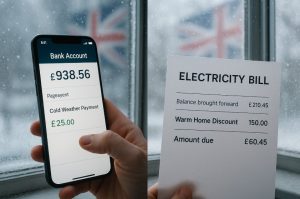
In most cases, this refers to the Warm Home Discount Scheme, which for the winter 2025 to 2026 season provides a £150 discount on electricity bills.
While it used to be £140 in earlier years, the scheme has increased and is now £150. This discount is not paid directly to the individual but is instead applied by the energy supplier to your bill before the end of March.
The Cold Weather Payment, on the other hand, is a separate scheme. It is a £25 cash payment for each qualifying period of cold weather, defined as seven consecutive days where the average temperature in your area is recorded or forecasted to be 0°C or below.
These payments are made automatically into your bank account if you meet the eligibility criteria.
Unlike the Warm Home Discount, which is a one-time discount, Cold Weather Payments can be issued multiple times during the winter if the temperature conditions are repeatedly met.
These two schemes serve different purposes. The Cold Weather Payment provides immediate cash relief during cold snaps, while the Warm Home Discount helps lower overall electricity costs during the winter season.
Who is Eligible for the Cold Weather Payment in 2025–2026?
Eligibility for Cold Weather Payments is based on both the type of benefits you receive and your personal or family circumstances. The following benefit recipients may be eligible:
- Pension Credit
- Income Support
- Income-based Jobseeker’s Allowance (JSA)
- Income-related Employment and Support Allowance (ESA)
- Universal Credit
- Support for Mortgage Interest (SMI)
Each benefit type comes with specific conditions that affect eligibility. These are detailed below.
Pension Credit
Recipients of Pension Credit will usually qualify automatically for Cold Weather Payments. There are no additional requirements beyond receiving the benefit.
Income Support and income-based JSA
Claimants of these benefits may qualify if they also have at least one of the following:
- A disability or pensioner premium
- A child under 5 living in the household
- A child who is disabled
Income-related ESA
Claimants in the support group or work-related activity group will typically receive the payments. If you’re not in either group, you may still qualify if:
- You receive a severe or enhanced disability premium
- You receive a pensioner premium
- You care for a child under 5 or a disabled child
Universal Credit
Eligibility for Cold Weather Payments while on Universal Credit depends on both employment status and household circumstances. You qualify if:
- You or your partner are not employed or self-employed
- You or your partner have a health condition or disability with limited capability for work
- You have a child under 5 in the home
- You receive a disabled child amount in your Universal Credit claim
Even if you’re working, you may still qualify if the disabled child amount applies to your household.
Support for Mortgage Interest (SMI)
Claimants will usually receive payments if they are treated as receiving a qualifying benefit and meet one of the following:
- Have a severe or enhanced disability premium
- Receive a pensioner premium
- Have a child under 5 or a disabled child living with them
It’s important to note that residents of Scotland are not eligible for Cold Weather Payments. Instead, they may receive the Winter Heating Payment, which is an annual fixed payment provided by the Scottish Government.
When Will the Cold Weather Payment Be Paid Out?
The Cold Weather Payment period for 2025 to 2026 runs from 1 November 2025 to 31 March 2026. During this time, a payment of £25 will be issued for each 7-day period where the average temperature in your area is 0°C or below.
The government uses weather data from the Met Office to determine whether the temperature threshold has been met in specific postcode areas. If the conditions are satisfied, the payment is automatically triggered.
You do not need to apply or take any action. If you’re eligible and a qualifying cold spell occurs in your area, you will receive the payment directly into the same bank or building society account where you receive your benefits. The payment should be made within 14 working days of the cold spell ending.
How Can You Check if a Cold Weather Payment is Due in Your Area?
To verify if a Cold Weather Payment has been triggered in your area, the UK government offers an official postcode checker.
This tool becomes available each winter from November onwards and allows claimants to enter their postcode to see if their local area experienced qualifying cold weather.
The system uses data from the nearest weather station to your postcode. If that weather station recorded or forecasted an average temperature of 0°C or below for seven consecutive days, a Cold Weather Payment will be made to eligible individuals.
You can access this tool via the GOV.UK website. It is recommended to check regularly, especially during colder months when eligibility might increase.
What is the Warm Home Discount and Who Qualifies for the £150 Payment?
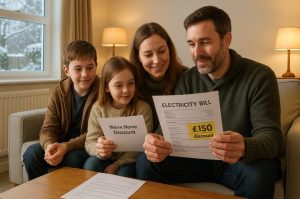
The Warm Home Discount Scheme provides a £150 one-off discount on electricity bills for eligible households. This is not a direct payment into a bank account. Instead, the energy supplier applies the discount directly to your electricity account, typically by March 2026.
The scheme is available to those who:
- Receive the Guarantee Credit element of Pension Credit
- Are on a low income and meet their supplier’s eligibility criteria
For most households in England and Wales, eligibility is assessed automatically and a letter is sent between November and January. If you qualify, no application is necessary. However, households in Scotland may need to apply directly to their energy supplier, particularly if they are on a low income.
If your household uses a prepayment or pay-as-you-go meter, your energy supplier may issue the discount in the form of a voucher. This voucher can be used to top up your electricity meter.
If you live in a park home, the application process is different. You must apply through the Park Homes Warm Home Discount Scheme, which handles these cases separately.
The Warm Home Discount does not impact your eligibility for the Cold Weather Payment or Winter Fuel Payment.
How Does the Cold Weather Payment Work with Universal Credit and Other Benefits?
For claimants on Universal Credit, qualification for the Cold Weather Payment depends on multiple factors. The primary condition is that you or your partner must not be gainfully self-employed.
The term “gainfully self-employed” refers to someone whose main job is self-employment, works regularly, and expects to make a profit.
If you are not working and have one of the following:
- A child under 5
- A disability or health condition that limits your ability to work
- A disabled child amount in your claim
then you will likely be eligible for Cold Weather Payments when the weather conditions are met.
Changes in your employment status, family composition, or disability status can influence your eligibility from month to month.
Here’s a quick comparison of how Universal Credit and Pension Credit affect your Cold Weather Payment eligibility:
| Benefit Type | Main Eligibility Conditions | Payment Trigger |
| Universal Credit | Not working and meets family/health conditions | Based on cold spell |
| Pension Credit | Automatically qualifies | Based on cold spell |
How Do You Know if You’re Going to Receive the £150 Warm Home Discount?
The Department for Work and Pensions (DWP) sends out letters between November and January each winter to households that qualify for the Warm Home Discount. The letter informs you that your electricity supplier will apply a £150 discount to your account automatically.
In most cases, no application is needed unless:
- You live in Scotland and your energy supplier requires an application
- You believe you qualify but haven’t received a letter by mid-January
If that happens, you should contact the Warm Home Discount Helpline at 0800 030 9322. It’s also advisable to check directly with your electricity supplier if you think you’re eligible and haven’t heard anything by the end of January.
Some suppliers also provide updates via email or text message once the discount has been applied.
Can You Get Both the Cold Weather Payment and the Warm Home Discount?
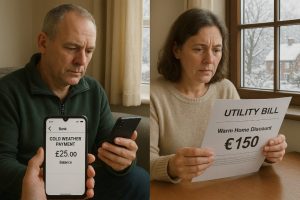
Yes, it is entirely possible and quite common to receive both. These two support schemes are designed to complement each other and assist vulnerable or low-income households during the cold winter months.
The Cold Weather Payment is weather-triggered and issued automatically to qualifying benefit recipients. The Warm Home Discount is a one-off discount applied to your electricity bill based on your income level and energy supplier participation.
Receiving one of these benefits does not disqualify you from receiving the other. In fact, many households that receive Pension Credit or are on Universal Credit with a low income could be eligible for both schemes during the same winter period.
Conclusion
With rising energy costs, winter support schemes are more important than ever. Understanding the difference between the Cold Weather Payment and the Warm Home Discount is essential. Make sure your benefits are up to date, monitor local weather conditions, and check eligibility regularly.
Stay informed via GOV.UK and your electricity supplier’s website. Preparation now can help ensure you’re fully supported when winter sets in.
FAQs
How is the Cold Weather Payment triggered in the UK?
The payment is triggered when the average temperature in your area is 0°C or below for 7 consecutive days between 1 November and 31 March.
Can you get Cold Weather Payment if you’re on Universal Credit?
Yes, but only if you’re not employed or self-employed and meet additional conditions such as having a child under 5 or a disability.
How long does it take to receive the Cold Weather Payment after a cold spell?
Payments are usually made within 14 working days of the qualifying cold period.
What if my area doesn’t experience 0°C — will I still get paid?
No. The Cold Weather Payment is only made if the specific temperature trigger occurs in your local area.
How can I appeal a missed Cold Weather Payment?
Contact your benefit provider (Jobcentre Plus or Pension Service) or log a note in your Universal Credit journal.
Does the Warm Home Discount apply to gas bills too?
It may if your supplier provides both gas and electricity. Contact your supplier to check eligibility.
Can you receive the Winter Fuel Payment alongside other winter payments?
Yes, the Winter Fuel Payment is separate and does not affect your eligibility for other schemes.