The loss of a spouse brings emotional distress and practical challenges, financial uncertainty being one of the most significant.
Many widows and widowers in the UK ask the vital question: “If my husband dies, do I get his State Pension?” Understanding your rights regarding State Pension, private pensions, and bereavement benefits is essential for navigating this difficult time.
This article offers a detailed guide on eligibility, pension rules, bereavement support, and how to claim what you’re entitled to under UK pension laws.
What Happens to the State Pension When a Husband Dies?
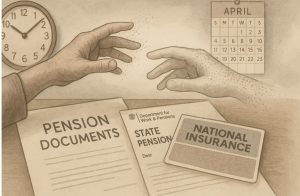
When a husband dies, his State Pension does not automatically transfer to his spouse. However, the surviving wife or civil partner may be entitled to receive a portion of his pension, depending on several key factors.
These include the type of State Pension he was receiving, the age of the surviving spouse, and their marital or civil partnership status at the time of death.
One of the most important steps following the death is to notify the relevant government departments. This can be done through the Tell Us Once service, which allows you to report the death just once and have the information passed to all necessary government organisations, including the Department for Work and Pensions (DWP), HMRC, and the Passport Office.
After the death is registered and the DWP has been informed, the deceased’s State Pension payments will usually stop immediately. The DWP will then assess whether the surviving partner is entitled to any additional payments or inheritance of pension components.
There are two distinct pension systems in the UK:
- The Basic State Pension, which applies to individuals who reached State Pension age before 6 April 2016
- The New State Pension, which applies to those who reached State Pension age on or after 6 April 2016
The inheritance rules differ significantly between these two schemes. Under the Basic State Pension system, it is possible to inherit a portion or all of your husband’s State Pension and Additional State Pension (such as SERPS). Under the New State Pension rules, only certain components, such as protected payments, may be inheritable.
In either case, the State Pension is paid based on the deceased’s National Insurance contribution record, and entitlement is determined on an individual basis.
It is not automatically granted, which is why it’s crucial to understand your potential eligibility and how the system applies to your circumstances.
In addition to the State Pension, if the deceased had private or workplace pensions, these may also provide death benefits or survivor’s pensions. You will need to contact each pension provider separately to determine if you are entitled to further payments.
Am I Eligible to Inherit My Husband’s State Pension?
Eligibility to inherit a late husband’s State Pension in the UK is based on specific legal and financial criteria. Simply being married or in a civil partnership does not guarantee that you will receive a portion of your partner’s pension several conditions must be met.
To qualify for inherited State Pension rights, you must meet the following requirements:
- You were legally married or in a civil partnership with your husband at the time of his death
- You have reached State Pension age (or will reach it in due course)
- You did not remarry or enter into another civil partnership before reaching State Pension age
- Your husband had made sufficient National Insurance contributions during his lifetime
It’s important to understand that the UK State Pension system has two major schemes:
1. If You Reached State Pension Age Before 6 April 2016
You are part of the Basic State Pension system. Under this scheme, you may inherit your husband’s:
- Basic State Pension, if your own National Insurance record is incomplete
- Additional State Pension, including SERPS and the State Second Pension (S2P)
- Graduated Retirement Benefit, in some cases
These inherited rights are usually added to your own pension entitlement when you make a claim. The amount you receive will be capped at the maximum Basic State Pension rate.
However, you lose the right to inherit your husband’s pension under this scheme if you remarry or form a new civil partnership before reaching State Pension age.
2. If You Reached State Pension Age On or After 6 April 2016
You are covered under the New State Pension system.
Under this modernised scheme, you cannot inherit the full pension, but you may still receive:
- Protected payments from your husband’s State Pension
- Additional contributions from his National Insurance record if you do not meet the minimum qualifying years
The New State Pension scheme was designed to be primarily individual-based, which limits the degree to which one partner’s pension can transfer to another.
That said, if your husband deferred claiming his pension and received an increase, you may be able to inherit that increased amount in some cases.
The government automatically reviews your late husband’s pension contributions when you apply for your own pension.
If you’re not of State Pension age at the time of his death, inheritance entitlements will be calculated and applied when you reach pension age and claim your pension.
In all cases, contacting the Pension Service is advised to clarify exactly what you are entitled to. They can provide a personal pension forecast and help identify whether you qualify for additional payments based on your late husband’s contributions.
What Is the Bereavement Support Payment and Do I Qualify?
The Bereavement Support Payment (BSP) is designed to provide financial help to people whose spouse or civil partner has recently died. This payment replaces previous bereavement benefits and is available to those who have not yet reached State Pension age.
To qualify for BSP:
- You must have been under State Pension age when your partner died
- The death must have occurred in the UK
- The deceased must have made sufficient National Insurance contributions
Bereavement Support Payment Breakdown
| Circumstances | Initial Lump Sum | Monthly Payments (18 months) |
| With dependent children | £3,500 | £350 |
| Without dependent children | £2,500 | £100 |
Applications should be made within 21 months of the partner’s death to receive full payments. Claims can be made online, by phone, or via post.
How Much State Pension Can a Widow or Widower Receive?
The amount a widow or widower can receive from a deceased husband’s State Pension depends on the following factors:
- The number of qualifying years on the husband’s National Insurance record
- The type of pension the surviving spouse is eligible for
- Whether any Additional State Pension or protected payments are included
The DWP will review both the deceased’s and the survivor’s records to determine the amount.
Example Scenarios of Inherited Pension Amounts
| Pension Type | Potential Inheritance |
| Basic State Pension (pre-2016) | Up to full basic rate if survivor’s record is insufficient |
| Additional State Pension (SERPS) | Up to 100% depending on the year of birth |
| New State Pension (post-2016) | Protected payments partially inheritable |
It’s important to note that any inherited pension is added to the surviving spouse’s own entitlement. However, the total amount cannot exceed the State Pension maximum.
Can I Receive My Husband’s Additional State Pension or SERPS?
Yes, surviving spouses may be eligible to inherit a portion of their late husband’s Additional State Pension, including SERPS (State Earnings-Related Pension Scheme) and S2P (State Second Pension).
The percentage you can inherit depends on your age and the year of your husband’s birth.
Key considerations include:
- You may inherit up to 100% of the Additional State Pension, depending on circumstances
- Entitlement is usually calculated automatically during the pension application process
- These components are often included in the Basic State Pension system, but may not apply to those under the New State Pension
SERPS inheritance was gradually reduced depending on when the deceased spouse reached pension age, so contacting the Pension Service for an estimate is advisable.
How Do I Claim My Deceased Husband’s State Pension?

The process of claiming your deceased husband’s pension is handled either through your own State Pension claim or through Bereavement Support if you are under State Pension age.
To claim:
- Use the Tell Us Once service or contact the Pension Service directly
- Prepare documentation including:
- Death certificate
- Marriage or civil partnership certificate
- National Insurance numbers for both you and your late husband
Once the Pension Service has this information, they will determine if you are entitled to any inherited pension or additional benefits.
What Happens to My Own State Pension Entitlement?
Your own State Pension is based on your National Insurance record. If your husband had qualifying years that you don’t, his record may help boost your entitlement, particularly under the Basic State Pension system.
Under the New State Pension system:
- Inherited rights such as protected payments may be added to your pension
- The rest of your pension remains based on your personal contributions
You will not lose any of your own entitlements due to the inheritance process, but the total amount of State Pension you can receive is still subject to overall caps set by the government.
Are There Tax Implications or Deductions on Inherited State Pensions?
The State Pension is considered taxable income, meaning:
- You may need to pay tax if your total income exceeds your personal allowance
- Bereavement Support Payment is tax-free and does not count towards taxable income
- If you inherit a private pension or workplace pension, you may also have to pay income tax on those payments
HMRC should be notified of your new income circumstances to ensure your tax code is accurate. The DWP does not deduct tax from your State Pension, so it’s your responsibility to declare any owed tax annually.
What Are the Other Benefits If Your Partner Dies?
When a partner dies, the financial implications can be significant. Aside from State Pension considerations, widows and widowers may become eligible for a range of other benefits and tax adjustments.
These can offer much-needed support during a difficult time and help offset the impact of a reduced household income. However, it’s essential to understand how your tax status, National Insurance contributions, and benefit entitlements may change following the bereavement.
Tax and National Insurance Considerations
Your income is likely to change after the death of a partner. Whether that change leads to higher or lower tax liabilities depends on your individual circumstances.
If you begin to receive money from pensions, annuities, or other sources such as an inheritance, your taxable income may increase. On the other hand, if you no longer have access to your partner’s earnings or benefits, your income may drop and lead to a lower tax burden.
Reporting Income to HMRC
HMRC requires you to report new sources of income that may arise after bereavement.
This includes:
- Interest from bank accounts, building societies, or National Savings and Investments (NS&I) products
- Income from letting out property
- Payments from Purchased Life Annuities
- Bereavement Allowance or Widowed Parent’s Allowance
- Carer’s Allowance
- Foreign pension payments
- Other untaxed income
However, you do not need to inform HMRC about income that is already taxed through PAYE (e.g. employment income), income from a private pension, untaxed income such as ISAs, or if you’re within four months of reaching State Pension age.
You can report changes in your income through your Self Assessment tax return if you’re registered for Self Assessment, or you can notify HMRC by phone.
Tax Allowance Adjustments
Everyone has a Personal Allowance the amount of income they can earn each tax year without paying tax.
This allowance may be adjusted automatically by HMRC based on your new circumstances after you notify them of the change in income. This ensures that you are taxed accurately and do not overpay.
Married Couple’s Allowance and Blind Person’s Allowance
If either you or your deceased spouse was born before 6 April 1935 and were claiming the Married Couple’s Allowance, you’ll continue to receive it until the end of the current tax year (5 April). After that, only your Personal Allowance will apply.
If your partner was claiming the Blind Person’s Allowance, you can ask HMRC to transfer any unused portion of the allowance to you for the remainder of the tax year. To request this, you can contact HMRC’s dedicated line for Blind Person’s Allowance enquiries.
Reduced Rate National Insurance
If you are a widow who was married before April 1977, you may still be paying a reduced rate of National Insurance, often referred to as the ‘small stamp’.
In some cases, you may be allowed to continue paying this reduced rate. It is advisable to contact HMRC to confirm your situation and get guidance on what action to take.
Additional Benefits After a Partner’s Death

Alongside pension entitlements, there are several government benefits that may be available to widows and widowers depending on their financial circumstances, age, and whether they have dependent children.
Bereavement-Related Benefits
There are three main types of benefits you may be entitled to:
| Benefit Type | Who It’s For | Notes |
| Bereavement Support Payment | Spouses and civil partners under State Pension age | Must be claimed within 21 months of the death |
| Widowed Parent’s Allowance | Parents whose partner died before 6 April 2017 and who have children | Closed to new applicants after 6 April 2017, but still applies if eligible |
| Funeral Expenses Payment | Low-income claimants who are arranging a funeral | Covers some funeral costs if you are receiving certain benefits |
To find out if you’re eligible for these bereavement benefits or whether your current benefits will be affected by the death of your partner, contact the DWP Bereavement Service. They provide support over the phone and can help you initiate claims.
Child Benefit and Tax Credits
If your late partner was claiming Child Benefit and you were not the named claimant, you will need to make a new claim in your name. This applies even if the children remain living with you.
Similarly, if your household was receiving tax credits, you must inform the Tax Credit Office of the death within one month. This allows them to reassess your claim and issue payments based on your new income and household status.
Benefits for Low-Income Households
Following bereavement, many individuals experience a significant drop in income. If your income has reduced, you may become eligible for a variety of income-related benefits. Use an online benefits calculator to determine what you might be able to claim.
Some of the benefits you may be eligible for include:
- Universal Credit (if you are under State Pension age)
- Pension Credit (if you are over State Pension age)
- Housing Benefit (in certain legacy cases)
- Council Tax Reduction
In addition, you may also qualify for seasonal or energy-related support, including:
- Winter Fuel Payment: if you were born on or before 5 July 1952
- Cold Weather Payment: for people on income-related benefits during periods of very cold weather
- Warm Home Discount Scheme: It provides a rebate on electricity bills for eligible households
Some of these benefits are taxable, while others are not. It’s essential to review the terms of each benefit and speak to a welfare adviser if you’re unsure.
Conclusion
While losing a spouse is emotionally challenging, being informed about your financial rights can offer some stability.
Whether you qualify for State Pension inheritance, Bereavement Support Payment, or protected payments depends on several personal and legal factors.
Reviewing your circumstances with the Pension Service and understanding the current pension system can help you make informed decisions.
Ensure you claim what you’re entitled to and seek professional advice if needed to manage your income and pension after your husband’s passing.
FAQs About Inheriting a Husband’s State Pension
Can I inherit my husband’s full State Pension amount?
Not usually. You may inherit a portion based on his contributions and your eligibility under the pension scheme in place.
Is Bereavement Support Payment taxable?
No, Bereavement Support Payment is tax-free, but other pensions may be taxable.
What documents are needed to claim a deceased partner’s pension?
You’ll need a death certificate, marriage certificate, and both National Insurance numbers.
Does cohabitation without marriage qualify for widow’s pension?
No, only legal marriages or civil partnerships are eligible for inherited State Pension benefits.
How long does it take to receive payments after applying?
Bereavement payments usually arrive within weeks; State Pension adjustments may take longer.
What happens to pension if the husband dies before retirement age?
It depends on his contributions and pension scheme. Workplace or private pensions may pay out a lump sum or survivors’ pension.
Are pension rules different for civil partnerships?
No, civil partners have the same pension inheritance rights as married couples.