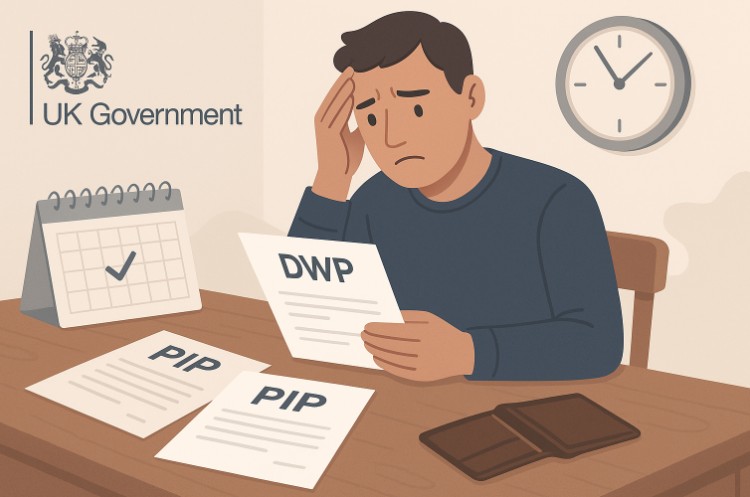
The DWP’s managed migration from legacy benefits to Universal Credit has now reached its final stage for most working-age households.
Anyone who receives a Universal Credit Migration Notice must act by the deadline printed in the letter, as existing legacy benefit payments can stop if a claim is not made on time.
A Migration Notice does not mean claimants are moved automatically. The claimant must make a Universal Credit claim, usually within three months of the letter date, and complete the application correctly to protect their payments and possible transitional protection.
The DWP’s official Migration Notice guidance explains that claimants should not ignore the letter and should ask for help before the deadline if they cannot claim on time.
Key takeaways:
- A Migration Notice is a formal letter telling a claimant to move to Universal Credit.
- Claimants usually have three months to claim Universal Credit.
- Legacy benefits can stop if the deadline is missed.
- Transitional protection may top up Universal Credit if the claimant would otherwise be worse off.
- Claimants who need more time should contact the Migration Notice Helpline before the deadline.
Last checked: 8 July 2026
This is informational only and is not financial, legal or welfare-rights advice. Claimants should check GOV.UK, the DWP helpline or an independent advice service before making decisions about a benefit claim.
What Is the DWP’s Plan for Moving Legacy Benefit Claimants to Universal Credit?

The DWP’s managed migration programme was created to move people from older legacy benefits onto Universal Credit.
Instead of transferring claimants automatically, the DWP sends a formal Universal Credit Migration Notice telling the person or household that they need to claim Universal Credit by a set deadline.
This process matters because the old benefits do not continue indefinitely once a Migration Notice has been issued. If the claimant does not make a Universal Credit claim by the deadline, their existing benefit entitlement can end.
DWP statistics state that legacy benefit customers receiving a Migration Notice are usually given a three-month period to claim, and they may also receive reminders or an extended deadline in some cases.
The move is designed to bring several working-age benefits into one monthly Universal Credit payment. However, the change can affect the timing, amount and management of household income, especially for people receiving ESA, Housing Benefit or disability-related support.
This is why claimants should read the letter carefully, keep the deadline visible, and seek help early if they are unsure how to claim.
Which Legacy Benefits Are Being Replaced by Universal Credit?
Universal Credit replaces six older “legacy benefits”, although many recent DWP letters have focused on claimants still receiving income-related ESA, Income Support, income-based JSA and Housing Benefit.
The wider managed migration programme also includes Working Tax Credit and Child Tax Credit, which have already been moved into the Universal Credit system for most claimants.
Legacy benefits affected by Universal Credit migration:
| Legacy benefit | Universal Credit position |
| Income-related Employment and Support Allowance | Replaced by Universal Credit through managed migration |
| Income Support | Replaced by Universal Credit |
| Income-based Jobseeker’s Allowance | Replaced by Universal Credit |
| Housing Benefit for most working-age claimants | Usually replaced by the housing costs element of Universal Credit |
| Working Tax Credit | Replaced by Universal Credit |
| Child Tax Credit | Replaced by Universal Credit |
Claimants should be careful not to confuse income-related ESA with New Style ESA, which is separate from Universal Credit.
Personal Independence Payment is also not replaced by Universal Credit, although it may still need to be reported as part of a claimant’s wider circumstances.
Housing Benefit also has exceptions. GOV.UK says Housing Benefit can still apply in some supported, sheltered or temporary accommodation cases, so claimants unsure about their housing type should check with their local council or an advice service before assuming all rent support will move into Universal Credit.
What Should Claimants Do First After Receiving a DWP Migration Notice?
The first step is to confirm that the letter is a formal Universal Credit Migration Notice, not a general benefits update.
The letter should include the claimant’s deadline, instructions for making a Universal Credit claim, and details about what may happen if the claim is not made on time.
Claimants should then take these steps:
- Check the deadline printed on the Migration Notice.
- Start the Universal Credit claim before the deadline.
- Complete the claim within 28 days of creating the Universal Credit account.
- Keep the Migration Notice letter and any DWP messages.
- Ask for help before the deadline if they cannot claim online.
- Contact the Migration Notice Helpline if illness, disability, caring duties, homelessness or digital access problems make it difficult to apply.
The important point is that claimants are not normally moved automatically. The responsibility is on the claimant to start the Universal Credit claim after receiving the notice.
Acting early also gives time to correct errors, provide identity evidence and ask for an extension if needed.
What Is Transitional Protection and Who Can Get It?

Transitional protection is a financial safeguard for claimants who move to Universal Credit after receiving a Migration Notice.
It is designed to stop households from being immediately worse off if their Universal Credit entitlement is lower than the amount they received from legacy benefits.
If a claimant qualifies, the DWP may add a transitional element to their Universal Credit award. This top-up is meant to cover the difference between the old benefit amount and the new Universal Credit entitlement.
GOV.UK explains that the transitional element makes up the shortfall where Universal Credit is lower than previous benefits.
Example:
| Previous legacy benefit amount | New Universal Credit amount | Transitional element | Total Universal Credit payment |
| £800 | £600 | £200 | £800 |
To qualify for transitional protection, a claimant normally needs to:
- Have received a Universal Credit Migration Notice.
- Claim Universal Credit by the deadline in the letter.
- Complete the claim properly.
- Move through managed migration rather than choosing to move voluntarily.
- Avoid certain changes in circumstances that can reduce or end the transitional element.
Transitional protection is not usually permanent. It can reduce over time if Universal Credit entitlement increases, and it may end if the claimant has a significant change in circumstances.
How Can You Apply for Universal Credit During the Migration?
The DWP offers two main channels for claimants to apply for Universal Credit after receiving their migration notice.
- Online Application
- Visit the official Universal Credit page on GOV.UK
- Create a Universal Credit account using your personal details
- Submit the application within 28 days from account creation
- Phone Application
- Contact the Universal Credit Migration Notice Helpline at 0800 169 0328
- This option is particularly useful for those who are not comfortable applying online or have accessibility needs
Once a Universal Credit claim is submitted and approved, all legacy benefits being received will cease.
Payments under Universal Credit will typically begin five weeks after the claim is accepted, known as the assessment period.
It’s also possible to apply for an advance payment if the claimant cannot wait five weeks. However, this advance is repayable in instalments from future Universal Credit payments.
What Happens If You Miss the Universal Credit Migration Deadline?

If a claimant misses the deadline in their Migration Notice, their existing legacy benefit can stop. This may affect income-related ESA, Income Support, income-based JSA, Housing Benefit or other legacy benefits included in the migration process.
However, claimants should not assume there is nothing they can do. If the deadline has not yet passed, they should contact the Universal Credit Migration Notice Helpline as soon as possible and ask whether the DWP can extend the deadline.
This may be considered where there is a good reason, such as illness, disability, bereavement, homelessness, caring responsibilities, difficulty using online services or another serious barrier.
If the deadline has already passed, Citizens Advice says claimants may still be able to get transitional protection if they claim Universal Credit up to one month after the deadline in the letter.
This is known as the final deadline. After that point, a claimant may still be able to claim Universal Credit, but transitional protection may no longer be available.
Claimants who have missed the deadline should:
- Start the Universal Credit claim as soon as possible.
- Contact the Migration Notice Helpline immediately.
- Explain why the deadline was missed.
- Keep evidence of illness, disability, postal delays, homelessness, caring duties or digital access issues.
- Get independent help from Citizens Advice or a local welfare-rights adviser.
This section should be handled carefully because missing the deadline can affect household income and rent support.
How Will Future Changes Impact Claimants After the Migration?
The government’s planned reforms under the upcoming Universal Credit and Personal Independence Payment Bill will introduce major changes from April 2026.
One of the most significant changes will be the reduction and freezing of the health component for new Universal Credit claimants.
These changes will not affect those who have already claimed Universal Credit before April 2026. Current and future transitional protection arrangements will apply only to those who migrate before the law changes.
Claimants who transition early will benefit from:
- Continuation of full health-related components
- Preservation of transitional top-up protections
- Exemption from post-2026 reduction in health support rates
This provides a strong incentive for claimants to act promptly if they receive a migration notice before 2026.
Who Should Get Advice Before Claiming Universal Credit?
Some claimants should get advice before making or delaying a Universal Credit claim, especially where their circumstances are complex.
This includes people receiving disability-related support, people in supported or temporary accommodation, mixed-age couples, carers, self-employed claimants and households with savings or irregular income.
Claimants should be especially careful if they receive:
- Income-related ESA
- Housing Benefit
- Personal Independence Payment
- Carer’s Allowance
- Council Tax Reduction
- Support with mortgage interest
- New Style ESA or New Style JSA
Universal Credit can change how often payments are made, how rent support is handled, and how income is assessed. For ESA claimants, the move can also raise concerns about work capability status and health-related Universal Credit elements.
Claimants should check the official guidance, speak to the DWP or use Citizens Advice migration support before making decisions that could affect entitlement.
What Help Is Available for People Struggling With the Move to Universal Credit?
Claimants who are worried about the move to Universal Credit should ask for help before their Migration Notice deadline. Support is available from the DWP, Citizens Advice, Jobcentre Plus and some local councils.
The main support options include:
| Support route | What it can help with |
| Universal Credit Migration Notice Helpline | Deadline questions, extensions and migration-specific support |
| Citizens Advice Help to Claim | Help starting and completing a Universal Credit claim |
| Jobcentre Plus | Claim support, identity checks and appointment guidance |
| Local council | Housing Benefit questions, supported accommodation and local welfare support |
| Welfare-rights charities | Complex benefit issues, disability support and missed deadline cases |
Claimants who cannot manage the five-week wait for their first Universal Credit payment may be able to ask for a Universal Credit advance payment. However, this is repayable and is usually deducted from future payments, so it should be considered carefully.
How Does Universal Credit Compare to the Legacy Benefits Being Replaced?

Understanding how Universal Credit compares to legacy benefits is important for those concerned about the changes.
The most notable difference is that Universal Credit is calculated monthly and adjusts based on real-time income data, while legacy benefits were paid weekly or fortnightly and assessed annually or semi-annually.
The table below outlines key differences between the systems:
| Feature | Legacy Benefits | Universal Credit |
| Application Process | Multiple separate claims | One integrated claim |
| Payment Frequency | Weekly/Fortnightly | Monthly |
| Income Assessment | Periodic | Monthly (real-time) |
| Change in Circumstances | Reported separately per benefit | One update applies to all components |
| Housing Costs | Paid directly to landlord in many cases | Usually paid to claimant |
| Digital Access | Mostly paper-based or phone | Online-first approach |
The structure of Universal Credit offers more flexibility and real-time adjustments but can be challenging for those unfamiliar with digital systems or those who prefer frequent payments.
Important Information Before Acting on a Migration Notice
A Universal Credit Migration Notice can affect a claimant’s income, rent support and transitional protection. For this reason, claimants should not rely only on general online information. They should check their own letter, confirm the deadline, and use official support if anything is unclear.
This is especially important for claimants with health conditions, disabilities, caring responsibilities, rent arrears, supported accommodation, temporary accommodation or irregular income. These circumstances can affect how Universal Credit is calculated and whether extra support is available.
Claimants should use GOV.UK guidance, contact the Migration Notice Helpline or speak to Citizens Advice before making decisions that could affect their benefit entitlement.
Conclusion
The DWP Migration Notice is an important deadline letter, not a general update. Claimants who receive one must usually claim Universal Credit within the deadline shown in the letter to avoid disruption to their existing benefits.
The most important steps are to read the notice carefully, start the Universal Credit claim early, complete the application properly and ask for help before the deadline if there are problems.
Transitional protection may help households avoid an immediate drop in income, but it depends on moving through the managed migration process correctly.
For claimants with ESA, Housing Benefit, disability support or complex household circumstances, getting advice before the deadline is the safest option.
FAQs About DWP Migration Notice Letters and Universal Credit
What is a DWP Migration Notice letter?
A DWP Migration Notice letter is an official letter telling a claimant that they must move from legacy benefits to Universal Credit. It includes a deadline for making the Universal Credit claim. Claimants are not usually moved automatically, so they must act before the date shown in the letter.
How long do claimants have to apply for Universal Credit after receiving the letter?
Most claimants are usually given around three months from the date of the Migration Notice to claim Universal Credit. The exact deadline will be printed in the letter, so claimants should check it carefully and avoid waiting until the final few days.
Which legacy benefits are being replaced by Universal Credit?
Universal Credit replaces income-related ESA, Income Support, income-based Jobseeker’s Allowance, Housing Benefit for most working-age claimants, Working Tax Credit and Child Tax Credit. Some benefits, such as Personal Independence Payment and New Style ESA, are not directly replaced by Universal Credit.
What happens if someone misses the Universal Credit migration deadline?
If a claimant misses the deadline, their existing legacy benefits may stop. They should contact the Universal Credit Migration Notice Helpline as soon as possible, especially if illness, disability, caring responsibilities, homelessness or digital access problems caused the delay. In some cases, there may still be limited time to protect transitional support.
What is transitional protection in Universal Credit?
Transitional protection is a top-up that may be added when a claimant moves to Universal Credit through managed migration and would otherwise receive less than they did on legacy benefits. It is designed to reduce the risk of an immediate drop in income, but it can reduce or end if circumstances change.
Do claimants need to apply separately for transitional protection?
Claimants do not usually need to make a separate application for transitional protection. It is considered as part of the managed migration process, but the claimant must normally have received a Migration Notice and claim Universal Credit by the required deadline.
Where can claimants get help with the move to Universal Credit?
Claimants can get help from the Universal Credit Migration Notice Helpline, Citizens Advice Help to Claim, Jobcentre Plus, local councils and welfare-rights organisations. Anyone unsure about their deadline, housing support, ESA status or disability-related benefits should seek advice before making decisions.
Editorial Note
This article is written for UK claimants affected by the DWP managed migration from legacy benefits to Universal Credit. It is intended to explain the Migration Notice process in clear language, including deadlines, transitional protection and support options.
It does not replace personalised advice from the DWP, GOV.UK, Citizens Advice, a local council or a qualified welfare-rights adviser.
How We Checked?
This article was checked against GOV.UK guidance on moving to Universal Credit after receiving a Migration Notice, GOV.UK transitional protection guidance, DWP managed migration statistics, and Citizens Advice guidance on missed deadlines.
Priority was given to official government sources and recognised independent advice services because Universal Credit migration can affect household income, rent support and disability-related payments.
Source Links
GOV.UK Migration Notice Guidance
https://www.gov.uk/guidance/move-to-universal-credit-if-you-get-a-migration-notice-letter
GOV.UK Transitional Protection Guidance
https://www.gov.uk/guidance/transitional-protection-if-you-receive-a-migration-notice-letter
Citizens Advice Migration Notice Support
https://www.citizensadvice.org.uk/benefits/universal-credit/moving-from-other-benefits/if-youve-got-a-migration-notice/
DWP Move to Universal Credit Statistics
https://www.gov.uk/government/statistics/move-to-universal-credit-july-2022-to-end-march-2026/completing-the-move-to-universal-credit-statistics-related-to-the-move-of-households-claiming-tax-credits-and-dwp-benefits-to-universal-credit-data