The Basic State Pension is a vital source of income for many retirees in the UK. Managed by the Department for Work and Pensions (DWP), it is designed to provide financial stability during retirement.
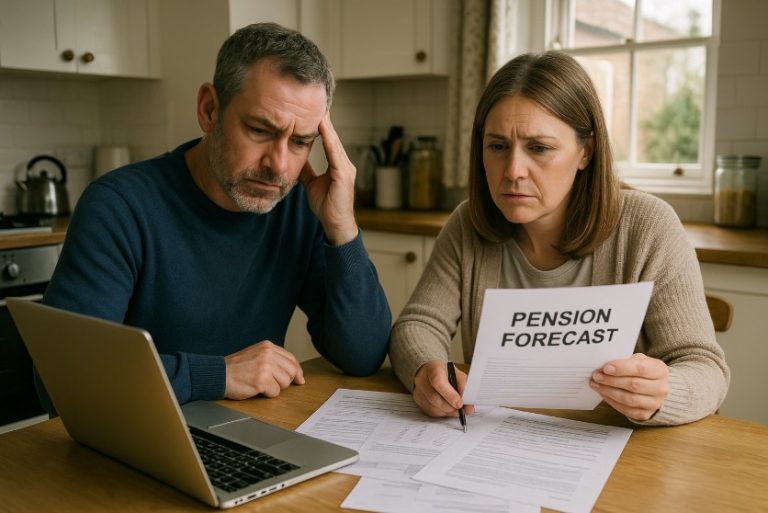
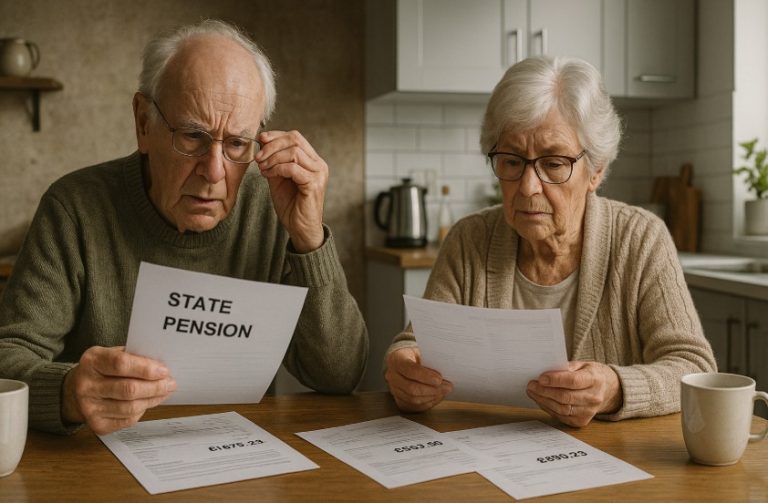
However, in recent years, thousands of pensioners have faced payment errors, leaving them underpaid for years without their knowledge.
These errors have often stemmed from missing National Insurance (NI) records, particularly relating to Home Responsibilities Protection (HRP), and have disproportionately affected women.
Recent correction initiatives and growing public awareness are helping to address these issues, but many eligible pensioners may still be missing out on money they are owed.
What Is the Basic State Pension and How Is It Calculated?
The Basic State Pension is the UK’s original state retirement income scheme for those who reached pension age before 6 April 2016.
It is not means-tested, meaning everyone who qualifies receives it regardless of other income or savings. However, the amount received depends on an individual’s National Insurance (NI) contribution history.
The calculation for the Basic State Pension takes into account:
- The number of qualifying NI years you have earned through work or credited time
- Whether you have claimed top-ups from a spouse’s or civil partner’s NI record
- Additional payments for certain eligible groups such as widows and carers
For the 2025/26 tax year, the full Basic State Pension is £169.50 per week. Anyone with fewer than 30 qualifying years will receive a proportionate amount.
The table below shows the payment structure:
| Qualifying Years | Percentage of Full Pension | Weekly Payment (2025/26) |
| 30 years | 100% | £169.50 |
| 25 years | 83% | £140.69 |
| 20 years | 66% | £111.87 |
| 15 years | 50% | £84.75 |
| 10 years | 33% | £56.94 |
Even when people meet the qualifying criteria, errors in NI records can result in lower payments than they are entitled to.
Why Do Basic State Pension DWP Payment Errors Occur?
Errors in Basic State Pension payments are not uncommon, and they can happen for a variety of reasons. Many of these are linked to historical policies, outdated administrative systems, and incomplete record-keeping.
Unlike the New State Pension, which is calculated in a more straightforward way, the Basic State Pension relies heavily on historical National Insurance (NI) records and credits. If these records are inaccurate, the pension calculation will also be wrong.
1. Missing Home Responsibilities Protection (HRP) Records
One of the main causes of underpayments is the failure to record HRP years correctly. HRP was designed to protect pension rights for people who had gaps in their NI contributions due to caring responsibilities. However, problems arose when:
- Claimants did not include their NI number on Child Benefit claim forms, particularly before May 2000.
- Child Benefit was claimed in a partner’s name rather than the main carer’s name.
- Carers failed to apply for HRP manually when it was not granted automatically.
Without these HRP credits, many people’s NI records show fewer qualifying years than they actually earned.
2. Reduced National Insurance Contributions for Married Women
Until the late 1970s, married women could opt to pay a lower rate of NI contributions, known as the “married woman’s stamp.” While this reduced their contributions, it also reduced their pension entitlement unless they later switched back to full NI payments.
In some cases, women who were entitled to a pension based on their husband’s contributions did not receive the correct amount because DWP records were incomplete or misinterpreted.
3. Errors in Transferring Spouse’s Entitlements
Under Basic State Pension rules, some pensioners are entitled to increase their pension based on a spouse’s or civil partner’s NI record.
Errors can occur if the transfer of entitlement is not processed correctly after marriage, divorce, or the death of a spouse. This often affects widows who should receive higher payments after their partner’s death but continue to receive their original amount.
4. Data Mismatches Between DWP and HMRC
The DWP relies on NI contribution records held by HMRC to calculate pensions. If there is a discrepancy—such as missing credits, incorrect dates, or overlapping records errors can occur.
This is particularly common for people who had periods of self-employment, lived abroad for part of their working life, or changed names due to marriage.
5. Delays and Human Error in Processing Claims
While technology plays a bigger role in processing pensions today, many historical records were paper-based.
Transferring this data into digital systems introduced opportunities for mistakes, especially if handwriting was unclear or documentation was incomplete. Human error in interpreting eligibility rules or applying credits can also cause miscalculations.
6. Limited Awareness Among Pensioners
A significant factor is that many pensioners are unaware of the detailed rules for calculating the Basic State Pension. As a result, they may never realise they have been underpaid.
For example, some do not know that they can claim additional amounts from a spouse’s record, or that HRP years can be added retroactively if missed.
How Has the DWP Addressed Historical Pension Underpayments?
In January 2024, the Department for Work and Pensions, in collaboration with HM Revenue and Customs, launched a large-scale correction programme. The aim was to identify individuals underpaid due to missing HRP years on their NI records.
Progress has been notable:
- Over 12,300 cases of underpayment identified by mid-2025
- A total of approximately £104 million repaid in arrears
- Average arrears payment of £8,377 per affected pensioner
The correction process involves cross-checking NI records against historical HRP eligibility and contacting those potentially affected.
HMRC has sent out over 370,000 letters, predominantly to women, encouraging them to review their records. However, many recipients have not responded due to confusion or concerns about scams.
What Is Home Responsibilities Protection (HRP) and Who Qualifies?
Home Responsibilities Protection (HRP) was a provision introduced by the UK Government in April 1978 to ensure that people who took time out of paid work to care for children or vulnerable adults did not lose out on their State Pension entitlement.
At the time, the State Pension was based heavily on the number of qualifying National Insurance (NI) years. Without HRP, many carers, especially women would have been left with a reduced pension in later life because they had fewer contribution years.
Rather than adding extra years, HRP worked by reducing the number of qualifying years needed for a full Basic State Pension.
For example, before 2010, a full pension might require 39 qualifying years for women and 44 for men.
If you had five years of HRP, those years were subtracted from the total needed, meaning you could still qualify for a full pension with fewer paid NI years.
In April 2010, HRP was replaced by NI credits, which automatically add to your record rather than reduce the required number of years.
However, HRP remains important today because many people who reached pension age before 2016 are still affected by missing or incorrectly recorded HRP years.
Who Qualified for HRP?
You could qualify for HRP if, between April 1978 and April 2010, you met specific conditions.
1. Claiming Child Benefit
If you claimed Child Benefit in your name for a child under the age of 16, you were usually awarded HRP automatically provided your NI number was recorded. Problems arose when:
- The Child Benefit claim was made in the partner’s name instead of the main carer’s.
- The claimant did not provide their NI number, especially before May 2000 when it became compulsory to do so.
2. Caring for Someone Who Was Sick or Disabled
You could qualify for HRP if you spent at least 35 hours a week caring for someone who was receiving:
- Attendance Allowance
- Disability Living Allowance (middle or highest rate for personal care)
- Constant Attendance Allowance
For years between 1978 and 1988, the benefit had to be paid for the full tax year; after April 1988, it needed to be paid for at least 48 weeks in the year.
3. Foster Carers and Kinship Carers in Scotland
From April 2003, foster carers and kinship carers in Scotland could also apply for HRP. However, unlike Child Benefit claimants, they had to make a manual application.
4. Special Cases
- If your partner claimed Child Benefit: You could sometimes transfer HRP from your partner’s NI record if they did not need it and you cared for the child jointly. This was only possible for qualifying years between 1978 and 2010.
- Married women and widows paying reduced NI rates: If you opted for the “small stamp” (reduced rate Class 1 contributions) as an employee or did not pay Class 2 NI when self-employed, you could not get HRP for those years.
HRP Eligibility at a Glance
| Eligibility Situation | Years Covered | Automatic or Application Needed | Key Conditions |
| Claimed Child Benefit in your name for a child under 16 | 1978–2010 | Automatic if NI number supplied | Must be the named claimant |
| Caring for sick or disabled person 35+ hrs/week | 1978–2002 | Application required | Care recipient must get specific benefits |
| Foster carer or kinship carer in Scotland | 2003–2010 | Application required | Not receiving Child Benefit |
| Partner claimed Child Benefit instead | 1978–2010 | Application required | Partner must not need HRP themselves |
| Married woman/widow paying reduced NI | 1978–2010 | Not eligible | Reduced NI contributions disqualify HRP |
Why HRP Still Matters Today?
Although HRP ended in 2010, its legacy is still being felt. Thousands of pensioners have discovered they were underpaid because their HRP years were never recorded on their NI account.
This is particularly common among women who raised children in the 1980s and 1990s but had Child Benefit paid in their husband’s name.
Missing HRP years can significantly reduce a pension. For example:
- A woman needing 39 years for a full pension who had 10 years of HRP should only need 29 paid NI years.
- If those 10 HRP years were not recorded, she could be left with a much smaller pension, sometimes reduced by £40 or more per week.
For anyone who was a carer or parent during the HRP years, it is worth checking old NI records to make sure these credits were applied correctly.
If they were missed, a claim can still be made to have them added, which may also result in a backdated pension payment.
How Can Pensioners Check If They Have Been Underpaid?

Pensioners can take practical steps to confirm whether they are receiving the correct amount:
- Use the State Pension forecast tool on GOV.UK to review entitlement
- Request a detailed NI record from HMRC to spot missing credits
- Look for HRP years that may not have been counted
- Contact the Pension Service for an official review if discrepancies are found
It is important to note that many people have ignored letters from HMRC inviting them to review their pension records.
Reasons include misunderstanding the letter’s purpose, believing it to be fraudulent, or being unsure how to respond.
What Steps Should You Take If You Suspect a Pension Error?
If there is any doubt about the accuracy of your State Pension payments, action should be taken quickly.
Steps include:
- Gather evidence of all Child Benefit claims, caring responsibilities, and NI contributions.
- Identify any HRP years between 1978 and 2010 that may be missing.
- Contact the Pension Service to request a recalculation of your pension.
- If necessary, complete the relevant HRP application forms via HMRC.
- Keep a record of all correspondence and responses from government departments.
In cases where the process feels complex, professional advice can be sought from pensions specialists, Independent Age, Citizens Advice, or Age UK.
How Can Future Pension Payment Errors Be Prevented?

Reducing the risk of future pension errors requires both systemic improvements and individual awareness.
Key preventative measures include:
- Regularly checking your NI record online to ensure it is accurate
- Making sure Child Benefit claims are made in the main carer’s name
- Understanding how NI credits and HRP work and keeping personal records
- Supporting public awareness campaigns about pension rights
- Encouraging better data sharing between DWP and HMRC to avoid mismatches
By keeping personal records up to date and monitoring NI contributions annually, individuals can reduce the chance of losing out on pension income in the future.
Conclusion
Basic State Pension DWP payment errors have left many pensioners short-changed, often for decades. These errors, largely linked to missing HRP years and incomplete NI records, have disproportionately impacted women.
While the DWP and HMRC’s correction programme is making progress, many affected individuals have yet to come forward.
By checking NI records, understanding eligibility rules, and taking proactive steps, pensioners can ensure they receive the full amount they are entitled to.
FAQs
What is the difference between Basic and New State Pension?
The Basic State Pension applies to those who reached pension age before April 2016, while the New State Pension applies to later retirees. The latter has a higher weekly rate and different eligibility rules.
How long does it take for the DWP to correct a pension error?
Timescales vary, but many corrections are processed within three to six months once all necessary information is provided.
Can I claim backdated State Pension payments?
Yes, if you have been underpaid due to a DWP error, you can claim arrears for the affected period. There is usually no strict time limit for such claims.
What is the average underpayment for Basic State Pension?
Recent correction data suggests the average arrears payment is around £8,377, though some receive significantly more or less.
How do I check if my HRP years are missing?
You can check your NI record online via GOV.UK or by contacting HMRC directly. If HRP years are missing, you can apply to have them added.
Can pension errors affect my tax obligations?
Yes, if you receive a large back payment, it could affect your tax in the year it is paid. You may need to speak to HMRC for guidance.
Is there a deadline to claim pension arrears?
For DWP errors, there is generally no fixed deadline, but acting promptly ensures you receive what you are owed without unnecessary delays.