You should normally allow around two weeks after receiving a PIP decision or award text for the letter to arrive.
If the text gives a specific timeframe, follow that timeframe instead. Contact the PIP enquiry line if the stated period has passed, your address has changed or you believe the letter may have been lost.
Waiting for a Personal Independence Payment decision can be stressful, particularly after receiving a text message from the Department for Work and Pensions.
The important point is that waiting for DWP to make a decision is different from waiting for the paper award letter after a decision has been completed.
There is no single published delivery deadline applying to every PIP decision letter.
However, if DWP has sent you a text confirming that a decision has been made, it is reasonable to allow around two weeks for the letter to arrive.
Follow any specific timeframe stated in the text message, as the wording sent to individual claimants can vary.
Last checked: 15 July 2026
This article is for general information only and is not financial, legal or welfare-rights advice.
How Long Should You Wait for a PIP Award Letter?

After receiving a DWP text saying that a decision has been made, most claimants should allow the timeframe stated in the message before contacting DWP.
Where no timeframe is provided, waiting approximately two weeks gives time for the decision notice to be printed, posted and delivered.
This is a practical guideline rather than a guaranteed DWP delivery standard. The official PIP decision guidance confirms that DWP will send a letter explaining whether you will receive PIP.
If the claim is successful, the letter should also state the first payment date and when the claim may be reviewed.
What Does a DWP PIP Text Message Mean?
The meaning of a PIP text depends on its exact wording. A message saying that DWP has made a decision does not necessarily confirm that PIP has been awarded.
It normally means that the decision process has finished and that the formal outcome will be explained in a letter.
A message specifically stating that you have been awarded PIP is clearer, but you should still wait for the decision letter before relying on the award amount, payment date or award length.
| Type of message | What it normally means | What to do next |
| DWP has made a decision | The claim has been considered, but the outcome may not be shown in the text | Wait for the formal decision letter |
| You have been awarded PIP | DWP has indicated that the claim was successful | Wait for the letter confirming the rate and payment details |
| Your PIP review is complete | A new decision has been made about an existing award | Continue checking your post for the review decision |
| DWP needs more information | The decision may not yet be complete | Respond by the deadline given |
Because automated message wording can differ, the formal letter remains the most reliable record of the decision.
Is Waiting for a PIP Decision Different From Waiting for the Letter?
Yes. These are two separate waiting periods:
- Decision waiting time is the period during which DWP reviews the claim form, supporting evidence and assessment report.
- Award-letter waiting time begins after DWP has completed its decision and prepared the written notice.
The latest official DWP PIP processing statistics show that the median end-to-end processing time for a normal-rules new claim was 18 weeks in April 2026.
This measures the period from claim registration to the decision being made. It does not mean that an award letter should take 18 weeks to arrive after a decision text.
| Stage | What is happening | Relevant waiting period |
| Claim registered | DWP opens the new claim | Part of the full claim timeline |
| Form and evidence considered | DWP and the assessment provider review the information | Part of the full claim timeline |
| Assessment completed | A report may be sent to a DWP decision maker | The decision may still be pending |
| Decision made | DWP records the outcome | The postal waiting period begins |
| Decision letter sent | The formal result is posted | Usually the final stage |
Receiving an assessment text or completing an appointment does not mean an award has already been approved. Claimants trying to interpret what happened during the appointment can read the guide on how to tell if a PIP assessment went well, although only DWP can make the final decision.
When Can a PIP Decision Take Longer?
The full decision process may take longer where:
- DWP needs additional supporting evidence
- The assessment provider needs clarification
- An appointment is cancelled or rearranged
- The case involves complex daily-living or mobility needs
- DWP is experiencing a high volume of claims
- The claim is being processed under a different route, such as an award review or DLA reassessment
These factors normally affect how long it takes to reach a decision. They should not be described as direct causes of postal delay after a completed decision.
Can You Avoid Delays in Receiving the Award Letter?
A claimant cannot control DWP processing or postal delivery, but a few practical checks may prevent avoidable problems:
- Tell DWP promptly if your address or contact details change
- Keep the text message showing when the decision was completed
- Check that your name is clearly shown at your current address
- Keep copies of previous DWP correspondence and your National Insurance number
- Contact DWP if the timeframe stated in the text has passed
Providing medical evidence and attending an assessment can help prevent delays earlier in the claim. However, once a decision text has been received, the focus should be on postal delivery and confirming that DWP holds the correct address.
Can Your First PIP Payment Arrive Before the Award Letter?

In some cases, a claimant may notice a payment in their bank account before the paper decision letter is delivered. However, this should not be treated as a guaranteed sequence or an official indication of the full award details.
The decision letter should confirm:
- The date of the first payment
- The usual payment day
- How long the award will last
- Whether and when the claim will be reviewed
PIP is normally paid every four weeks. You can read more about the payment cycle in the guide explaining whether PIP is paid in arrears.
If money appears before the letter, keep a record of the payment reference and wait for the formal decision notice. Do not assume the rate, components or award length from the bank payment alone.
If you have received an award letter but the expected money has not arrived, see the separate guide on why a PIP payment may be missing.
Will a Successful New PIP Claim Be Backdated?
Where a new claim results in an award, entitlement may begin from the claim date or from the date on which the relevant qualifying conditions were met. The exact start date depends on the type and circumstances of the claim.
The decision letter should show the period covered and the first scheduled payment. Claimants should therefore avoid assuming that every back payment begins from the decision date.
What Information Is Included in a PIP Award Letter?
A successful PIP decision letter should explain the award and its payment arrangements. Read the letter carefully and keep it in a safe place because it may be needed when applying for related support or challenging the decision.
The letter may include:
- Whether PIP has been awarded
- The daily-living and mobility decision
- The amount payable
- The award start date
- The first payment date
- The normal payment day
- How long the award will continue
- Whether the award will be reviewed
- How to challenge the decision
Claimants who want to understand how daily-living and mobility activities are assessed can read the guide to PIP questions and points.
Why Has My PIP Award Letter Been Delayed?
A delay after a completed decision is more likely to involve printing, posting, delivery or incorrect contact details than further medical assessment.
Possible causes include:
- The decision notice has been completed but not yet posted.
- Ordinary postal delays.
- A bank holiday or local delivery disruption.
- DWP holding an old or incomplete address.
- The letter being returned to DWP as undeliverable.
- The decision still requiring an administrative check before issue.
Additional evidence, medical reports and assessment appointments usually delay the decision itself, rather than a letter that has already been issued.
This distinction should be made clear because a claimant who has received a decision text is at a different stage from someone still waiting after an assessment.
If you have moved recently, contact DWP rather than relying on mail redirection alone.
How Can You Prevent Delays Before a PIP Decision?
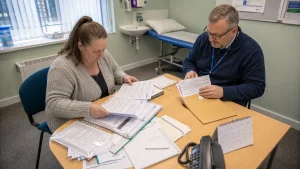
Some delays happen before the Department for Work and Pensions makes a final PIP decision. Although you cannot control DWP workloads or assessment availability, you can reduce the risk of avoidable delays by providing complete information and responding promptly.
Complete the PIP2 Form Carefully
Answer every relevant question on the “How your disability affects you” form. Explain how your condition affects daily living and mobility, using clear examples rather than short or general statements.
Send Relevant Supporting Evidence
Include useful evidence such as medical reports, care plans, hospital letters or statements from people who understand your support needs. Send copies rather than original documents and keep a full set for your records.
Respond to Requests Promptly
Reply as soon as possible if DWP or the assessment provider asks for more information. If you cannot meet a deadline, contact DWP before the due date and ask whether an extension can be provided.
Attend Scheduled Assessments
Missing or repeatedly rearranging an assessment may extend the claim process. If you cannot attend, contact the assessment provider immediately so that another appointment can be arranged.
Keep Your Contact Details Updated
Tell DWP promptly if your address, telephone number or other contact details change. Incorrect information could prevent letters, calls or appointment details from reaching you.
These steps may help your claim progress without unnecessary interruptions, but they do not guarantee a faster decision. They also apply to the period before a decision is made, rather than the postal delivery of an award letter that has already been issued.
What Should You Do if Your PIP Award Letter Has Not Arrived?
First, read the DWP text again and check whether it gives a delivery timeframe. Wait until that period has passed before following up, unless you have recently moved or believe DWP holds the wrong address.
If the letter has still not arrived:
- Check the date on which the DWP text was received.
- Confirm that DWP has your current postal address.
- Check your bank account for an unfamiliar DWP payment, but do not treat this as a substitute for the letter.
- Contact the official PIP enquiry service.
- Ask whether the decision letter has been issued and whether a replacement can be sent.
- Record the date of the call and the name of the adviser, where provided.
The PIP enquiry line is 0800 121 4433 and is currently open Monday to Friday from 9am to 5pm. Relay UK and British Sign Language contact options are also available through the official Disability Service Centre page.
Have your National Insurance number, full name, date of birth and current address ready before calling. DWP may need to complete security checks before discussing the claim.
Can You Track a PIP Award Letter Online?
GOV.UK does not currently provide a general online tracking service showing where an existing PIP decision letter is in the postal system.
DWP may send text-message updates during the claim, but these messages do not always provide the complete decision, award rate or payment schedule. The formal decision letter remains the main written record of the outcome.
If the expected letter has not arrived, the practical way to check its status is to contact the PIP enquiry line.
An adviser may be able to confirm whether a decision notice has been issued, check the address held on the claim or arrange for correspondence to be sent again.
Avoid entering personal or banking details into unofficial websites claiming to track DWP letters.
Is a PIP Review Decision Different From a New-Claim Decision?

Yes. A PIP review concerns an existing award, while a new claim determines whether a person qualifies for PIP for the first time.
During a scheduled review, DWP may consider the review form, new supporting evidence and, where necessary, an assessment report. GOV.UK confirms that an existing PIP award normally continues to be paid while the review is being processed.
Once the review is complete, DWP sends a decision letter explaining whether the award will:
- Stay the same
- Increase
- Decrease
- End
The overall review process may take considerably longer than the delivery of the final letter. Readers waiting for the review decision should use the more detailed guide to PIP review decision times.
After receiving a review-complete text, the claimant should follow the delivery timeframe stated in the message and contact DWP if the letter does not arrive.
What Should You Do When the PIP Decision Letter Arrives?
Open and read the letter as soon as possible. Check your name, address, award components, payment rate, start date and award length.
If you agree with the decision, keep the letter in a safe place and note the first payment date. If you disagree, read the challenge instructions immediately because benefit-decision challenges are subject to time limits.
Keep the original letter and make a copy or clear digital scan. Also retain any assessment report, supporting evidence and notes from previous calls with DWP.
Conclusion
After receiving a PIP decision or award text, it is reasonable to allow around two weeks for the paper letter to arrive, unless the message gives a different timeframe.
This postal wait is separate from the full claim process, which had a median end-to-end processing time of 18 weeks for normal-rules new claims in April 2026.
If the expected letter does not arrive, confirm that DWP holds your correct address and contact the PIP enquiry line. Keep the formal decision letter because it confirms the award, first payment date, duration and review arrangements.
FAQs About Waiting for a PIP Award Letter
1. How long should I wait for a PIP award letter after a DWP text?
Follow the timeframe stated in the DWP text message, as wording can vary. If no timeframe is given and the letter has not arrived after around two weeks, contact the PIP enquiry line.
2. Does a PIP decision text mean I have been awarded PIP?
Not always. A text saying a decision has been made only confirms that DWP has completed the decision; the formal letter explains whether the claim was successful.
3. Can my PIP payment arrive before the award letter?
A payment may sometimes reach your bank before the paper letter. However, the decision letter is needed to confirm the award rate, first payment date, award length and review arrangements.
4. What should I do if my PIP award letter has not arrived?
Check that DWP holds your correct address and contact the PIP enquiry line on 0800 121 4433 if the timeframe stated in the text has passed.
5. How often will I receive PIP payments after an award?
PIP is usually paid every four weeks. Your decision letter should confirm your first payment date and the weekday on which you will normally be paid.
6. What information will my PIP award letter contain?
The letter explains whether you have been awarded PIP and, if successful, gives your first payment date, award duration and information about when the claim may be reviewed.
7. Will my existing PIP payments continue while my claim is reviewed?
Yes. DWP states that you will continue receiving your existing PIP payments while a scheduled award review is being processed.
Editorial Note
This guide explains general PIP decision and award-letter procedures in England and Wales. Individual processing and postal times can vary.
It should not be treated as financial, legal or personalised welfare-rights advice. Claimants facing an urgent deadline or possible loss of entitlement should contact DWP or an independent benefits adviser.
How We Checked This Guide?
This article was checked against current GOV.UK guidance covering PIP decisions, payments, reviews and Disability Service Centre contact details.
The wider claim-processing figure was taken from the Department for Work and Pensions’ official statistics to April 2026.
Full-claim processing times have been kept separate from the time taken for a completed decision letter to arrive. Claimant-reported experiences have not been presented as guaranteed DWP service standards.