Understanding how and when the UK State Pension is paid is vital for financial planning in retirement.
One of the most common questions among those nearing pension age is: Is the State Pension paid in advance or arrears?
This article aims to provide a comprehensive explanation of how State Pension payments work in the UK, how they are calculated, and what recipients can expect in terms of timing.
What Does It Mean for the State Pension to Be Paid in Arrears?
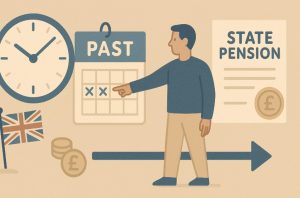
In the UK, the State Pension is paid in arrears, which means you receive payment after the period it covers has passed.
For example, if you receive a payment on the 10th of the month, it typically covers the previous four weeks, not the upcoming four weeks. This system ensures that you are only paid for the time you were actually eligible.
Paying in arrears is standard practice for many public funds, including pensions, and it helps reduce errors and overpayments.
If someone’s circumstances change or they become ineligible, arrears payments allow time for the system to adjust before funds are released.
The arrears method supports accuracy by confirming eligibility for the entire period before making a payment.
This approach is particularly important for benefits like the State Pension, which can be affected by changes in personal status, residence, or death.
How Often Is the UK State Pension Paid?
The majority of pensioners in the UK receive their State Pension every four weeks. This four-week payment cycle is designed to offer consistency and predictability for budgeting.
Weekly payments are only issued in limited circumstances, primarily for those who already had that arrangement in place before recent changes or for recipients of Pension Credit who opt for it.
State Pension payments are not aligned with calendar months but follow a four-weekly rhythm, meaning the dates shift slightly each month.
When Will You Receive Your First State Pension Payment?
Once your application is approved and your entitlement begins, your first State Pension payment usually arrives within five weeks.
The amount of this first payment may not be for a full four-week period. Instead, it will cover the period from your entitlement start date to your first scheduled payment date.
This partial payment is common and is followed by full payments every four weeks thereafter.
Your official payment schedule will be provided by the Department for Work and Pensions (DWP) upon confirmation of your claim.
Some people believe they will receive their pension as soon as they reach State Pension age, but this is not the case. Payment is only made after the entitlement period ends, in keeping with the arrears system.
Which Day of the Week Is Your State Pension Paid?
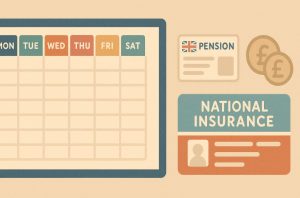
The day you receive your pension payment depends on the last two digits of your National Insurance (NI) number.
This system staggers payments across the week to manage demand and ensure timely processing.
Here is the current structure for payment days based on NI numbers:
| Last Two Digits of NI Number | Payment Day |
| 00 to 19 | Monday |
| 20 to 39 | Tuesday |
| 40 to 59 | Wednesday |
| 60 to 79 | Thursday |
| 80 to 99 | Friday |
You are assigned a payment day automatically and it cannot be changed. The day will remain consistent for all future pension payments unless your NI number changes, which is highly unlikely.
This assignment helps distribute payments evenly throughout the working week and prevents system overload on any single day.
Can You Choose How You Receive Your State Pension?
State Pension payments are usually deposited directly into your UK bank or building society account.
This method ensures fast and secure transfers. When you apply for the pension, you will be asked to provide your bank details.
While the default option is direct deposit, some individuals who are unable to open or maintain a bank account may use the Payment Exception Service.
This alternative allows pensioners to collect payments via vouchers at PayPoint locations or the Post Office.
Key details about payment methods:
- Direct deposit is the preferred and most reliable method
- The account must be in your name or jointly held with another individual
- If you’re living abroad, you can choose to be paid into a foreign account, though timing and currency may vary
Bank holidays can affect payment dates. If your usual payment date falls on a bank holiday, your pension is typically paid on the last working day before the holiday.
What Happens If There’s a Delay in Your Pension Payment?
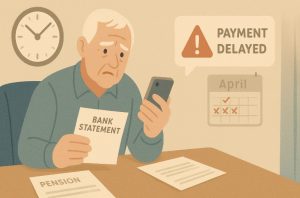
Delays in receiving your State Pension payment can be concerning, especially for retirees who rely on a consistent income for essential living costs.
Although the Department for Work and Pensions (DWP) has systems in place to ensure timely payments, delays can occasionally happen due to a variety of reasons.
Understanding the possible causes and knowing what to do in such situations is important for minimising disruption to your finances.
Common Reasons for Payment Delays
Most payment delays are the result of routine processing issues rather than serious system faults. Some of the most frequent causes include:
- Bank holidays and public holidays: If your payment date falls on a non-working day, such as a bank holiday, the payment is usually made on the last working day before the holiday. However, if this change isn’t communicated clearly or if your bank processes payments slowly, it may appear as though your payment is late.
- Banking issues: Problems with the bank account into which your pension is deposited can result in delays. This includes account closures, changes in bank details that haven’t been updated with DWP, or technical faults on the bank’s end.
- Recent changes to personal details: If you’ve recently moved house, changed your name, or opened a new bank account and the DWP hasn’t received the updated information, it can result in your payment being withheld or sent to an outdated account.
- Application processing delays: For those receiving their first pension payment or resuming after a suspension, delays can occur if documentation is incomplete or further verification is required.
- Technical errors: Though uncommon, system outages or processing failures within the DWP or HM Revenue and Customs systems can cause a backlog in payments.
How to Check if There’s a Delay?
If your payment hasn’t arrived on the expected date, the first step is to allow at least one full working day after the due date before taking action.
In many cases, payments may appear late but are simply delayed by processing times between the DWP and your bank.
After one working day has passed, you can take the following actions to investigate:
- Check your bank account and recent transactions to ensure the payment wasn’t deposited later in the day or in a separate transaction.
- Verify whether the payment date coincided with a bank holiday, which could have pushed the payment forward to an earlier day.
- Review any recent communications from DWP either via post, email, or your online pension account—to see if you were informed about a change to your payment schedule.
What to Do if Your Payment Is Missing?
If, after one full working day, your payment still hasn’t been received and you’ve confirmed there are no issues with your bank, you should contact the Pension Service directly.
Their contact details can be found on GOV.UK, but the primary phone number for pension enquiries is:
Pension Service Helpline: 0800 731 7898
(Monday to Friday, 8am to 6pm)
When contacting DWP, it helps to have the following information ready:
- Your National Insurance number
- The date you expected payment
- Your bank details
- Any recent changes to personal circumstances
The helpline staff can check the status of your payment, confirm whether it has been processed, and provide a resolution timeframe if additional action is needed.
Steps You Can Take to Avoid Future Delays
While not all delays can be prevented, taking the following steps can reduce the likelihood of disruption:
- Keep your bank account information up to date with the Pension Service
- Inform the DWP immediately of any changes in address, name, or marital status
- Notify them if you are planning to move abroad, as this may require additional arrangements for international payments
- Regularly check your online State Pension account (if you’ve set one up) to stay updated on payment schedules and personal details
It’s also a good idea to set up text or email alerts through your bank so you’re notified when a payment lands in your account. This helps you track your pension without constantly checking your balance.
Escalating the Issue
If your payment delay is not resolved within a reasonable period, you have the right to escalate the issue. This may involve:
- Filing a formal complaint with the DWP if you believe an error has occurred or your case hasn’t been handled properly
- Contacting the Independent Case Examiner (ICE) if your complaint is not resolved to your satisfaction
- Seeking assistance from citizens advice services or financial advocacy organisations that help pensioners manage disputes with public bodies
Such instances are rare, but it’s important to know your rights and the correct channels to pursue further help if required.
Are There Exceptions to How State Pension Payments Are Made?
While the vast majority of State Pension payments are made in arrears every four weeks, there are a few exceptions to be aware of.
These include:
- Overseas payments: Pensioners living outside the UK may receive payments every four or thirteen weeks depending on the arrangement
- Bank holiday adjustments: Payments are usually made earlier if your normal date falls on a UK bank holiday
- Backdated claims: If your claim is processed late but you were eligible earlier, you may receive a lump-sum payment covering that period
- System adjustments: Occasionally, administrative errors are corrected with advance or catch-up payments
It’s important to review your pension statements regularly to ensure payments are correct, especially if you have recently moved, changed your name, or updated bank details.
How Is the UK State Pension Different from Private Pensions in Payment Terms?
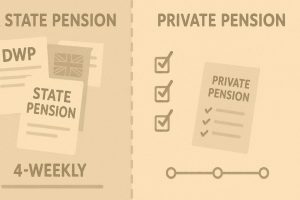
The structure and frequency of State Pension payments are different from private pension schemes, which are usually offered through employers or personal savings plans.
Here is a comparison:
| Feature | UK State Pension | Private Pensions |
| Payment Frequency | Every four weeks | Monthly, quarterly, or lump sum options |
| Payment Timing | In arrears | Can be in advance or arrears |
| Payment Control | Fixed by DWP | Often flexible, based on plan terms |
| Payment Method | Direct deposit | Bank transfer, drawdown, or annuity |
| Taxation | Taxable income | Taxable based on drawdown and thresholds |
Private pensions may offer more flexibility in how and when you receive your funds. Some allow you to take a lump sum at retirement, while others provide a steady monthly income.
In contrast, the State Pension offers a structured, consistent payment based on your National Insurance contribution history and the government’s eligibility criteria.
What Should You Do If You Haven’t Received Your Payment?
If your pension payment does not arrive on the expected date, there are several steps you should take to resolve the issue promptly.
- First, check your bank account and wait one full working day
- Contact your bank to ensure there are no issues with your account
- Reach out to the Pension Service helpline or use GOV.UK’s support services
- Have your NI number and payment details ready when making enquiries
In most cases, delays are temporary and easily resolved, especially if caused by bank holidays or minor processing issues. However, keeping your details up to date and checking your payment schedule regularly can help prevent disruptions.
Conclusion
Understanding that the UK State Pension is paid in arrears helps pensioners plan their finances effectively. By knowing when and how much you’ll be paid, and which day your payment arrives, you can better manage bills, direct debits, and other living expenses.
Staying informed through official channels like GOV.UK and the DWP ensures you always have the most accurate information about your retirement income.
Frequently Asked Questions
Does the UK State Pension ever get paid in advance?
Only in exceptional cases, such as bank holidays or administrative adjustments. Standard payments are always made in arrears.
How do I find out my pension payment date?
It is based on the last two digits of your National Insurance number. This information is provided by DWP when your claim is processed.
Can I change the day I get paid?
No. The payment day is fixed and depends on your National Insurance number. It cannot be altered.
What if my payment date falls on a bank holiday?
The payment will be made on the last working day before the bank holiday to ensure no disruption in your income.
Why was my first pension payment less than expected?
This is usually due to a partial payment, which covers the time between your entitlement start date and the next full four-week cycle.
Are pension payments taxed?
Yes, your State Pension is classed as taxable income. However, no tax is deducted at source it’s usually collected via PAYE through other income sources.
How do I contact DWP about a missing payment?
You can call the Pension Service helpline at 0800 731 7898 or use the contact forms available on the GOV.UK website.