Many people in the UK who are living with long-term illnesses or disabilities often ask whether Incapacity Benefit and Personal Independence Payment (PIP) are the same.
While both are linked to health-related support, these two benefits are fundamentally different in purpose, eligibility, and structure.
This article provides a comprehensive, professional breakdown of the differences between Incapacity Benefit and PIP, their roles within the UK welfare system, and what claimants need to know.
What Was Incapacity Benefit and Why Was It Replaced?
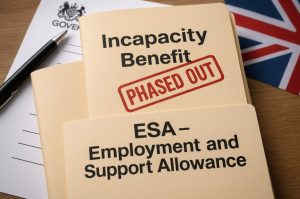
Incapacity Benefit was a benefit designed to support individuals who were unable to work due to illness or disability.
It was introduced in 1995 and replaced the earlier Invalidity Benefit. This payment was available to people under State Pension age who had paid enough National Insurance contributions and who could not work because of a health condition.
The benefit was awarded based on medical evidence and the outcome of the Personal Capability Assessment, a test that determined whether a person was fit for work.
The focus was on the claimant’s inability to work rather than their daily living needs or mobility challenges.
Over time, the government decided to reform the benefits system to make it more streamlined and work-focused. In 2008, Incapacity Benefit was replaced by Employment and Support Allowance (ESA).
The aim of this reform was to encourage those with some work capacity to eventually return to employment, where possible, while still providing financial support.
What Is PIP and Who Is It Designed For?
Personal Independence Payment (PIP) is a disability benefit introduced in 2013 to replace Disability Living Allowance (DLA) for working-age adults.
Unlike Incapacity Benefit, which was designed to replace income for people who couldn’t work, PIP is not based on the ability to work.
Instead, it is aimed at helping people cope with the extra costs of living with a long-term illness or disability.
PIP is available to individuals aged between 16 and State Pension age. It is made up of two components:
- Daily Living Component: For people who need help with everyday tasks such as preparing meals, dressing, or managing medication
- Mobility Component: For individuals who struggle with moving around or planning and following journeys
Each component is paid at either a standard or enhanced rate depending on how much assistance the person requires.
PIP is not means-tested and is not based on National Insurance contributions. This means that individuals can receive PIP regardless of their income or employment status.
How Does PIP Differ from Incapacity Benefit?

Although both Incapacity Benefit and Personal Independence Payment (PIP) are health-related benefits, they serve entirely different functions within the UK’s social security system.
Understanding the distinctions is essential, especially for individuals who may have received Incapacity Benefit in the past and are now exploring support options like PIP.
Purpose and Core Objective
The primary purpose of Incapacity Benefit was to replace income for individuals who were medically certified as unable to work due to illness or disability.
It was aimed at ensuring people had a basic level of financial support while they were excluded from the labour market for health reasons.
PIP, on the other hand, is not an income-replacement benefit. Instead, it exists to help cover the extra costs that individuals with a long-term disability or health condition may face in daily life or while getting around. These costs might include:
- Assistance with personal care
- Support for mobility aids or transport
- Additional household costs due to their condition
This fundamental difference in purpose makes it clear that PIP is not a direct replacement for Incapacity Benefit.
Eligibility and Assessment Focus
Incapacity Benefit was granted to people who met specific medical criteria and had paid enough National Insurance contributions.
The benefit was largely tied to a person’s work capability, assessed through a Personal Capability Assessment. If the assessment determined that the individual could not reasonably be expected to work, they would be eligible.
PIP, however, uses a functional assessment model. It is based not on whether someone can work, but on how much help they need with:
- Daily living activities such as dressing, eating, managing medication
- Moving around and planning or following a journey
Applicants are assessed using a points-based system, where points are awarded according to the degree of difficulty they experience in completing specific tasks. A certain number of points is required to qualify for either the standard or enhanced rate of PIP.
Financial Structure and Payment Rules
Incapacity Benefit was paid at a fixed rate, depending on the length of time the claimant had been unable to work and their age at the start of the claim. Additional increments could apply based on age or dependency status, but the structure remained relatively uniform.
PIP, by contrast, is split into two components:
- Daily Living Component
- Mobility Component
Each component is paid at either a standard or enhanced rate, depending on the number of points awarded during assessment. This makes PIP more tailored to individual needs and the specific impact of a condition on daily life.
Another major difference is that PIP is not means-tested, nor is it taxable. It is also not affected by income or savings, whereas Incapacity Benefit, while not directly means-tested, was only available to those with a history of National Insurance contributions.
Working and Receiving Benefits
One of the most notable limitations of Incapacity Benefit was that it was intended for people not in work. Claimants were expected to be out of employment due to their health condition. Returning to work often meant losing the benefit entirely.
PIP, however, is designed to run alongside work, allowing individuals to maintain employment while still receiving financial support for their additional needs.
This supports the government’s broader aim of enabling people with disabilities to live independently and, where possible, participate in the workforce.
Integration with Other Benefits
When Incapacity Benefit was active, it could not be received alongside certain other benefits, and it often conflicted with income-based supports.
Following its replacement, individuals were typically migrated to Employment and Support Allowance (ESA), which similarly focuses on work capability.
PIP is designed to complement other benefits, including ESA and Universal Credit. A person can receive PIP alongside these, as the benefit is focused on needs-based support, not income replacement.
Comparison Table
To better illustrate the distinctions between the two benefits, the following table provides a detailed side-by-side comparison:
| Feature | Incapacity Benefit | Personal Independence Payment (PIP) |
| Primary Purpose | Replace income for those unable to work | Cover extra costs of living with a disability |
| Basis for Eligibility | Medical inability to work | Difficulty with daily living or mobility |
| Assessment Focus | Capability to work | Functional ability in everyday tasks |
| Payment Structure | Flat rate, varies by age and claim duration | Two components, each with two payment levels |
| Means-tested or Not | No (but required NI contributions) | Not means-tested or contribution-based |
| Affected by Work Status | Yes, cannot be in paid work | No, can be received while working |
| Current Availability | Discontinued | Active and replacing DLA |
| Associated Benefits | Replaced by ESA | Can be claimed with ESA or Universal Credit |
Can You Receive PIP if You Were on Incapacity Benefit?
When Incapacity Benefit was discontinued, most claimants were reassessed and moved to ESA. This transition was not automatic and involved a Work Capability Assessment to determine eligibility.
PIP is entirely separate from Incapacity Benefit or ESA. However, individuals who were moved from Incapacity Benefit to ESA can still apply for PIP, provided they meet the criteria. The two benefits can be received together because they serve different purposes.
PIP is designed to cover additional living and mobility needs, while ESA is a form of income support for those unable to work due to health conditions.
Therefore, someone who was formerly on Incapacity Benefit and now receives ESA may also be entitled to PIP, if they have difficulties with personal care or mobility.
What Are the Eligibility Criteria for PIP Compared to Incapacity Benefit?
The eligibility requirements for Incapacity Benefit and PIP are structured around different principles.
Incapacity Benefit was contribution-based and focused on the person’s ability to work. PIP, in contrast, is based on how a person’s condition affects their day-to-day functioning and mobility.
Eligibility for Incapacity Benefit included
- Being under State Pension age
- Having a medical condition or disability that prevents working
- Meeting National Insurance contribution conditions
- Passing the Personal Capability Assessment
Eligibility for PIP includes
- Aged 16 to State Pension age
- Having a long-term physical or mental health condition
- Experiencing difficulties with daily living or mobility
- Being affected for at least three months and expecting it to last at least nine more months
- Passing a functional assessment where points are awarded
PIP uses a points-based system to determine eligibility. Each task or activity (such as preparing food, managing treatment, or moving around) is assessed to determine how much help the person needs.
How Does the Assessment Process Work for PIP?
The PIP assessment process is more detailed and functional than that used for Incapacity Benefit. While Incapacity Benefit focused on whether the person could work, PIP assessments examine how a person’s condition affects specific aspects of their life.
The steps involved in the PIP assessment process are as follows:
- Initial Claim: The claimant contacts the Department for Work and Pensions (DWP) to begin the claim.
- PIP2 Form: This form requires the applicant to describe how their condition affects their daily life and mobility.
- Medical Evidence Submission: Claimants can include GP notes, hospital records, and prescription histories.
- Health Assessment: Conducted by a DWP-contracted healthcare professional, often via phone or face-to-face.
- Points Scoring: Based on responses and evidence, the DWP assigns points to different activities.
- Decision Letter: A formal letter is sent confirming whether the applicant is entitled to PIP and at what rate.
Here’s an overview of how points are awarded during the assessment:
| Activity Type | Standard Rate (8–11 points) | Enhanced Rate (12+ points) |
| Daily Living | Tasks like dressing, eating, managing medication | Awarded if high support needs are evident |
| Mobility | Includes physical movement and journey planning | Assessed based on distance and safety |
The assessment takes into account both physical and mental health issues. People are often reassessed periodically, especially if the DWP believes their condition may change.
What Benefits Replaced Incapacity Benefit in the UK?

Incapacity Benefit was officially replaced by Employment and Support Allowance (ESA). The government introduced ESA to encourage a more supportive and work-focused system that differentiates between those who can return to work and those who cannot.
ESA is divided into:
- Contribution-Based ESA: For those who meet the National Insurance requirements
- Income-Related ESA: For those with low or no income (now gradually replaced by Universal Credit)
Under ESA, individuals are placed into one of two groups:
- Work-Related Activity Group (WRAG): Expected to prepare for a return to work
- Support Group: Not expected to work due to the severity of their condition
PIP is separate from ESA and was introduced to cover areas of daily living and mobility that ESA does not. While ESA focuses on ability to work, PIP focuses on managing the practical impacts of disability.
Is PIP Better Financial Support Than Incapacity Benefit?
The answer depends on what type of support an individual needs. Incapacity Benefit provided a flat income replacement but did not account for specific daily living needs or mobility challenges. PIP offers more targeted financial assistance based on the individual’s lifestyle impact.
Advantages of PIP over Incapacity Benefit include:
- Can be received while working, making it more flexible
- Covers specific needs related to personal care and mobility
- Based on impact rather than income or contributions
- Not taxable and unaffected by savings or earnings
However, the PIP assessment process can be more complex and demanding. The strict points-based system means that some people may not qualify even if they have a long-term condition. This has led to criticism and a number of appeals.
For those who previously relied on Incapacity Benefit, transitioning to ESA and claiming PIP as an additional benefit can offer more comprehensive support.
How Can You Apply for PIP in the UK Today?
To apply for PIP, individuals should:
- Contact the PIP claim line on 0800 917 2222
- Complete the PIP1 application form by phone
- Receive the PIP2 form to describe how the condition affects daily life
- Submit supporting medical documents
- Attend a health assessment conducted by an independent professional
- Await the decision, usually made within 12 to 18 weeks
Applicants should ensure that their forms are filled in accurately and that all relevant supporting documents are provided. Seeking help from a benefits advisor or local welfare organisation can improve the chances of success.
What Should You Do If You’re Still Receiving Incapacity Benefit?

If someone believes they are still receiving Incapacity Benefit, it’s important to confirm this with the Department for Work and Pensions. In most cases, people have already been moved to ESA. If someone is unsure:
- Check benefit award letters for the name of the benefit
- Contact DWP for clarification
- If receiving ESA but facing challenges in daily life or mobility, consider applying for PIP
Being proactive about reassessing benefits can ensure that individuals receive all the support they are entitled to under the current welfare structure.
Conclusion
Incapacity Benefit and PIP are not the same, and they serve entirely different purposes. Incapacity Benefit supported those unable to work due to illness, while PIP is focused on helping people manage the additional costs of living with a disability or long-term condition.
With Incapacity Benefit now obsolete, the benefits landscape has shifted. ESA and PIP are now the primary forms of support depending on your circumstances.
It’s vital to understand how these benefits work and seek guidance when navigating the UK benefits system.
FAQs About Incapacity Benefit and PIP
Can I still apply for Incapacity Benefit?
No, Incapacity Benefit is no longer available. It has been fully replaced by Employment and Support Allowance (ESA).
Can I receive both PIP and ESA?
Yes, if you meet the eligibility criteria for both, you can claim PIP and ESA at the same time, as they serve different purposes.
Do I need a diagnosis to claim PIP?
You don’t need a formal diagnosis, but you do need medical evidence showing how your condition affects daily living and mobility.
Is PIP taxable or affected by savings?
PIP is non-taxable and not affected by income or savings. It is designed to cover the extra costs of living with a disability.
How long does a PIP decision take?
It can take between 12 to 18 weeks to receive a decision after applying, depending on assessment availability and evidence provided.
Can I challenge a PIP decision?
Yes, if you’re unhappy with the outcome, you can request a Mandatory Reconsideration and, if necessary, appeal to a tribunal.
What happens during a PIP assessment?
The assessment looks at how your condition affects your ability to perform daily activities and mobility. It may involve questions, physical tests, or observation.