Understanding entries on your bank statement can sometimes be confusing, especially when they appear as acronyms or codes. One such entry that often raises questions is “DWP AA”.
This blog will explore what it means, why you’re receiving it, and everything else you need to know about the Attendance Allowance from the Department for Work and Pensions (DWP).
What Does “DWP AA” Mean On A Bank Statement?
When the code DWP AA appears on a bank statement, it signifies a payment made by the Department for Work and Pensions (DWP) for Attendance Allowance. This is a non-means-tested benefit given to individuals over State Pension age who have a long-term illness, disability, or mental health condition requiring care or supervision.
The payment is issued via Automated Credit Transfer (ACT) directly into the bank account of the individual who qualifies. For many, the label “DWP AA” may appear without prior knowledge, especially when the claim has been managed by a carer or family member.
In most cases, this payment is legitimate and reflects a successful claim or backdated benefit.
Who Is Eligible To Receive Attendance Allowance Payments?
To be eligible for Attendance Allowance, applicants must satisfy a number of conditions based on age, health, and residency. This benefit is targeted at those who have care needs but do not necessarily need to have a carer in place.
Key Eligibility Criteria Include:
- Being over State Pension age
- Having a disability, illness or mental health condition that requires care or supervision
- Needing assistance with personal care or being supervised for safety reasons
- Having experienced the care need for at least six months
- Meeting residency and immigration requirements
Applicants do not need to have a formal diagnosis or be receiving care services to apply. Additionally, income and savings are not considered, which makes it a particularly accessible benefit.
How Does The Department For Work And Pensions Process AA Payments?
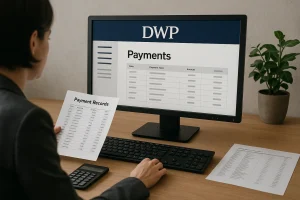
The DWP processes Attendance Allowance payments by transferring funds directly into a claimant’s bank or building society account. Payments are typically made every four weeks and will appear as “DWP AA” on statements.
This benefit is available at two rates, depending on the level of care the individual requires.
Weekly Payment Rates For Attendance Allowance
| Rate | Criteria For Payment | Weekly Amount |
| Lower Rate | Frequent help or supervision during the day, or supervision at night | £73.90 |
| Higher Rate | Help or supervision throughout both day and night, or terminal illness | £110.40 |
In some cases, if a person is nearing the end of life, the DWP may fast-track the claim and automatically award the higher rate.
Payments do not need to be spent on care itself and can be used for general living expenses, adaptations to the home, or hiring personal support if desired.
Why Might Someone See A DWP AA Payment Unexpectedly?
There are cases where individuals may notice a DWP AA payment in their bank account even though they did not recall applying for the Attendance Allowance themselves. This can understandably raise concerns or confusion, especially for those who do not routinely manage their benefits.
Claim Made On Behalf Of The Recipient
In some situations, a family member, friend, or official appointee may submit a claim on behalf of the individual needing care. If the person lacks capacity or prefers support in managing financial matters, it is common for representatives to take responsibility for the application without the claimant directly handling the paperwork.
This can result in a payment appearing without the recipient being fully aware of the claim’s progress.
Backdated Payments Following Approval
The DWP often processes back payments for Attendance Allowance once a claim is approved. These are designed to cover the period from the date of application to the date the regular payment cycle begins.
This lump-sum amount may appear as a larger-than-usual payment and could span several weeks or months, depending on how long the claim took to process.
Fast-Track Claims For Terminal Illness
If someone is diagnosed with a life-limiting condition, a fast-track claim may be submitted under the Special Rules for End of Life. This bypasses the standard waiting periods and can result in a higher rate of Attendance Allowance being awarded almost immediately.
In such cases, the individual or their relatives may not have been expecting the payment to come through so quickly.
Administrative Or System Errors
Although rare, there can be cases of misallocated payments due to clerical errors or incorrect account details. An individual may see a DWP AA entry if:
- Their details were accidentally used in another person’s claim
- The DWP issued a duplicate payment
- An old claim was reinstated in error
Whenever there is doubt, it is essential to contact the DWP directly to verify the nature and source of the payment.
How Does Attendance Allowance Differ From Other DWP Benefits?

Attendance Allowance differs from other DWP disability-related benefits in eligibility, purpose, and structure. It is designed specifically for those who are over State Pension age and focuses on the need for care or supervision, not mobility.
Comparison Of Attendance Allowance And Other Disability Benefits
| Feature | Attendance Allowance | Personal Independence Payment (PIP) | Carer’s Allowance |
| Age Group | Over State Pension | 16 to State Pension | 16+ |
| Covers Mobility Needs | No | Yes | No |
| Means-Tested | No | No | Yes |
| Paid To | Person needing care | Person needing care | Carer |
| Maximum Weekly Payment | £110.40 | £101.75 (daily living) | £81.90 |
| Requires Supervision Or Help | Yes | Yes | Yes (to qualify) |
Unlike PIP or DLA, Attendance Allowance does not include a mobility component, nor is it available to those under State Pension age.
What Should You Do If You Don’t Recognise A DWP AA Payment?
If you see a DWP AA on bank statement entry that you do not recognise, the most important step is to investigate its origin promptly. This ensures that any genuine claims are acknowledged and that possible errors or fraud are addressed quickly.
Check Recent Communications From The DWP
Start by reviewing letters, emails, or text messages you may have received from the DWP. They usually send a decision notice upon approval of a benefit claim. These communications can confirm whether:
- A claim was recently processed
- Back payments were included
- Future payment schedules are in place
Also, check with any relatives or carers who may have been involved in helping with a claim.
Speak To Family Members Or Appointees
If you have a family member or carer who helps manage your affairs, it is worth checking with them to see if they submitted an application on your behalf. Many Attendance Allowance applications are made by a Power of Attorney or someone who has appointee status from the DWP.
This is common when the claimant is elderly or dealing with cognitive or physical impairments.
Contact The Department For Work And Pensions
If no explanation is apparent, you should contact the DWP using the details on their official website. When calling, have the following ready:
- Your National Insurance number
- The exact payment amount
- The date the payment appeared
- Any reference codes shown on the bank statement
The DWP will use this information to trace the payment and explain why it was issued.
Report Potential Fraud Or Incorrect Payments
If you suspect that the payment is a fraudulent claim made in your name or a genuine payment sent to the wrong person, it is essential to report it. This helps protect your identity and ensures that public funds are distributed correctly.
You can report suspected benefit fraud online or via the DWP’s National Benefit Fraud Hotline.
Can A Carer Receive Payments From The Attendance Allowance?

Attendance Allowance is always paid to the individual with the health condition, not directly to their carer. However, the existence of an AA claim can impact other benefits.
If a person receiving AA requires substantial care, their carer may be eligible to receive Carer’s Allowance, provided they meet separate criteria.
Key points about this interaction:
- AA does not require a carer to be in place
- The carer cannot claim AA, but may receive Carer’s Allowance
- Receiving AA may increase entitlement to Pension Credit, Housing Benefit, or Council Tax Reduction
In households with multiple benefit claims, understanding how they interconnect is important. The individual claiming AA remains in control of how they use their benefit, whether it goes towards professional carers or supports informal care arrangements.
Conclusion
Seeing an unfamiliar “DWP AA” entry on your bank statement can cause confusion, but understanding what it means is key to managing your finances or supporting a loved one. It represents financial support for those with significant care needs and can make a vital difference in the quality of life for many people across the UK.
If you or someone you know may be eligible, check the official GOV.UK site or speak to a local adviser to ensure you’re not missing out on valuable assistance.
FAQs about DWP AA on bank statements
What is the difference between DWP AA and PIP?
Attendance Allowance is for people over State Pension age, while PIP is for those under State Pension age. PIP includes a mobility component, while AA does not.
How often is Attendance Allowance paid?
It is usually paid every four weeks, although some people nearing the end of life may receive weekly payments.
Can Attendance Allowance be backdated?
Yes, claims can be backdated to the date the DWP receives your form, especially if you were already eligible when you applied.
Does Attendance Allowance affect other benefits?
Yes. Receiving AA can increase Pension Credit and Housing Benefit, but it does not reduce other benefits like your State Pension.
Do you need a carer to claim Attendance Allowance?
No, having a carer is not a requirement. The benefit is based on your need for care or supervision, not whether someone provides it.
Can you receive AA and PIP at the same time?
No, you cannot receive both. If you are receiving PIP or DLA, you cannot receive Attendance Allowance at the same time.
How is Attendance Allowance assessed?
An assessment may be requested if your application doesn’t provide enough evidence. This is typically a face-to-face meeting with a medical professional.