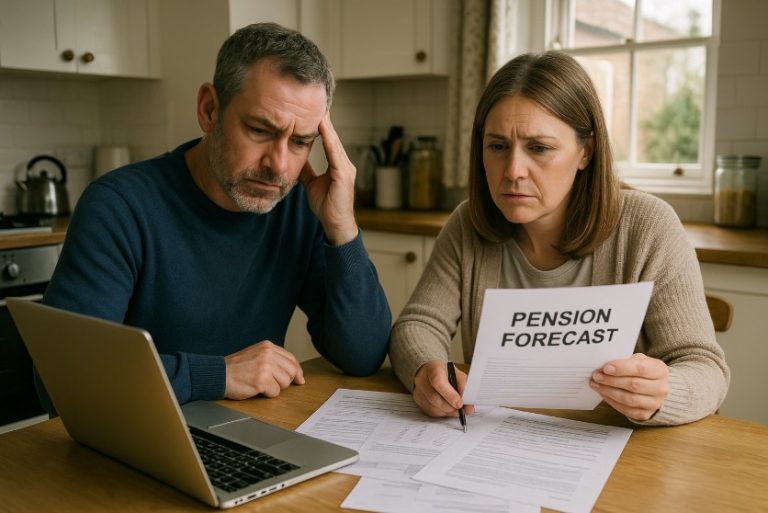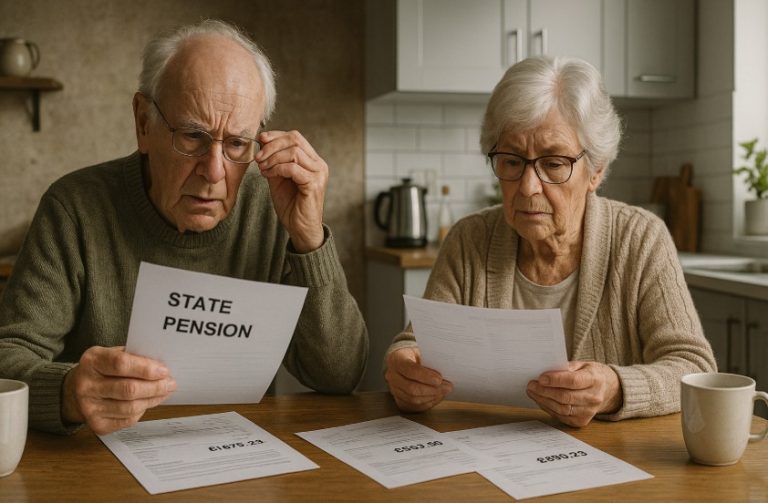
In recent months, growing concern has emerged over whether state pensions in the UK are set to become taxable. Following the Chancellor’s Autumn Statement and subsequent clarification on ITV’s Martin Lewis Money Show Live, many pensioners are seeking answers.
With the full new State Pension set to surpass the personal tax-free allowance by 2027, the question on everyone’s mind is: Is the state pension being cut, or are pensioners just facing new tax burdens?
In a clear and candid exchange between financial expert Martin Lewis and the Chancellor, Rachel Reeves, reassurance was given to millions of pensioners.
For now, those who rely solely on the State Pension will not have to pay income tax or submit tax returns during this Parliament. However, beyond that period, the future remains uncertain.
Let’s explore what this all means for pensioners and what lies ahead.
What Did the Chancellor Say About State Pension and Income Tax?
During a Budget special episode of The Martin Lewis Money Show Live, Martin Lewis questioned the Chancellor about a growing concern among older citizens.
He relayed a question from a viewer about whether her 85-year-old father, who only receives the State Pension and is living with dementia, would be required to complete a tax return once his pension income exceeds the personal tax-free threshold.
Chancellor Rachel Reeves responded unequivocally. She stated that pensioners whose only income is the State Pension will not have to pay income tax during this Parliament, and they would not need to submit tax returns.
This commitment applies regardless of whether the pension rises above the personal allowance threshold during the next few years.
“We are not going to make you fill in a tax return,” said Reeves. “In this Parliament, they won’t have to pay the tax.”
Martin Lewis clarified: “So that’s really good to have clarity that they won’t be paying the tax.”
Will State Pension Increases Push Pensioners Over the Tax-Free Allowance?
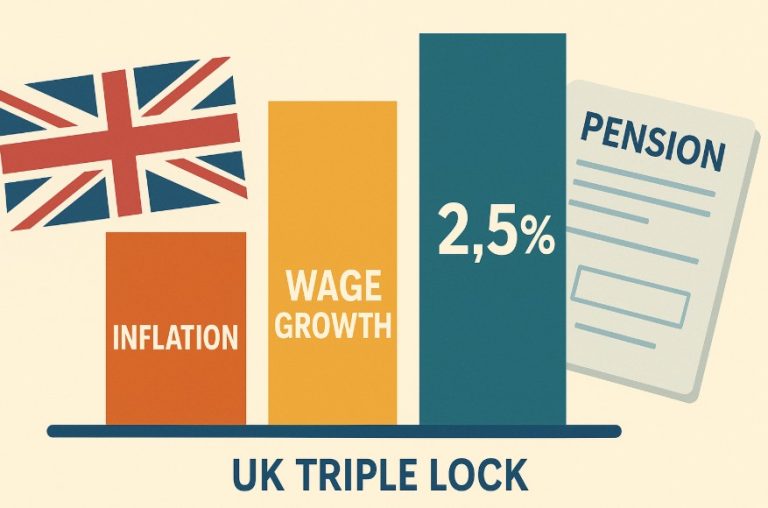
The issue has arisen because of the projected growth of the State Pension under the government’s triple lock guarantee. This policy ensures that the State Pension increases each April by whichever is highest out of:
- The rate of inflation (measured by CPI)
- Average earnings growth
- A guaranteed minimum of 2.5%
Due to recent earnings growth of 4.8%, the full new State Pension will increase significantly from April 2026.
Currently set just under £11,500 per year, this amount is edging closer to the income tax personal allowance of £12,570.
If the triple lock continues to deliver annual increases, the State Pension is expected to exceed the personal allowance by April 2027.
This scenario means that pensioners who rely solely on the State Pension could become liable to pay income tax, not because they are receiving more income in real terms, but because the tax threshold has remained frozen for several years.
Below is a projection of how the State Pension may increase in relation to the personal allowance:
| Year | Full New State Pension (Annual) | Personal Allowance | Difference | Tax Payable |
| 2025/26 | £11,502 | £12,570 | -£1,068 | No |
| 2026/27 | £12,048 (est. 4.75% increase) | £12,570 | -£522 | No |
| 2027/28 | £12,625 (est. 4.8% increase) | £12,570 | +£55 | Yes |
If current trends continue, by 2027/28, pensioners receiving the full new State Pension will earn slightly more than the tax-free allowance, triggering a requirement to pay income tax on the surplus.
Do Pensioners Have to Submit a Tax Return?
Under the current tax framework, individuals are typically not required to submit a tax return if they are employed or retired and their tax is managed via PAYE.
However, this can change when total annual income exceeds the personal allowance or comes from various sources.
The recent announcement by the Chancellor makes it clear that pensioners whose sole income is from the State Pension will not need to file a self-assessment tax return during this Parliament.
This is particularly important for elderly pensioners or those suffering from conditions such as dementia, where handling financial paperwork can be a serious burden.
For those with additional income streams, including private pensions or savings, the situation is more complex.
While a tax return may not be mandatory in all cases, HMRC may still adjust tax codes or issue a P800 tax calculation notice.
Key points regarding tax returns for pensioners:
- No tax return is required for pension-only income during this Parliament
- Pensioners with multiple income streams may receive adjusted tax codes
- HMRC could request further information via other methods, even without formal self-assessment
How Does the Triple Lock Affect Future State Pension Increases?
The triple lock is a long-standing policy mechanism that plays a pivotal role in how State Pension payments are calculated in the UK.
It was introduced in 2010 to ensure that pensions would rise in real terms and maintain their value against the increasing cost of living.
Over time, this guarantee has significantly influenced the value of the State Pension, but its interaction with a frozen personal tax allowance is now causing concern.
The mechanics of the triple lock
Under the triple lock system, the State Pension rises each year by the highest of the following three measures:
- The Consumer Prices Index (CPI) inflation rate from the previous September
- Average earnings growth from May to July of the prior year
- A minimum guaranteed increase of 2.5%
The purpose of this structure is to protect pensioners from losing purchasing power, particularly during times of inflation or wage growth. When one of the indicators exceeds the others, it is used as the benchmark for the State Pension increase.
Recent impact of triple lock increases
Over the past three years, the triple lock has delivered considerable increases in the State Pension, largely driven by spikes in inflation and sharp rises in average earnings. This has benefited many pensioners but also brought about unintended consequences.
One such consequence is that the pension is now close to exceeding the tax-free personal allowance, a threshold that has remained unchanged since 2021.
Below is a summary of recent triple lock outcomes:
| Year | CPI Inflation | Average Earnings Growth | Pension Increase Chosen |
| 2023/24 | 10.1% | 6.0% | 10.1% (CPI) |
| 2024/25 | 6.7% | 8.5% | 8.5% (Earnings) |
| 2025/26 | 3.8% | 4.8% | 4.8% (Earnings) |
The consistent use of average earnings growth as the dominant factor in pension calculations has seen the State Pension rising rapidly, narrowing the gap with the personal allowance.
The emerging conflict with personal tax thresholds
As of the 2025/26 tax year, the full new State Pension stands at approximately £11,502 annually. The personal allowance, which determines how much a person can earn before they are taxed, remains frozen at £12,570.
Projections suggest that by April 2027, the State Pension will surpass this threshold due to continued triple lock increases.
This puts pensioners at risk of becoming taxable purely because their pension income exceeds the allowance. It’s a scenario that was never intended when the triple lock was introduced, and it raises broader questions about the sustainability of current tax and pension policies.
Government responses to this issue have so far been limited. While the Chancellor has confirmed that those with only a State Pension will not pay income tax during this Parliament, there is no commitment beyond that period.
Unless the personal allowance is increased or an exemption is created for State Pension income, millions of pensioners may face new tax liabilities.
Could Future Governments Reverse This Tax-Free Promise?
The commitment not to tax the State Pension applies only to this Parliament. Beyond that, there are no guarantees.
While Martin Lewis pressed for long-term assurances, the Chancellor was careful not to make promises that extend beyond the next general election.
“Further out, I’m not about to make any commitments on that,” Reeves said.
This means that future administrations could change policy, potentially taxing State Pensions that exceed the personal allowance. Pensioners, therefore, may need to be alert to changes in government and fiscal policy as 2027 approaches.
What Happens If You Have Other Sources of Retirement Income?
While the Chancellor’s recent statement provides reassurance for those who rely solely on the State Pension, many pensioners in the UK draw income from multiple sources. For this group, the tax situation is more complex, and the risk of exceeding the personal allowance is greater.
Types of retirement income beyond the State Pension
In addition to the State Pension, retirees often receive income from the following:
- Private pensions, including workplace schemes and personal pension plans
- Investments, such as dividend-paying shares or savings interest
- Property income from rental homes or lodgers
- Part-time employment or freelance work
- Annuities or drawdown pensions from retirement funds
Each of these income sources is assessed by HMRC as part of an individual’s total taxable income. The State Pension is included in this total, even though it is usually paid gross (i.e., without tax being deducted at source).
Tax implications of combined retirement income
When a person receives more than one income stream in retirement, their total income may easily exceed the personal allowance.
In such cases, income tax is payable on the amount above the threshold. Tax is typically collected in one of the following ways:
- Through PAYE (Pay As You Earn) if income is paid via a pension provider or employer
- Through a Self Assessment tax return, particularly if income is irregular or from property
- By adjusting tax codes to ensure that sufficient tax is collected during the year
Here is a breakdown of common retirement income scenarios and how they may be taxed:
| Income Type | Example Annual Income | Tax Status | Collection Method |
| Full State Pension | £11,502 | Taxable if over allowance | Often not taxed at source |
| Private Pension (Defined Benefit) | £4,000 | Taxable | PAYE or tax code |
| Savings Interest | £600 | Partially taxable | Automatic deduction |
| Rental Income | £3,000 | Taxable | Self Assessment likely |
| Part-Time Work | £2,500 | Taxable | PAYE |
A retiree receiving both the State Pension and a modest private pension could easily exceed the allowance, creating a tax liability even before considering other income.
How tax obligations are managed by HMRC?
For most pensioners with straightforward income, tax obligations are managed through the PAYE system. HMRC uses tax codes to calculate how much should be deducted from private pensions or other taxable sources. This helps to avoid underpayments or the need for a tax return.
However, for those with more complex income — particularly self-employment or property rental — a Self Assessment return may be required. Pensioners in this category should be aware of deadlines and keep accurate records to ensure compliance.
Managing retirement income effectively
To stay ahead of tax obligations, pensioners with varied income streams should consider the following steps:
- Regularly review all sources of income to monitor if the personal allowance is likely to be exceeded
- Use HMRC’s Personal Tax Account to view current tax codes and tax history
- Notify HMRC of any significant changes in income, such as starting to receive a private pension or rental income
- Consult with a financial adviser or tax professional, particularly if income is irregular or derived from multiple sources
Being proactive can help pensioners avoid unexpected tax bills, especially as the tax-free allowance remains frozen. Understanding the interaction between different income types is essential for financial planning during retirement.
What Should Pensioners in the UK Be Aware of by 2027?

Looking ahead to 2027, several key developments are likely to affect how State Pensions are taxed.
The most pressing is the fact that, under current projections, the State Pension will surpass the tax-free threshold, thereby generating tax obligations for recipients unless policy changes are introduced.
To prepare for these changes, pensioners should:
- Review their total income annually, not just the State Pension
- Monitor the Autumn Budget and Spring Statement for updates to tax policy
- Make use of government services such as the Pension Forecast Tool and HMRC’s Personal Tax Account
- Consult independent financial advisers if unsure about tax implications
Charities like Age UK and Citizens Advice can also offer free support for those unfamiliar with the tax system.
Taking proactive steps before 2027 will help pensioners avoid unexpected tax bills and ensure compliance with HMRC regulations.
Are There Other Pension Reforms Coming in the UK?
In addition to potential tax changes, several broader reforms are being discussed in relation to the UK pension system. These include:
- Raising the State Pension age in response to increased life expectancy
- Expanding automatic enrolment into workplace pensions to include younger workers and those on lower incomes
- Simplifying National Insurance thresholds to support fairer contributions across income levels
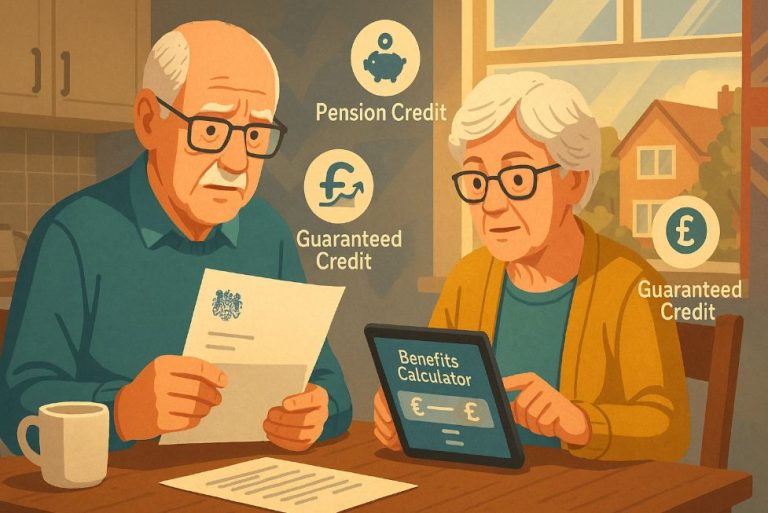
- Streamlining pension credit access for low-income pensioners
The government is also assessing the long-term affordability of the triple lock. While the policy remains popular among older voters, its sustainability is questioned by some economists who argue that it places increasing pressure on public finances.
Understanding the wider pension landscape is essential for anyone planning for retirement, especially as reforms may alter the way income is calculated and taxed in the future.
Conclusion
No, the State Pension is not being cut. In fact, it is rising above inflation in line with the triple lock guarantee.
However, because the personal tax-free allowance has been frozen, some pensioners may become liable for income tax for the first time in 2027.
Thanks to the Chancellor’s recent confirmation, those whose only income is the State Pension will not pay income tax or be required to file a tax return during this Parliament.
While this offers short-term peace of mind, the situation after the next general election remains uncertain.
Pensioners are encouraged to stay engaged with financial updates, understand their income situation, and seek guidance if needed.
FAQs
Will the state pension always stay tax-free in the UK?
Not necessarily. The current government has pledged not to tax pension-only recipients during this Parliament, but future policies may change.
What is the current personal tax-free allowance for pensioners?
As of now, the personal allowance is £12,570 annually, regardless of age or employment status.
What happens if my total income just exceeds the allowance?
You’ll be taxed on the amount over £12,570. HMRC may adjust your tax code or request a tax return depending on your income sources.
Is Martin Lewis’s advice legally binding for pension planning?
No, but Martin Lewis is a trusted financial expert. His advice is based on government statements and helps interpret them for the public.
How is the triple lock calculated every year?
The triple lock uses the highest of CPI inflation, average earnings growth, or 2.5% to set the annual increase.
Are private pensions affected by the Chancellor’s announcement?
No. The announcement only applies to those whose only income is the State Pension. Other income sources may still be taxable.
Do I need to report my pension income to HMRC?
Only if your income exceeds the personal allowance or if you receive multiple income sources. Otherwise, most pensioners don’t need to file a return.