The Department for Work and Pensions (DWP) has reassured millions of Personal Independence Payment (PIP) claimants that their entitlement to key benefits such as Blue Badges, free bus travel, and Carer’s Allowance will remain unchanged.
This clarification comes amid proposed welfare reforms, prompting widespread concern about the future of disability support in the UK.
With the government confirming continuity for existing recipients, individuals and carers depending on these essential services can expect ongoing support through the current benefits framework.
What Did the DWP Announce About PIP and Related Benefits?
The Department for Work and Pensions (DWP) has addressed growing concerns around the stability of disability-related benefits by confirming that individuals currently receiving Personal Independence Payment (PIP) will continue to access key support services.
This announcement, made during a parliamentary session, provides much-needed reassurance for millions of claimants relying on these essential forms of assistance.
DWP Reassures Claimants Amid Welfare Reform Proposals
In light of proposed reforms to the welfare system, questions were raised about how changes might affect those receiving PIP, especially in terms of benefits connected to mobility and care.
During a House of Commons session, Labour MP Dr Lauren Sullivan highlighted PIP’s role as a “passport” to other vital services and asked for clarity on the government’s position.
Work and Pensions Secretary Liz Kendall confirmed that all current PIP claimants would retain their existing benefits.
She explained that even if a reassessment takes place in the future, it would not result in a loss of access to related services such as Carer’s Allowance or travel benefits.
This assurance directly addresses the fears of those who rely on PIP to maintain their independence and financial stability, especially in cases where access to transport and daily support is directly linked to this benefit.
Access to Passport Benefits Remains Protected
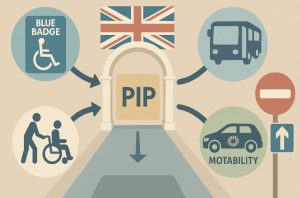
One of the most important aspects of Kendall’s announcement is the confirmation that passported benefits, those automatically granted based on PIP eligibility, will remain protected. These include:
- The Blue Badge scheme, which offers priority parking and improved access for individuals with mobility difficulties
- Concessionary travel schemes, such as free bus passes, often granted by local councils
- Carer’s Allowance, a financial benefit provided to those caring for individuals receiving the daily living component of PIP
Kendall emphasised that all of these benefits would continue to be available to current recipients, even if they are subject to future reassessments under proposed policy changes.
Parliamentary Backing for Benefit Continuity
The statement by the Secretary of State was met with support from members across the political spectrum who recognised the importance of ensuring continuity for disabled individuals.
The clarification also provides guidance for local councils and service providers who base their eligibility criteria on PIP awards.
This parliamentary support signals a broader political consensus that any future reforms should not negatively impact those already dependent on existing benefits.
It also indicates that the DWP is aiming to introduce changes in a manner that upholds fairness while responding to broader policy objectives.
Stability for Over 3.7 Million PIP Recipients
Currently, over 3.7 million people in the UK receive PIP, with some entitled to up to £749.80 every four weeks depending on the combination of daily living and mobility components. For many, these payments not only provide essential income but also unlock access to vital services.
The confirmation from DWP provides a sense of security for these claimants. While reforms may alter the process for new applicants or future assessments, existing recipients have been assured that their current status and entitlements will be preserved.
Why Is PIP Considered a Gateway to Other Support Services?
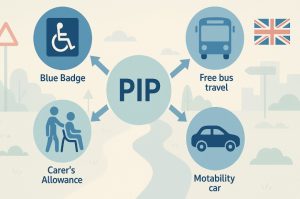
Personal Independence Payment is often referred to as a gateway benefit because it allows eligible claimants to access multiple related supports without needing to apply for each separately.
PIP is central to determining eligibility for a range of services provided by both local authorities and central government departments.
One of the most significant advantages of being awarded PIP is the access it provides to mobility and carer-related benefits, including:
- The Blue Badge scheme, which enables priority parking access for disabled individuals
- Free or subsidised local bus travel, typically through the Disabled Person’s Bus Pass
- Carer’s Allowance for those who provide unpaid care to PIP recipients with daily living needs
Local authorities often use the PIP award letter as proof of eligibility for these services. In many cases, individuals with the enhanced rate of the mobility component are automatically eligible for schemes such as Motability or additional council support, making PIP a vital cornerstone of disability assistance in the UK.
How Will Existing PIP Claimants Be Affected by Welfare Reforms?
As the government prepares for a broader reform of disability and welfare benefits, the DWP has made it clear that individuals currently receiving PIP will not see any changes to their benefits or associated services.
Liz Kendall confirmed that even if a claimant is reassessed, their access to benefits such as Carer’s Allowance or mobility support will remain unaffected.
This protection is important because it provides a safeguard for the 3.7 million people currently claiming PIP, many of whom rely on the financial and practical support it provides.
According to current policy, reassessments or changes to the eligibility framework will not lead to retroactive benefit loss for existing recipients.
This assurance offers some stability during a time of uncertainty. Although the DWP may explore adjustments to future eligibility or assessment processes, current claimants can expect continuity in their support.
The government aims to balance cost efficiency with fairness, particularly in response to rising public concerns about the impact of benefit reforms on the disabled community.
What Concerns Have Been Raised About the Motability Scheme?

The Motability Scheme has come under increased scrutiny during recent parliamentary debates, particularly regarding its rapid expansion and growing cost to the taxpayer.
Conservative MP Danny Kruger voiced concerns about the eligibility and scope of the scheme, pointing out that it now serves over 100,000 new claimants each year.
Kruger argued that the scheme, which was originally intended to support individuals with significant physical impairments, has grown beyond its initial purpose.
He questioned whether all claimants currently leasing vehicles through the scheme meet the original eligibility intent.
He highlighted several issues, including:
- The programme now accounts for nearly 20 percent of all new car sales in the UK
- It costs the government approximately £3 billion annually
- There appears to be a lack of a formal review or audit of its expansion
Kruger called for a thorough examination of the Motability Scheme, suggesting that more robust eligibility checks or limits may be needed.
The concern stems not only from cost but also from ensuring that public funds are being directed to those in genuine need of mobility support.
Is the Government Planning Changes to the Motability Scheme?
In response to Danny Kruger’s remarks, Sir Stephen Timms, Minister for Social Security and Disability, stated that the government does not currently have any plans to change the Motability Scheme.
He confirmed that the DWP has not initiated a formal review, nor does it intend to adjust the scheme’s eligibility criteria in the near future.
Timms acknowledged that the concerns are valid but maintained that no policy change is being developed at this time. This position indicates that while the Motability Scheme will continue to serve eligible PIP claimants, there may be increased oversight in the future depending on the outcome of parliamentary discussions and reviews.
The scheme remains an essential service for many disabled individuals across the UK, offering access to reliable transportation that supports their independence and daily activities.
How Much Financial Support Do PIP Claimants Receive for Mobility?
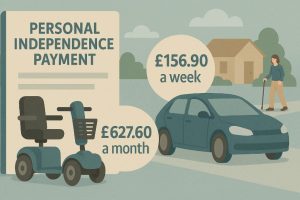
For individuals receiving the mobility component of PIP, the benefit provides financial assistance that can be used to improve travel and accessibility. The PIP mobility component is divided into two levels—standard and enhanced.
Here’s a breakdown of the current weekly and monthly amounts for the mobility component:
| Mobility Component | Weekly Rate | Monthly Rate (4 weeks) | Eligibility Use |
| Standard | £26.90 | £107.60 | Partial support for local transport |
| Enhanced | £77.05 | £308.20 | Full support; eligible for Motability Scheme |
Claimants receiving the enhanced mobility rate are eligible to lease a vehicle through the Motability Scheme, which includes maintenance, insurance, and breakdown cover. This allowance also covers the cost of specialist modifications if required, making it a vital tool for improving mobility.
Who Uses the Motability Scheme and What Does It Offer?
The Motability Scheme, administered by the non-profit Motability Operations, provides an affordable vehicle leasing option for people who receive the higher mobility rate of PIP.
According to the latest figures, more than 815,000 people are currently enrolled in the scheme across the UK.
In addition to PIP recipients, the scheme also supports individuals receiving devolved disability benefits such as the Adult Disability Payment (ADP) and Child Disability Payment (CDP), especially in Scotland.
It is also known as the Accessible Vehicles and Equipment Scheme when referring to these devolved administrations.
The Motability Scheme provides the following services to eligible claimants:
- New vehicle every three years (or five years for Wheelchair Accessible Vehicles)
- Insurance and servicing included in the lease
- Breakdown assistance provided by the RAC
- Option for advance payments and adaptations based on needs
The scheme remains one of the most impactful forms of practical support for disabled individuals, offering them the ability to manage their own transport and lead more independent lives.
It plays an especially crucial role in rural areas where public transport options may be limited or inaccessible.
What Does This Mean for Disabled Individuals Moving Forward?

While the government is proceeding with a review of how disability benefits are assessed and awarded, it has made a firm commitment to protect existing claimants.
By confirming that PIP recipients will continue to have access to Blue Badges, concessionary travel, and Carer’s Allowance, the DWP has provided much-needed reassurance.
However, discussions around the future of schemes like Motability signal that changes could be on the horizon. Policymakers may look to refine eligibility, implement checks, or introduce new cost-control mechanisms.
For now, the existing system remains in place, but ongoing parliamentary debate suggests that the structure of disability benefits and support in the UK will continue to evolve.
Conclusion
As the UK government explores future reforms to disability and welfare systems, existing PIP claimants can take confidence in the DWP’s clear stance on protecting current benefits.
Access to Blue Badges, concessionary travel, and Carer’s Allowance will remain in place, safeguarding essential mobility and care support.
While programmes like the Motability Scheme may be reviewed, no immediate changes are planned. The continued assurance offers much-needed stability for those who rely on these services for daily independence and financial security.
FAQs About DWP, PIP, and Disability Benefits in the UK
What is the role of PIP in accessing other disability benefits?
PIP serves as a qualifying benefit that unlocks access to additional services like Blue Badges, Carer’s Allowance, and travel concessions offered by local authorities.
Can local councils refuse a Blue Badge if someone is on PIP?
Most local authorities follow DWP guidance and grant Blue Badges based on PIP eligibility, especially when the enhanced mobility component is awarded.
Will future PIP assessments affect Carer’s Allowance entitlement?
According to the DWP, existing PIP claimants will maintain Carer’s Allowance eligibility, even if reassessed under future policy changes.
What are passported benefits, and why do they matter?
Passported benefits are secondary entitlements triggered by a primary benefit like PIP. They provide practical support beyond cash payments, such as discounted travel or parking privileges.
Is the Motability Scheme available across all parts of the UK?
Yes. While delivery may vary slightly in devolved nations, the Motability Scheme is available across England, Wales, Scotland, and Northern Ireland.
Are there any changes to how the Motability Scheme is assessed?
Currently, there are no confirmed changes. However, concerns raised in Parliament may influence future reviews or eligibility criteria.
How can someone apply for a Blue Badge using their PIP award?
Applicants can submit their PIP decision letter showing the mobility component to their local council through an online or paper application process.
Related Articles: