The Department for Work and Pensions (DWP) is under scrutiny after revelations that its own staff were involved in benefit fraud, stealing funds meant for pensioners, carers and disabled individuals.
Between 2024 and 2025, internal investigations uncovered £1.7 million in losses due to employee misconduct.
These findings have raised serious concerns about trust in public institutions and the effectiveness of existing safeguards within government departments responsible for supporting the UK’s most vulnerable communities.
What Is The DWP Staff Benefits Theft Scandal About?

The Department for Work and Pensions (DWP) has been implicated in a major internal scandal involving the theft of benefits funds by its own staff. Between April 2024 and March 2025, internal investigations exposed fraudulent behaviour that led to a loss of £1.7 million.
This money, earmarked for pensioners, carers, and disabled individuals, was redirected by DWP employees who deliberately bypassed regulations designed to prevent abuse.
Reports from official sources show that these incidents are not isolated. In the past five years, more than £6 million in taxpayer money has been lost due to internal fraud. This marks the highest reported loss by DWP employees in a single year since 2020.
The scandal is particularly damaging because the DWP is entrusted with administering benefits to some of the most vulnerable members of society. The breach of this trust has led to public outrage and political scrutiny, especially at a time when welfare fraud by claimants is under intense political debate.
How Were Benefits Stolen By Government Employees?
Employees within the department exploited systemic weaknesses to process false claims and misappropriate funds. The DWP’s annual report outlines specific examples, such as one staff member who approved multiple benefits applications without valid documentation. Another case involved an employee who manipulated ID verification protocols to approve fraudulent benefit claims.
Key fraudulent practices identified include:
- Approving claims without documentary proof
- Manipulating internal processing systems
- Exploiting weaknesses in customer ID verification
- Circumventing internal audits and review processes
These breaches were uncovered by the department’s internal fraud team, which investigated 25 cases between April 2024 and March 2025. Each of these cases involved either full-time staff or contractors with access to confidential systems. The affected funds had been intended for those legally entitled to welfare support, highlighting the seriousness of the breach.
Who Are The Victims Of The DWP Benefits Fraud?
The victims of this fraud include a wide demographic of vulnerable UK citizens:
- Elderly pensioners relying on state pensions
- Disabled individuals dependent on Personal Independence Payments
- Carers who receive Carer’s Allowance
- Families supported through Universal Credit or housing benefits
These are groups who often live on limited incomes and depend on timely, uninterrupted benefit payments. The misdirection of these funds causes not only financial stress but also emotional strain, especially when payments are delayed or questioned as part of wider departmental reviews triggered by the fraud.
Former pensions minister Baroness Ros Altmann condemned the misconduct, stating that while most DWP staff are honest, those responsible should face criminal prosecution. Her comments reflect widespread concern that trust in civil service integrity is being eroded.
What Action Has The DWP Taken Against Fraudulent Staff?
The Department for Work and Pensions (DWP) has responded with firm disciplinary and legal measures against employees found guilty of defrauding the welfare system.
Following internal investigations carried out between April 2024 and March 2025, the department identified and acted upon 25 individual cases involving internal fraud.
These cases included both permanent employees and contracted staff, all of whom had access to sensitive benefit systems and personal claimant data.
Once allegations of misconduct were substantiated through internal audits and data analysis, the DWP implemented a sequence of disciplinary actions. In the most serious cases, employees were immediately suspended, dismissed from service, and referred for criminal prosecution.
These steps were taken in accordance with internal fraud management protocols and in cooperation with external law enforcement agencies.
The actions taken by the DWP fall under several categories:
- Administrative Action: Employees under suspicion were often placed on immediate leave while the investigation was conducted. In verified cases, dismissal was enacted without delay.
- Criminal Referral: Where there was evidence of criminal intent—such as manipulation of benefits claims, identity verification abuse, or forgery—cases were forwarded to the Crown Prosecution Service and relevant police departments. Arrests and legal proceedings have already begun in several of these cases.
- Policy Enforcement and Procedural Updates: Following these incidents, the DWP announced internal reviews of key policies and procedures related to benefit processing and staff oversight. Particular focus has been placed on strengthening ID verification methods, tightening access to sensitive databases, and implementing new employee monitoring tools.
- Public Accountability Measures: The department issued public statements to confirm that fraudulent actions would not be tolerated. A spokesperson clarified that “when there is evidence of wrongdoing, an employee is subject to disciplinary action and dismissed. Cases are also referred for consideration for criminal prosecution.” This statement aims to reassure the public of the department’s commitment to accountability.
- Training and Prevention Initiatives: Recognising systemic vulnerabilities, the DWP has begun updating its fraud prevention training modules for all current employees. This includes refresher courses on ethical responsibilities, red flag detection, and secure system usage.
The department’s handling of the situation has been both reactive and proactive. While disciplinary action has addressed immediate breaches, additional preventive strategies are being designed to deter future incidents.
DWP Enforcement Measures Taken Against Staff (2024–2025)
| Measure Category | Description of Action | Implementation Status |
| Suspension & Dismissal | Immediate removal of staff involved in confirmed fraud | Completed in all 25 cases |
| Legal Action | Referral to police and prosecution authorities | In progress |
| System Access Restriction | Limited access for sensitive systems during investigations | In effect |
| Policy Review | Updates to ID checks and benefit verification protocols | Ongoing |
| Staff Training | Enhanced fraud prevention and ethical conduct modules | Launched Q2 2025 |
| Public Assurance Statement | Media communication confirming department’s strict approach | Released July 2025 |
Despite these efforts, public critics argue that the DWP’s actions, while necessary, are also reactive. Several commentators and watchdog groups have questioned how the fraud could occur at such a scale without prior detection. These critics have urged the department to go further by instituting independent oversight, regular audits, and anonymous tip-off systems for whistleblowers.
In response, the DWP has hinted at working with third-party consultants and government watchdogs to create an external framework for fraud monitoring. This could include a more transparent reporting system that would allow for the publication of quarterly fraud incidents, steps taken, and updates on legal outcomes.
While criminal cases are ongoing and more may come to light, the DWP’s present challenge lies not only in dealing with those already caught, but in preventing future breaches of trust within the department.
Why Does This Scandal Matter To The Public And Politicians?
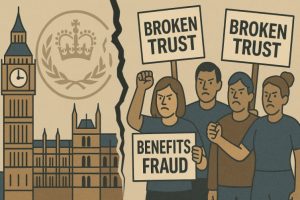
The misuse of public funds by civil servants is not just a legal concern but a matter of public trust. Taxpayers expect their contributions to be managed responsibly. When employees within the system abuse their authority, it damages the credibility of public institutions.
This incident is especially sensitive because it coincides with political efforts to reduce benefit fraud and tighten welfare eligibility criteria. The Labour Party, in particular, has been vocal about cracking down on what it calls “benefit cheats.” But revelations that some fraudsters were government employees complicates the narrative.
Think-tanks such as the Taxpayers’ Alliance have called for comprehensive reviews of departmental operations. They warn of public backlash if action is not taken promptly. The case also underscores the need for cross-departmental coordination and independent oversight mechanisms.
How Much Fraud Has Been Committed Internally Over The Years?
Fraud within the DWP is not a new phenomenon. Internal fraud figures have fluctuated over the years, but 2024–2025 marked a significant spike in losses. When compared with fraud committed by claimants, the figures show that staff-related misconduct, though numerically fewer, still accounts for a sizeable portion of financial losses.
Comparative Annual Fraud Losses (2020–2025)
| Year | Staff Fraud Losses | Claimant Fraud Losses |
| 2020–2021 | £1.2 million | £4.5 million |
| 2021–2022 | £1.3 million | £4.9 million |
| 2022–2023 | £1.1 million | £5.3 million |
| 2023–2024 | £0.7 million | £5.6 million |
| 2024–2025 | £1.7 million | £5.8 million |
While claimant fraud remains a persistent issue, internal misconduct poses a unique challenge due to staff access to sensitive systems and the expectation of professional integrity.
What Safeguards Are In Place To Prevent Benefit Theft?
The Department for Work and Pensions (DWP) has a range of systems and protocols in place intended to protect the integrity of the UK’s welfare benefits system.
These safeguards are designed to prevent both external and internal fraud, detect suspicious activity, and ensure that only eligible individuals receive government support.
However, the recent staff fraud scandal has exposed notable weaknesses, prompting calls for stronger, more transparent mechanisms.
Historically, the DWP has focused its fraud prevention efforts primarily on claimants. Over time, this has evolved to include internal oversight and staff monitoring, although critics argue that these efforts have not kept pace with the complexity of modern fraud techniques.
Key Fraud Prevention Measures
1. Digital Identity Verification
- All benefit applications undergo a series of digital ID verification checks.
- Claimants must submit photographic ID, utility bills, or biometric data, which are cross-referenced with government and credit databases.
- Staff involved in processing applications are also required to complete secure log-ins and operate under tracked system credentials.
2. Automated Risk Profiling
- Machine learning models and data analytics tools are used to flag high-risk applications or transactions.
- Algorithms assign risk scores based on claim patterns, frequency of updates, and inconsistencies in supporting documents.
- High-risk cases are manually reviewed by specialist teams for anomalies or signs of manipulation.
3. Access Controls for Staff
- Employees at the DWP are granted role-based access to internal systems.
- Only authorised staff can make decisions on claims or process payments, and all access is logged with timestamps.
- Any attempt to override normal workflows triggers an alert, requiring further investigation by a line manager or fraud prevention team.
4. Audit Trails and Monitoring
- Every interaction made by staff on the DWP system creates an audit trail.
- Supervisors and internal auditors regularly review activity logs for unauthorised changes or irregular patterns.
- Suspicious actions such as approving claims without evidence or modifying ID checks are flagged for further inspection.
5. Whistleblower Reporting Mechanisms
- The DWP encourages employees to report suspicious activity through confidential internal channels.
- Whistleblowers are protected under UK law and DWP policy from retaliation or discrimination.
- Anonymity is maintained where possible to encourage more staff to report ethical breaches.
6. Mandatory Training and Fraud Awareness
- All new employees undergo fraud prevention and data protection training during onboarding.
- Existing staff are required to complete annual refresher courses covering topics like cyber-security, data integrity, and ethics.
- Specialised training is provided to fraud investigators and compliance officers within the department.
DWP Internal Safeguards and Their Functions
| Safeguard | Purpose | Current Challenges |
| Digital ID Verification | Confirms identity of claimants and verifies documentation | Can be bypassed internally if staff collude |
| Risk-Based Analytics | Detects fraud trends and flags suspicious claims | Limited insight into internal manipulation |
| System Access Controls | Restricts employee permissions and tracks changes | Needs stricter enforcement and oversight |
| Internal Audit Logs | Tracks employee actions for post-review | Requires more frequent and independent audits |
| Whistleblower Protection Scheme | Encourages ethical reporting within the organisation | Fear of retaliation still a concern |
| Fraud Awareness Training | Builds knowledge and accountability in staff | May be inconsistently implemented across teams |
Areas Identified for Improvement
The recent scandal has shown that while safeguards exist, they are not infallible. Several areas require enhancement to improve overall security and rebuild public trust:
- Strengthening Independent Oversight: There is increasing support for third-party audits and inspections of DWP operations. Independent scrutiny can help identify blind spots in current monitoring systems and reduce the risk of internal collusion.
- Real-Time Fraud Detection: Although some automated tools are in place, the department is yet to implement real-time monitoring systems that can flag and halt irregular transactions before they are processed.
- Improved Internal Reporting Culture: Whistleblower systems are only effective when staff feel safe using them. Encouraging a stronger ethical culture within the department is key to uncovering internal misconduct early.
- Enhanced Background Checks: Some experts have suggested that more rigorous screening of new hires and periodic checks of existing staff could help weed out individuals more likely to commit fraud.
- Use of Behavioural Analytics: Incorporating behavioural monitoring tools that analyse how employees interact with systems could provide deeper insight into potentially fraudulent actions before they occur.
As pressure mounts for transparency and reform, the DWP will need to demonstrate that its existing safeguards are being modernised and reinforced. While no system is entirely immune to exploitation, a combination of technology, human oversight, and external accountability offers the best chance of maintaining the integrity of the benefits system.
Could This Damage Labour’s Anti-Fraud Credibility?

Labour has campaigned heavily on reducing welfare fraud. However, this internal scandal within a department under government oversight weakens its stance. Critics suggest that by focusing predominantly on claimant fraud, the party may have underestimated risks from within the system itself.
The scandal may prompt political opponents to question Labour’s ability to manage departmental integrity, especially as the government plans further investment into anti-fraud technologies. The issue also presents a dilemma: intensify staff surveillance without compromising employee morale or continue risking reputational damage.
If Labour fails to take visible corrective action, it risks losing support from voters who are sensitive to perceived inefficiencies or misconduct in public service.
How Can The DWP Restore Public Trust?
To rebuild credibility, the DWP must prioritise transparency and accountability. This can be achieved through a series of reforms that include:
- Publishing quarterly fraud audit reports
- Independent reviews of internal processes
- Clear penalties for misconduct communicated publicly
- Collaboration with watchdog organisations
Additional suggestions involve creating external reporting lines for fraud suspicions and launching public awareness campaigns to demonstrate action is being taken. The department must balance stricter controls with fair treatment of its staff and ensure legitimate claimants are not penalised due to the actions of a few.
What Lessons Can Be Learned From This Scandal?
The scandal reveals the importance of:
- Ethical recruitment practices
- Continuous monitoring of internal processes
- Robust fraud detection tools
- Whistleblower protection and staff accountability
It also highlights the risks of assuming internal compliance without verification. Going forward, both policy-makers and civil servants must commit to a culture of transparency to maintain the welfare system’s credibility.
Conclusion
The DWP staff benefits theft scandal exposes alarming weaknesses in the government’s internal oversight.
With civil servants misusing their positions, it highlights the need for stronger safeguards, transparency and accountability. Public trust can only be rebuilt if the department takes decisive action to prevent future abuses.
As welfare policies face ongoing reform, ensuring that funds reach the rightful recipients must remain a top priority to protect the integrity of the UK’s social support system.
Frequently Asked Questions
What is the main responsibility of the DWP?
The Department for Work and Pensions is responsible for administering welfare, pensions, and child maintenance policy in the UK. It supports millions of citizens, especially those who are unemployed, retired, or disabled.
How often does internal DWP fraud occur?
Internal fraud within the DWP, while involving a small fraction of staff, has been consistent over the past five years. Losses due to staff misconduct have exceeded £6 million since 2020.
Can DWP staff face criminal charges for fraud?
Yes, employees found guilty of benefit fraud may face criminal prosecution, in addition to dismissal from the department. Cases are referred to law enforcement where appropriate.
What actions can whistleblowers take in the DWP?
Whistleblowers within the DWP are protected under UK employment law and internal policies. They are encouraged to report any suspicious activity through secure internal channels.
How can claimants check if their benefits have been tampered with?
Claimants should regularly review their benefit statements and report any discrepancies to the DWP. If fraud is suspected, they can also request an independent review of their case.
What measures has the government introduced to combat benefit fraud?
The government has enhanced fraud detection tools, increased staff training, and introduced stricter eligibility assessments. Recent efforts include greater use of data analytics and AI.
Is internal fraud a new issue in the UK’s welfare system?
No, internal fraud has existed for years, though it is often overshadowed by claimant-related fraud. Recent cases have brought it back into public focus, demanding renewed scrutiny and policy reform.
Source – https://www.express.co.uk/news/uk/2084423/dwp-staff-benefits-pensioners-disabled-people