
When receiving an inheritance in the UK, one of the biggest concerns is how it might impact your eligibility for means-tested benefits such as Universal Credit, Housing Benefit, or Pension Credit.
These benefits are a financial lifeline for many, and a sudden increase in assets could affect your entitlement.
Understanding how to legally safeguard these benefits is essential. This guide outlines the common risks, legal considerations, and strategic steps you can take to ensure your inheritance does not jeopardise your financial support.
What Benefits In The UK Can Be Affected By An Inheritance?

Inheritance primarily affects means-tested benefits, which are granted based on a claimant’s total income and capital. The UK welfare system is structured so that people with access to higher financial resources are gradually phased out of eligibility for certain support schemes.
The following benefits are susceptible to reduction or removal due to inheritance:
- Universal Credit
- Housing Benefit
- Pension Credit
- Council Tax Support
- Income-Based Jobseeker’s Allowance
- Income-Related Employment and Support Allowance
- Income Support
Each of these benefits has specific capital limits. Once a person’s savings exceed these thresholds, the benefits may be reduced or stopped altogether.
Capital Threshold Overview
| Benefit Type | Capital Threshold | Impact on Benefit Eligibility |
| Universal Credit | £16,000 | Ineligible if savings exceed this threshold |
| Housing Benefit | £16,000 | Payments generally cease beyond this point |
| Pension Credit | £10,000 | Partial reduction begins at this amount |
| Council Tax Support (Local Authority Set) | Typically £16,000 | Eligibility often removed above this amount |
Even if the inheritance is not yet spent, simply possessing it in a savings or investment account will generally count against benefit calculations.
How Does Inheritance Typically Impact Means-Tested Benefits?
Inheritance is treated as capital, and any lump-sum payment received will be considered when assessing eligibility for benefits. The Department for Work and Pensions (DWP) evaluates the total financial resources of the claimant, including savings, investments, and assets.
Key implications include:
- Savings between £6,000 and £16,000 can reduce the amount of benefit received
- Savings above £16,000 may lead to complete loss of entitlement to many benefits
- The DWP may assess interest from the inheritance as income, depending on how it’s held
The way the money is handled after inheritance can also influence the assessment. For instance, transferring funds, giving gifts, or not declaring the amount can lead to sanctions or accusations of fraud.
Can A Discretionary Trust Protect Your Benefits After Receiving Inheritance?

A discretionary trust is one of the most effective legal tools for protecting benefits. In this arrangement, the inherited assets are placed into a trust managed by appointed trustees who control when and how the money is distributed.
Since the beneficiary has no automatic right to the trust’s assets, the DWP may not include these funds as part of their capital calculation.
Advantages of discretionary trusts include:
- Prevents direct access to the funds, keeping them outside means-testing limits
- Allows flexible management of the funds for the beneficiary’s long-term benefit
- Provides legal protection from sudden changes in financial status
The trust must be created correctly with professional legal support to ensure it meets regulatory and benefit requirements. If improperly formed, the trust could still be considered accessible capital.
What Are The Legal Ways To Avoid Inheritance Affecting Your Entitlement?
For individuals relying on means-tested benefits, receiving an inheritance can present a serious risk to ongoing support. Fortunately, there are several legal strategies to avoid or minimise the impact of inheritance on benefit entitlement.
These approaches require careful planning, often before the inheritance is received, and must be compliant with UK benefit regulations to be effective.
The key to avoiding issues with the Department for Work and Pensions (DWP) is to ensure that all actions are transparent, well-documented, and undertaken with the help of legal professionals. Below are the most recognised and lawful methods to protect benefit eligibility.
Set Up A Discretionary Trust In Advance
One of the most robust strategies is for the person making the will (the testator) to place the inheritance into a discretionary trust on behalf of the beneficiary. In this setup, the funds are controlled by appointed trustees who decide how and when distributions are made.
The main advantage is that the beneficiary has no automatic right to the assets held in the trust. As a result, these funds are not usually counted towards the means-tested benefit thresholds.
- The trust must be created before the inheritance is distributed
- The language of the trust deed must clearly define discretionary powers
- Trustees must act independently and not under the direction of the beneficiary
Include Protective Clauses In A Will
Another proactive approach is for the person leaving the inheritance to include protective clauses in their will. These can limit how the inheritance is received, potentially distributing it in a way that won’t trigger loss of benefits.
For example:
- Creating life interest trusts, where the beneficiary can receive income from the inheritance but not access the capital
- Using staggered inheritance payments, where the estate is distributed in smaller instalments over time
- Allocating funds for specific purposes such as care costs or housing expenses
By designing the will strategically, the inheritance can be structured to support the individual without breaching DWP capital limits.
Use Of Deeds Of Variation
If the will has already been written without protective structures, beneficiaries may consider a Deed of Variation. This legal document allows the distribution of the estate to be altered after death, with the agreement of all beneficiaries.
In some cases, this can redirect the inheritance into a trust or to another beneficiary who is not subject to means-tested assessments. However, this must be done within two years of the death, and only if the beneficiary has not yet taken control of the funds.
Professional legal advice is essential before using a Deed of Variation to ensure it’s not later deemed as deprivation of capital.
Delay Accepting The Inheritance (In Some Situations)
In very specific cases, delaying acceptance of an inheritance could allow time to implement a legal protection strategy. However, this is a complex area and generally not a long-term solution. The DWP may still consider the beneficiary to have access to the funds, even if they haven’t yet claimed them.
Delay can only be a viable strategy when used in conjunction with legal planning, such as while setting up a discretionary trust. It is not advised to delay acceptance without first seeking legal guidance.
Spend The Inheritance On Allowable Expenses
If the inheritance has already been received, one legal way to reduce its impact is to spend it on legitimate and necessary expenses. When done reasonably, and with proper documentation, this spending may not be seen as deprivation of capital.
Examples of acceptable spending:
- Paying off mortgage arrears or personal debt
- Funding essential home repairs or adaptations for disability
- Purchasing white goods or furnishings for the home
- Covering pre-approved medical treatments or mobility aids
Unreasonable or excessive spending, such as buying luxury items or giving large cash gifts, is likely to be scrutinised and potentially penalised by the DWP.
Use A Life Interest Trust Where Suitable
A life interest trust allows the beneficiary to receive income generated from the inheritance (e.g., rental income or dividends) while the capital remains protected for another beneficiary, often the next generation. This may help avoid the full value being assessed as part of your savings.
It’s not suitable in every case, especially for those receiving benefits where income is also means-tested, but it can be beneficial in particular family situations and estate plans.
Ensure Full Disclosure To DWP
One of the most important legal steps is transparency. Regardless of the strategy used, inheritance must always be disclosed to the Department for Work and Pensions and the relevant local authorities.
Failing to disclose or attempting to hide funds can lead to:
- Loss of benefits
- Repayment demands
- Legal action for fraud
By working with a qualified solicitor and financial adviser, individuals can ensure they follow proper reporting procedures and maintain compliance.
Is Gifting Inheritance Money A Valid Way To Protect Benefits?
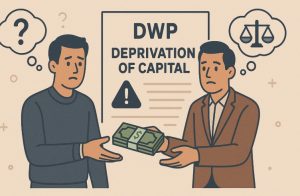
Gifting money may appear to be a quick solution to remain within benefit thresholds, but it is fraught with legal and administrative risks. The DWP can investigate and determine whether the gifting was done deliberately to maintain benefit eligibility.
Risks Of Gifting
- DWP may apply “deprivation of capital” rules and treat you as still having the money
- If the gift lacks documentation or justification, it can result in suspension or loss of benefits
- Backdated repayment of benefits received while over the threshold may be demanded
Gifts given for legitimate and essential purposes may be acceptable in limited cases. These might include payments for medical care, minor support for dependents, or urgent debt repayment. However, they must be justified and recorded appropriately.
How Do You Set Up A Trust Fund To Safeguard Benefit Entitlements?
Setting up a trust fund requires careful legal planning. It must be created before the beneficiary has access to the inheritance. Post-inheritance trusts may not protect benefit eligibility unless properly structured and justified.
Steps To Set Up A Trust Fund
- Engage A Solicitor: Choose one who specialises in estate planning and welfare law.
- Select Trustees: Appoint responsible individuals or professionals to manage the trust.
- Create A Trust Deed: This legal document sets out the terms and management rules.
- Determine Trust Type: Most use a discretionary trust, which offers flexibility and protection.
- Register The Trust: If applicable, register it with HMRC and maintain proper records.
Comparison Of Trust Types
| Trust Type | Suitability For Benefit Protection | Access To Funds | Complexity |
| Discretionary Trust | High | No automatic | Medium |
| Bare Trust | Low | Immediate access | Low |
| Life Interest Trust | Moderate | Income only | Medium |
Always consult an experienced professional to select the correct trust structure based on the inheritance size, your current benefits, and long-term financial planning goals.
What Role Do Professionals Like Solicitors And Financial Advisors Play?

Solicitors and financial advisers play a crucial role in managing the complexities of inheritance and benefits. Their guidance helps individuals take lawful, strategic steps to protect entitlements while receiving support.
Services Offered By Professionals
- Reviewing Financial Position: Helps identify current and future risks to benefits.
- Setting Up Trusts: Ensures legal compliance and appropriate structures.
- Advising On Gifting: Explains when and how assets can be transferred without penalties.
- Navigating DWP Rules: Helps prevent common mistakes that lead to disqualification.
Their involvement reduces the chances of falling foul of DWP’s capital rules and helps ensure that inheritance does not jeopardise long-term welfare support.
Can Inheritance Affect Housing And Council Tax Benefits Too?
Yes, both Housing Benefit and Council Tax Support are affected by the amount of capital a person holds. Inheritance that increases capital beyond the set thresholds can result in a reduction or full withdrawal of support.
In some cases, local authorities may temporarily disregard a lump-sum inheritance if it is used for specific purposes, such as:
- Home repairs or improvements
- Purchasing a first property
- Paying off rent arrears
However, this disregard is typically time-limited and subject to local council discretion. It is essential to declare the inheritance to the local authority and provide documentation of how it is being used.
What Common Mistakes Should Be Avoided When Planning Inheritance Around Benefits?

Poor planning can lead to significant financial consequences, including benefit loss, DWP investigations, and repayment demands. Awareness of common pitfalls can help individuals better prepare and take appropriate action.
Common Mistakes To Avoid
- Disclaiming Inheritance Without Legal Advice: This can be considered deprivation of capital if done incorrectly.
- Transferring Funds Without Documentation: Lack of legal records can lead to penalties.
- Failing To Report Inheritance Promptly: Delays can cause overpayments and legal issues.
- Overspending Without Proof: Excessive or unjustified spending may not be accepted by the DWP.
- Relying On Informal Advice: Always use qualified professionals for complex legal and financial decisions.
Being proactive and cautious ensures that inheritance enhances rather than disrupts financial wellbeing and support entitlements.
Conclusion
Managing an inheritance while relying on means-tested benefits in the UK requires careful planning and legal awareness.
With the right strategies such as setting up trusts, seeking expert advice, and avoiding common pitfalls it’s possible to protect both your inheritance and your benefit entitlements.
Taking informed steps early on can make a significant difference in maintaining financial security. Always consult a qualified solicitor or financial advisor to ensure your actions comply with DWP regulations and safeguard your long-term welfare support.
FAQs
How long do I have to report inheritance to DWP?
Inheritance should be reported as soon as it is received or when you’re informed of it. Delays may result in overpayments and future deductions.
Can I use inheritance to pay off debt and still keep benefits?
Yes, paying off essential debts is often acceptable. However, ensure it’s reasonable and well-documented to avoid deprivation allegations.
Will my inheritance affect my partner’s benefits too?
Yes, if you live together, your combined capital is considered. An inheritance received by one partner can affect the household’s benefit entitlement.
Can small inheritances still impact my benefits?
Yes. Even amounts over £6,000 can reduce your benefits. Anything over £16,000 may disqualify you entirely from means-tested benefits.
What happens if I inherit property instead of cash?
Inherited property counts toward capital. If you cannot sell it or earn income from it, special rules may apply. Seek legal advice.
Does inheritance affect non-means-tested benefits?
No, benefits such as Personal Independence Payment (PIP) or Disability Living Allowance (DLA) are not impacted by inheritance.
Can I put my inheritance into someone else’s name?
This is typically viewed as deprivation of capital unless legally justified. Always consult a solicitor before taking this route.