
Sir Robert Devereux served as Permanent Secretary at the Department for Work and Pensions (DWP) from 2011 to 2018, overseeing one of the most significant periods of welfare reform in UK history.
Known for his strategic leadership and operational focus, he played a vital role in implementing major policies like Universal Credit and pension restructuring.
His tenure marked a shift towards modernised, efficient public service delivery, shaping how millions in the UK engage with the welfare system.
Who Is Robert Devereux and What Is His Background in the Civil Service?

Image – Source
Early Life and Education
Robert John Devereux was born on 15 January 1957. He pursued higher education at St John’s College, Oxford, where he studied Philosophy, Politics, and Economics (PPE) a degree often associated with future leaders and policymakers in the UK.
He later obtained a master’s degree from the University of Edinburgh, further grounding his understanding of public systems and governance.
His academic background provided a solid foundation for a career in the civil service, blending analytical skills with a strong understanding of economic and political structures.
Entry into the Civil Service
Devereux began his civil service career in 1979, joining the Overseas Development Administration, a department focused on international aid and development.
During his time there, he developed an appreciation for how government systems interact on both a national and international scale.
By 1983, he moved to HM Treasury, one of the UK’s most influential departments. His work at the Treasury involved fiscal planning, policy development, and financial oversight roles that sharpened his ability to manage public resources efficiently.
Rise Through Government Departments
Throughout the 1990s, Devereux continued to build a reputation for competence and reliability.
He joined the Department of Social Security (DSS) in 1996, a department that would eventually be merged into what is now the DWP.
His time at DSS further embedded him in welfare-related policy and administration, areas that would later define the most prominent phase of his career.
Between 1996 and 2001, he worked closely on reforms involving benefits, social support systems, and organisational changes within the department.
This period helped him gain a nuanced understanding of the UK’s welfare state and the operational challenges that accompanied it.
Permanent Secretary at the Department for Transport
In 2007, Devereux was appointed Permanent Secretary at the Department for Transport (DfT). This senior civil service role placed him in charge of delivering infrastructure policy, managing large-scale projects, and ensuring efficient use of public funds within the transport sector.
During his tenure at the DfT, he worked with multiple ministers including Douglas Alexander, Ruth Kelly, and Philip Hammond.
His responsibilities included shaping long-term transport strategies and navigating funding allocations across rail, road, and aviation sectors.
His time in the department demonstrated his ability to lead large teams, manage public accountability, and execute complex, cross-departmental initiatives.
Transition to the Department for Work and Pensions
On 1 January 2011, Robert Devereux was appointed Permanent Secretary at the Department for Work and Pensions (DWP).
This marked a pivotal moment in his career, placing him in charge of the largest government department in the UK.
At the time, the DWP was preparing to undergo vast structural reforms under a new government mandate focused on welfare modernisation, digital transformation, and cost efficiency.
Devereux inherited a department with over 84,000 staff and a wide operational remit. From benefits and pensions to disability services and employment support, the department’s policies touched the lives of more than 20 million people in the UK.
His move to DWP was seen as a strategic decision, aimed at bringing experienced leadership to a department facing enormous pressure for reform.
Public Profile and Civil Service Standing
Though not a public-facing political figure, Devereux became well known within civil service circles and among policymakers for his calm demeanour and administrative precision.
His ability to navigate political transitions, budgetary challenges, and media scrutiny positioned him as one of the most influential civil servants of his time.
By 2015, his value to the department was underscored by his reported salary bracket of £180,000 to £184,999, placing him among the highest earners in the UK government.
His leadership was not only operationally effective but also shaped the internal culture and long-term strategy of the DWP.
What Role Did Robert Devereux Play at the Department for Work and Pensions?
As Permanent Secretary at the DWP, Devereux was responsible for the administration of a department serving over 20 million UK residents.
His role required him to ensure the effective delivery of welfare payments, pensions, employment support, and disability services while simultaneously overseeing the introduction of complex policy changes.
Devereux’s leadership supported the continuity of operations across different political administrations. Working with ministers including Iain Duncan Smith, David Gauke, and Esther McVey, he focused on executing policies efficiently rather than creating them.
His responsibilities included the oversight of strategic departmental changes, budget management, staff coordination, and the delivery of new systems like Universal Credit.
Under his leadership, the department advanced digital infrastructure, cut down operational redundancy, and introduced new policies aligned with modern welfare needs.
How Did Robert Devereux Influence Welfare Reform in the UK?
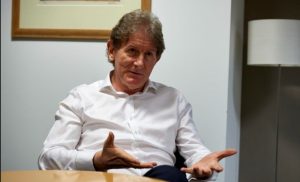
Image – Source
Robert Devereux’s influence on UK welfare reform is significant. He was central to executing major changes in how welfare and pensions were delivered. These reforms were part of a broader government strategy to modernise public services, improve employment incentives, and reduce long-term dependency on benefits.
Key welfare initiatives implemented during his tenure included:
- Universal Credit: A single, streamlined benefit replacing six legacy payments, aimed at simplifying the system and making work pay
- New State Pension: A flat-rate pension offering greater transparency and simplicity for future retirees
- Personal Independence Payment (PIP): Designed to better assess and support individuals with disabilities or long-term health conditions
- Child Maintenance Service overhaul: A reform focused on encouraging parental collaboration while reducing reliance on government enforcement
- Automatic workplace pension enrolment: Helping millions of workers begin saving for retirement through employer contributions
Each reform required collaboration across departments, adaptation of IT systems, training of thousands of employees, and extensive communication with the public. Devereux’s role was to oversee the operational execution of these complex changes, often under tight timelines and with limited resources.
What Were the Results of His Leadership at DWP?
Devereux’s leadership saw significant quantifiable outcomes in both departmental efficiency and public welfare indicators. The DWP experienced a broad shift in how services were delivered, and the UK’s employment landscape reflected many of the reforms implemented under his leadership.
Key Operational and Social Metrics
| Performance Indicator | Outcome During Tenure |
| Employment Rate | Reached record high of 75.3% |
| People in Work | Peaked at 32.14 million |
| Unemployment Rate | Dropped to lowest level since 1975 |
| Reduction in Workless Households | Marked decline |
| Children in Workless Households | 608,000 fewer since 2010 |
| Retirement Savings Participation | Substantial increase due to auto-enrolment |
Organisational Efficiency Outcomes
| Area of Impact | Change Reported |
| Operating Costs | Reduced by £2.9 billion |
| Departmental Headcount | Cut by approximately 50,000 |
| Employee Engagement | Increased by 17 percentage points |
| Customer Service Quality | Reportedly improved based on internal benchmarks |
These figures illustrate the scale and scope of changes managed during Devereux’s tenure. Despite staff reductions and budget constraints, the department improved service delivery while achieving cost efficiency. The automation of benefit systems and the increased use of digital platforms also played a crucial role in these outcomes.
What Were the Challenges Faced During His Time at DWP?
Leading the largest government department through systemic reform was never going to be free of obstacles. The rollout of Universal Credit, in particular, drew substantial criticism. The initial phase of implementation faced technical difficulties, administrative backlogs, and communication failures, leading to public concern and political fallout.
In 2013, Cabinet Secretary Sir Jeremy Heywood reportedly expressed concern to Prime Minister David Cameron about what he termed a “concerted political briefing campaign” against Devereux due to the issues surrounding Universal Credit.
While he retained the confidence of senior officials, media reports and MPs increasingly questioned the department’s handling of the reform.
Challenges also emerged in the form of:
- IT infrastructure breakdowns in early versions of Universal Credit
- Delays in benefit payments that left vulnerable claimants in hardship
- Coordination between multiple agencies and departments, which slowed implementation
- Pressure from advocacy groups demanding more inclusive, responsive welfare policies
Despite these issues, Devereux and his team pushed forward with reforms, gradually improving the systems based on internal feedback and external audits. The decision to prioritise long-term structural changes over short-term popularity often placed Devereux in a controversial position, but one that aligned with government policy at the time.
What Was the Response to Robert Devereux’s Retirement?
Robert Devereux’s announcement in October 2017 that he would retire in January 2018 received widespread attention. Government ministers and civil service leaders issued statements recognising his contribution to public life. David Gauke, then Secretary of State for Work and Pensions, noted that Devereux had led the department through unprecedented change and left it well-positioned for the future.
Cabinet Secretary Sir Jeremy Heywood highlighted Devereux’s effectiveness in overseeing reforms and credited him with transforming the department’s performance. Colleagues acknowledged his ability to maintain stability and professionalism during periods of political turbulence.
Devereux himself expressed pride in his team of over 84,000 civil servants, stating that while the reforms were complex, the collective effort led to improved service quality and better outcomes for millions of people. His farewell comments reflected both humility and satisfaction at having served during a pivotal moment in UK welfare policy.
What Has Robert Devereux Been Involved in Since Leaving the DWP?
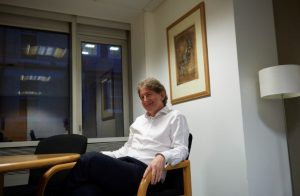
Image – Source
After stepping down as Permanent Secretary, Devereux took a step back from frontline public service. However, in April 2025, he was called upon to lead an independent review into the culture and operations of the Office for National Statistics (ONS). This followed concerns about internal governance and staff engagement within the ONS.
The review concluded in June 2025 and found what Devereux described as “deep-seated” issues across the organisation. His report called for a realignment of the ONS’s leadership culture, communication structure, and data accountability practices.
The government committed to implementing several of the recommendations, and his involvement was widely seen as a continuation of his contribution to public service standards.
Devereux’s post-retirement work reinforced his reputation as a dependable and strategic leader, capable of diagnosing complex institutional problems and proposing credible solutions.
How Is Sir Robert Devereux Recognised for His Contributions?
Sir Robert Devereux received formal recognition for his service in the form of a Knighthood in the Order of the Bath (KCB), announced in the 2016 New Year Honours. This honour was granted for his services to transport, welfare reform, and voluntary work in Kilburn, London.
His knighthood acknowledged not just his civil service achievements but also his leadership in navigating politically sensitive reforms. It reflected a broader appreciation within government for his steady hand, strategic planning, and commitment to public value.
In addition to this accolade, Devereux’s career has often been cited in discussions of modern civil service reform. He is regarded as a figure who combined technical expertise with practical leadership, helping shape how departments approach transformation in large-scale public systems.
What Lessons Can Be Learned from Robert Devereux’s Time at DWP?
Robert Devereux’s period in office offers several instructive lessons for government leaders, civil servants, and policymakers. His tenure demonstrated that meaningful reform requires:
- Patience and perseverance through public criticism
- Strong internal systems for implementation and feedback
- A focus on both efficiency and public outcomes
- Clear communication across departments and with the public
These principles were key to executing initiatives like Universal Credit and pension reform, despite the challenges faced.
The long-term impact of these changes is still being assessed, but Devereux’s legacy is firmly embedded in the transformation of the UK’s welfare state.
Conclusion
Robert Devereux’s legacy at the DWP reflects a career defined by large-scale reform, operational efficiency, and public impact.
His leadership guided the department through complex policy transitions while maintaining service delivery to millions. Despite challenges, he remained a central figure in reshaping the UK welfare landscape.
Post-retirement, his contributions continue through reviews and advisory roles, reinforcing his status as a committed and influential public servant. His tenure remains a case study in transformative civil service leadership.
FAQs About Robert Devereux and His Legacy at the DWP
What was Robert Devereux’s most notable contribution to UK welfare?
His leadership in implementing Universal Credit and pension reforms stands as his most transformative contribution to the UK’s welfare system.
Why was Universal Credit controversial during his tenure?
Delays, cost overruns, and challenges in implementation drew criticism from political opponents, advocacy groups, and media commentators.
How did employment statistics change under his leadership?
Employment reached record highs, while unemployment and workless household numbers fell significantly between 2010 and 2018.
What is the role of a Permanent Secretary in a UK government department?
A Permanent Secretary is the top civil servant responsible for overseeing the department’s administration, policy delivery, and advising ministers.
Did Robert Devereux face political pressure during his DWP career?
Yes, particularly in relation to Universal Credit’s rollout, which led to media scrutiny and political tension within government circles.
What did the ONS review led by Devereux reveal?
The 2025 review uncovered deep-seated issues within the ONS and recommended systemic changes to address operational and cultural weaknesses.
What honour did Devereux receive for his public service?
He was appointed Knight Commander of the Order of the Bath (KCB) in 2016 for services to welfare and transport.
Image – Source