The UK government is introducing major changes to Universal Credit from April 2026 as part of the Universal Credit Bill.
One of the most significant changes will affect claimants receiving the Limited Capability for Work and Work-Related Activity (LCWRA) element.
This article explores how these upcoming changes may impact payment amounts, eligibility, and what claimants should do to prepare.
What is the LCWRA Element in Universal Credit and Who Qualifies for It?

The Limited Capability for Work and Work-Related Activity (LCWRA) element is a financial support element provided as part of Universal Credit.
It is specifically designed for individuals whose health conditions or disabilities prevent them from working or preparing for work.
Claimants must go through a Work Capability Assessment (WCA) conducted by a healthcare professional appointed by the Department for Work and Pensions (DWP). The assessment determines if the claimant fits into one of the following categories:
- Limited Capability for Work (LCW): The individual is not currently fit for work but may be required to prepare for work in the future.
- Limited Capability for Work and Work-Related Activity (LCWRA): The individual cannot work and is not expected to take part in work-related activities.
Eligibility for LCWRA includes:
- Having a long-term physical or mental health condition
- Providing sufficient medical evidence, such as fit notes from a GP
- Successfully completing the WCA with a classification of LCWRA
The LCWRA element exempts claimants from work-related requirements under Universal Credit, recognising their inability to engage with the labour market due to serious health conditions.
How Are Universal Credit Payments Changing in April 2026?
Starting April 2026, the government will introduce reforms to Universal Credit payments under the Universal Credit Bill.
One major change will be the increase in the standard allowance, which forms the base payment of all Universal Credit claims.
The standard allowance amount is determined by age and household composition. Although exact figures have not yet been published, it has been confirmed that all standard allowance rates will increase. These new amounts are expected to be announced by late 2025.
Current standard allowances (as of 2025):
| Household Type | Monthly Standard Allowance |
| Single under 25 | £311.68 |
| Single 25 or over | £393.45 |
| Couple both under 25 | £489.23 |
| Couple one or both 25 or over | £617.60 |
From April 2026, these figures will rise. However, while the standard allowance is increasing, this is accompanied by a reduction in the LCWRA element for new claimants, making the overall impact more complex.
How Will the April 2026 Changes Affect LCWRA Claimants?
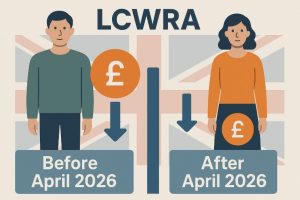
The most significant change to the Universal Credit system coming into effect from April 2026 concerns the Limited Capability for Work and Work-Related Activity (LCWRA) element.
This change will impact new claimants applying for LCWRA after the cut-off date of 5 April 2026. Under the Universal Credit Bill, the rate of LCWRA will be significantly reduced for anyone awarded this element on or after 6 April 2026.
Key Differences in LCWRA Payments
Currently, claimants who are found to have LCWRA receive an additional £423.27 per month on top of their Universal Credit standard allowance.
This extra amount is intended to help those whose physical or mental health conditions prevent them from working or participating in work-related activities.
From April 2026 onwards, this additional LCWRA payment will be reduced to £217.26 per month for new claimants. This marks a reduction of over £200 per month, equating to a potential annual loss of more than £2,400 for new recipients.
Side-by-Side Payment Comparison
| Category of Claimant | Monthly LCWRA Rate Before April 2026 | Monthly LCWRA Rate After April 2026 |
| Claimants awarded LCWRA before 6 April 2026 | £423.27 | £423.27 (unchanged) |
| Claimants awarded LCWRA on or after 6 April 2026 | N/A | £217.26 |
This split means the timing of your LCWRA claim becomes critically important. Anyone considering applying due to a long-term health condition or disability should ideally complete the process before the 6 April 2026 deadline to receive the higher support rate.
Impact on Financial Wellbeing
The reduced LCWRA rate will likely have a noticeable impact on the living standards of new claimants, particularly those who rely solely on Universal Credit as their main source of income.
For individuals with serious health conditions who may face higher living costs (e.g. for heating, mobility aids, or specialist diets), the lower payment may not sufficiently meet their needs.
For example:
- A single adult over 25 with no other earnings, currently receiving £393.45 (standard allowance) + £423.27 (LCWRA) = £816.72 per month
- From April 2026, the same individual, if newly assessed, would receive £393.45 + £217.26 = £610.71 per month
- That’s a reduction of £206.01 every month
Such a reduction may force new claimants to seek additional financial support, increase their reliance on local council schemes, or make difficult choices about essential expenses.
Transitional Arrangements and Who Is Affected
The reduced payment applies only to new claimants. Those who are already receiving the LCWRA element before 6 April 2026 will be protected through transitional protection. Their payment amount will not be reduced unless their claim ends and they need to start a new one after the deadline.
Claimants most affected include:
- People newly diagnosed with long-term health conditions or disabilities after April 2026
- Existing Universal Credit claimants who have not yet reported a health condition or started the LCWRA assessment process
- Individuals transitioning from legacy benefits (like ESA) who are assessed after the April 2026 cut-off
- People who stop claiming Universal Credit temporarily (e.g., due to changes in income or living arrangements) and later reapply
Implications for Decision-Making
These changes create a pressing incentive for eligible individuals to apply for LCWRA before April 2026.
Delaying the application could result in receiving significantly less financial assistance every month.
Claimants should also be aware that the LCWRA assessment process can take several weeks or even months, depending on the availability of medical documentation and DWP processing times.
Early action is critical. Even if you’re unsure about long-term eligibility, beginning the process now can help secure the higher payment rate before the changes are implemented.
Who Will Be Protected from the LCWRA Payment Reduction?
Claimants who are already receiving the LCWRA element before 6 April 2026 will continue to receive the higher amount through a policy mechanism known as transitional protection.
This protection ensures:
- No reduction in payment for existing LCWRA recipients
- Continuation of the £423.27 monthly rate beyond the April 2026 change
- Retention of this rate unless the Universal Credit claim is closed or interrupted
If a claimant’s Universal Credit claim ends and they reapply after April 2026, they will lose the transitional protection and become subject to the new, lower LCWRA rate.
To ensure entitlement to the higher payment:
- Individuals should apply as soon as they believe they meet the eligibility criteria
- Fit notes and other supporting medical documentation should be submitted promptly
What Should You Know About Applying for LCWRA Before the Deadline?
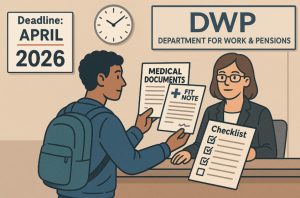
Applying for LCWRA involves several procedural steps that must be completed in a timely manner to qualify for the higher payment rate before 6 April 2026.
To begin the process:
- Report your health condition when applying for or updating your Universal Credit claim
- Submit a fit note from your doctor as early as possible
- Complete the health questionnaire sent by the DWP
- Attend the Work Capability Assessment when scheduled
- Provide full medical evidence to support your claim
Given the time involved in processing these applications, early action is vital. Waiting too long could result in delays that push a claimant’s award date beyond the April 2026 cut-off, making them ineligible for the higher payment rate.
Key points for claimants:
- The assessment process can take 8 to 14 weeks
- The award date is based on when the claim is accepted, not when the application was submitted
- The earlier a claimant starts the process, the higher the likelihood of securing the higher rate
Are Other Benefits Like PIP Affected by These Universal Credit Changes?
The changes introduced in the Universal Credit Bill do not apply to other disability-related benefits, including Personal Independence Payment (PIP).
PIP is designed to help with the extra costs of living with a long-term physical or mental health condition or disability. It is assessed independently of Universal Credit and is not means-tested.
The government proposed reforms to PIP earlier in 2025 but has since confirmed that these proposals are not going ahead for now. However, further consultations may take place in 2026, which could result in rule changes at a later date.
Currently, PIP eligibility remains unchanged, and individuals are encouraged to apply under the existing rules. Receiving PIP does not affect LCWRA entitlement, and many claimants qualify for both.
What Are the Broader Implications of the Universal Credit Bill?
The Universal Credit Bill is part of a wider programme of welfare reform aimed at streamlining the benefits system and reducing long-term costs. In addition to changes in payment structure, it includes administrative adjustments such as:
- Moving claimants from legacy benefits like Employment and Support Allowance (ESA) to Universal Credit through managed migration
- Introducing a new health element for Universal Credit in the future, possibly replacing the LCWRA element entirely
- Aligning future health-related benefits with Personal Independence Payment eligibility, making the system more standardised
The government’s approach is shifting toward simplifying assessments and focusing on direct links between health support and PIP eligibility. This may result in a more integrated assessment process, but could also lead to further changes in how people qualify for financial support.
These broader implications suggest that while April 2026 marks a major turning point, further adjustments may follow in the coming years. Claimants should remain aware of evolving policies and seek regular updates from trusted advisory services like Citizens Advice or government channels.
How Can You Prepare for These Universal Credit LCWRA Changes?

Preparation is key to navigating the upcoming changes effectively. Whether you are a new claimant or currently receiving Universal Credit, proactive planning can help secure the most favourable financial support.
Consider the following steps:
- Review your benefit entitlement: Use online calculators to see if you are eligible for LCWRA or other support
- Gather medical documentation early: The sooner you have supporting evidence, the faster your assessment can proceed
- Apply ahead of time: Avoid last-minute delays by submitting your claim well before April 2026
- Monitor policy updates: Keep informed through official government websites or welfare advice organisations
- Speak to benefits advisers: Local authorities and charities like Citizens Advice can guide you through the process
Preparing now allows claimants to take full advantage of transitional protection and avoid financial loss due to the new lower LCWRA rate.
Conclusion
The upcoming changes to Universal Credit, particularly the LCWRA element, will significantly affect new claimants from April 2026.
While the standard allowance is set to increase, the reduced LCWRA rate means many could see less financial support if they delay applying.
Claimants with long-term health conditions should act now to secure the higher rate and understand their options.
Staying informed and preparing early is essential to minimise the impact of these changes on financial stability and overall wellbeing.
FAQs About Universal Credit LCWRA Changes
What is the deadline to qualify for the current LCWRA rate?
To receive the current higher LCWRA payment, you must be awarded LCWRA before 6 April 2026. The assessment and claim process can take several weeks, so apply early.
Will the LCWRA changes affect existing claimants?
No, existing claimants receiving LCWRA payments before the April 2026 changes will not see a reduction in their monthly payments.
Can I still apply for PIP if I get LCWRA?
Yes, PIP and LCWRA are separate benefits. Receiving one does not disqualify you from the other. It is often beneficial to claim both if you meet the criteria.
What if I stop receiving Universal Credit and reapply later?
If your claim ends and you reapply after 6 April 2026, you may lose the transitional protection and only qualify for the lower LCWRA rate, even if you previously received the higher one.
Are fit notes enough to get LCWRA?
Fit notes are part of the evidence required, but you also need to go through a Work Capability Assessment and provide supporting medical documentation.
What happens if I’m found fit for work during my assessment?
If you’re assessed as fit for work, you won’t be eligible for LCWRA. You may request a reconsideration or appeal the decision with additional medical evidence.
Will Universal Credit payments increase even if I don’t get LCWRA?
Yes, the standard allowance for Universal Credit will increase for all claimants in April 2026, regardless of their health or disability status.