Housing costs are one of the largest monthly expenses for individuals in the UK, especially for those on a low income or who are unemployed.
For single adults, understanding how much housing benefit they may be entitled to can make a substantial difference in budgeting and long-term planning.
This guide explores the maximum housing benefit for a single person in the UK, including eligibility, thresholds, caps, and more.
What Is Housing Benefit And How Does It Support Single Claimants?

Housing Benefit is a UK government scheme designed to assist individuals on a low income with their rent.
It plays a vital role in supporting single people who may be unemployed or unable to afford housing independently.
Single claimants can apply for this benefit if they live in:
- Council or housing association accommodation
- Privately rented homes
- Supported, sheltered, or temporary housing (with specific care or supervision)
Depending on your living situation, Housing Benefit may cover either part or all of your rent. The actual amount varies and is calculated based on income, savings, location, rent amount, and specific circumstances such as disabilities or care needs.
How Is The Maximum Housing Benefit Calculated For A Single Person?
The calculation of Housing Benefit is determined by a range of factors, with the most influential being the Local Housing Allowance (LHA) for private tenants and ‘eligible rent’ for social or council tenants.
Key calculation components include:
- Local Housing Allowance (LHA) rates
- Household size and composition
- Whether there are spare bedrooms
- Income from employment, pensions, and other benefits
- Capital savings exceeding £6,000
For those living in council or social housing, the calculation is based on eligible rent, which includes:
- Actual rent
- Certain service charges (e.g., maintenance of communal areas)
However, it does not cover costs like heating, water, or meals.
Example Of Housing Benefit Deduction For Spare Bedrooms
| Spare Bedroom(s) | Reduction From Eligible Rent | Example: £100 Rent |
| 1 Bedroom | 14% | £86 Weekly Benefit |
| 2+ Bedrooms | 25% | £75 Weekly Benefit |
A single person with one spare room in a council property will have 14% deducted from their eligible rent, reducing the maximum housing benefit they can receive.
What Is The Local Housing Allowance And How Does It Affect Single People?
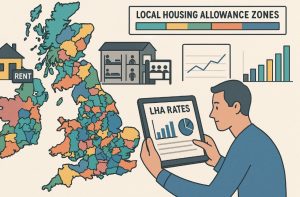
For those renting privately, the LHA sets a cap on the amount of Housing Benefit that can be awarded.
The LHA rate is determined by:
- Postcode or local authority area
- Number of bedrooms required based on household makeup
Most single people under the age of 35 qualify only for the Shared Accommodation Rate, limiting their Housing Benefit to what is considered appropriate for renting a single room in shared housing.
However, a single person may qualify for the higher One-Bedroom Rate if they meet any of the following conditions:
- Over 35 years old
- Have a severe disability
- Require a live-in carer who stays overnight
- Are a care leaver under 25
- Have lived in a homeless hostel for more than 3 months
Local Housing Allowance Examples (Indicative)
| Location | Shared Room Rate | 1-Bedroom Rate |
| Central London | £103 | £245 |
| Manchester | £85 | £138 |
| Birmingham | £80 | £130 |
| Glasgow | £75 | £115 |
Use a benefits calculator or check with your local authority to find the LHA rate applicable to your specific postcode.
Who Qualifies For The Maximum Housing Benefit As A Single Person?
A single person must meet several criteria to be eligible for the full amount of Housing Benefit. Not all single claimants will receive the maximum, as various thresholds and adjustments apply.
Eligibility criteria include:
- Renting from a recognised landlord
- Being on a low income or means-tested benefits
- Not having savings over £16,000 (unless receiving Guarantee Pension Credit)
- Not living in the home of a close family member
- Not already claiming Universal Credit (with certain exceptions)
To qualify for the maximum amount, the following conditions must usually apply:
- The LHA rate or eligible rent matches your rent
- No income from employment or only low earnings
- No non-dependants (other adults in the household)
- No spare bedrooms in council or social housing
What Are The Housing Benefit Caps And Thresholds In 2025?
The Benefit Cap is a limit on the total amount of benefits a person can receive. This includes Housing Benefit and is applied regardless of the actual rent being paid.
Benefit Cap Limits (2025 Figures)
| Area | Weekly Cap For Single Adults |
| Greater London | £423.46 |
| Outside London | £283.71 |
If the combined total of your benefits exceeds this cap, your Housing Benefit will be reduced accordingly.
In addition, deductions are applied in specific situations:
- 14% deduction for one spare bedroom (social housing)
- 25% deduction for two or more spare bedrooms
- Non-dependant deductions if other adults live in the property
Benefit caps do not apply if:
- You (or your partner) are working and earning above a certain threshold
- You receive certain disability-related benefits like PIP or DLA
- You are entitled to Working Tax Credit
Can Single Claimants Receive Housing Benefit With Universal Credit?

Most new claimants must apply for Universal Credit, which includes a housing element for rent support.
Traditional Housing Benefit is only available to those who:
- Have reached State Pension age
- Live in supported, sheltered, or temporary housing
In Universal Credit, the housing support is calculated similarly but paid directly to the claimant, who must then manage rent payments themselves.
Key differences from Housing Benefit:
- Monthly payments instead of weekly
- More responsibility for rent management
- Integrated with other benefits like income support and jobseeker’s allowance
If you’re already claiming Housing Benefit and switch to Universal Credit, your Housing Benefit will usually stop unless you qualify for transitional protection or fall into a special housing category.
How Do You Apply For Housing Benefit As A Single Person In The UK?
Determining Eligibility Before You Apply
Before beginning the application process, it’s essential to confirm whether you qualify for Housing Benefit or need to apply for the housing element of Universal Credit.
You may only make a new claim for Housing Benefit if:
- You have reached State Pension age
- You live in supported, sheltered or temporary housing
- You are already receiving Housing Benefit and have not had a change of circumstances
All other applicants will need to apply through Universal Credit instead.
Use a benefits calculator to assess your eligibility and estimate the amount you could receive before applying.
Applying Through Your Local Council
If you’re eligible for traditional Housing Benefit, the application must be submitted through your local council. You can usually do this online, by post, or in person.
You will need to provide:
- A valid form of identification (passport, driving licence, etc.)
- A tenancy agreement or rent proof
- Recent bank statements and information on income
- Evidence of any benefits or pensions you receive
- Information about anyone else living with you
Once submitted, your council will assess your claim and inform you of the outcome. Payments are usually made directly to your rent account if you’re a council tenant, or into your bank account if you rent privately.
Applying Through Universal Credit
If you’re not eligible for a new Housing Benefit claim, you’ll need to apply for Universal Credit via the GOV.UK website. This single claim covers multiple benefits including housing support.
Steps include:
- Creating a Universal Credit online account
- Completing your application with income and housing details
- Uploading or submitting a copy of your tenancy agreement
- Attending an initial interview at the Jobcentre (in most cases)
You’ll receive a monthly payment, which includes money for rent. This housing cost element is typically paid directly to your bank, meaning you are responsible for paying your landlord.
Documentation You May Need
To avoid delays, ensure you gather the following:
- Tenancy agreement or rental statement
- Proof of rent payments
- Identification documents (passport, driving licence)
- Proof of income, savings, or other benefits
- National Insurance number
If you live in temporary, supported or sheltered housing, additional documentation may be required to confirm care, supervision, or support services.
What Are Some Common Reasons For Housing Benefit Reduction Or Rejection?
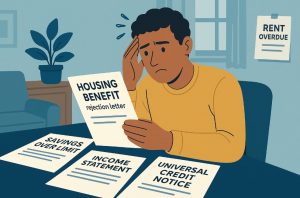
Exceeding The Capital Limit
One of the most common reasons for rejection is having savings or capital above £16,000, unless you’re receiving the Guarantee Credit element of Pension Credit.
Capital includes:
- Bank and building society savings
- Premium bonds or ISAs
- Investments or shares
- Property or land (excluding your main home)
If your savings are between £6,000 and £16,000, your Housing Benefit may still be reduced.
Income Or Benefit Levels Above Threshold
Your total income, including earnings, pensions, and benefits, can impact your eligibility or the amount you receive. High levels of income may reduce your entitlement or disqualify you altogether.
Income includes:
- Earnings from employment or self-employment
- Maintenance payments
- Occupational pensions
- Other state benefits such as ESA or Carer’s Allowance
Deductions will be applied if you exceed income thresholds set by your local authority.
Living In Non-Qualifying Accommodation
You may be disqualified if you:
- Live rent-free in a family member’s home
- Own your own property or are paying a mortgage
- Reside in accommodation not recognised by the scheme (e.g. some student housing)
In these situations, you might be eligible for other support such as Support for Mortgage Interest (SMI) instead.
Already Receiving Universal Credit
If you’re claiming Universal Credit, you generally cannot claim Housing Benefit at the same time unless you live in temporary, supported, or sheltered housing. Most working-age claimants will be directed to the housing cost element within their Universal Credit award.
Student Status And Other Restrictions
Full-time students are usually not eligible for Housing Benefit, unless they:
- Have children
- Are disabled
- Are under 21 and in further (non-advanced) education
- Live apart from their parents and are estranged or at risk
Other disqualifying factors include:
- Being a sponsored immigrant
- Being subject to immigration control that restricts access to public funds
- Living outside the UK temporarily or permanently
Missing Documentation Or Incomplete Applications
Incomplete applications or failure to provide necessary documents are common causes for delays or rejections.
It’s important to:
- Double-check all application fields
- Provide up-to-date documents
- Respond promptly to council or DWP requests
Keeping records of your submission and any communication with the council is recommended.
Conclusion
The maximum Housing Benefit a single person can receive depends heavily on factors such as their age, income, local rent rates, and type of accommodation.
For those who qualify, this benefit can significantly reduce financial pressure. However, eligibility criteria and caps mean that the full benefit is not always accessible to everyone.
Single claimants are advised to check their Local Housing Allowance, review their income status, and seek advice from their local authority or housing support service.
FAQs
What is the shared accommodation rate for under-35s in the UK?
The shared accommodation rate is a lower LHA rate intended for single people under 35 renting in shared houses. It reflects the typical cost of renting a room rather than a self-contained property.
How often do LHA rates change in the UK?
LHA rates are usually reviewed and updated annually by the Department for Work and Pensions, although local variations may occur.
Is housing benefit the same across all UK regions?
No, housing benefit varies based on your Local Housing Allowance rate, which depends on the cost of housing in your specific postcode area.
Can students get housing benefit?
Generally, full-time students are not eligible unless they have disabilities, children, or meet other exception criteria.
What happens if my rent is higher than my housing benefit?
You must cover the shortfall yourself. Housing Benefit will only pay up to the LHA rate or eligible rent, whichever is lower.
Does the housing benefit cover council tax too?
No, council tax support is a separate benefit, and you must apply for it individually through your local council.
Can you get housing benefit if you’re working part-time?
Yes, you may still qualify for a reduced amount of housing benefit if your income is low enough.