The Limited Capability for Work and Work-Related Activity (LCWRA) element of Universal Credit provides essential financial support for people unable to work due to health conditions or disabilities.
With government reforms planned, many are asking when will LCWRA be scrapped and what this means for current and future claimants.
Key changes include payment freezes, reduced rates for new applicants, and the eventual replacement of LCWRA with a new Health Group. Understanding these reforms is vital for affected individuals.
What Is LCWRA and Why Is It Important for Universal Credit Claimants?

The Limited Capability for Work and Work-Related Activity (LCWRA) element of Universal Credit provides additional financial support to claimants who cannot work because of a serious health condition or disability. It is intended to recognise the challenges faced by individuals who cannot earn a living and need ongoing assistance.
LCWRA is awarded after the Work Capability Assessment (WCA), which examines whether a person’s health condition prevents them from working or limits their ability to carry out work-related activities.
If someone is found to have LCWRA, they receive an additional monthly payment on top of their standard Universal Credit allowance.
For claimants, this element is vital. It helps to:
- Cover essential living costs when work is not possible.
- Provide a stable financial foundation for those managing long-term health conditions.
- Reduce the risk of poverty among disabled people who cannot access employment.
Because of its importance, any reform to LCWRA raises significant concerns, particularly for those who rely on it as their main source of additional support.
When Will the Work Capability Assessment (WCA) Be Scrapped?
The government has confirmed that the WCA will be abolished in 2028 or 2029. Since the WCA determines entitlement to LCWRA, this also signals the eventual removal of the LCWRA element.
Until that time, the WCA remains in place. People applying for Universal Credit who believe they cannot work due to illness or disability must still undergo the WCA process.
The decision to scrap the WCA has been justified by the government as a way to simplify the benefits system. Ministers argue that the current system is complicated, stressful for claimants, and costly to administer.
Critics, however, argue that scrapping the WCA could reduce protections for disabled people and make it harder for many to access financial support.
The exact timetable suggests that the change will not happen suddenly. Instead, the government is phasing out LCWRA gradually with changes starting in 2026.
What Are the Key Dates for LCWRA Changes Between 2026 and 2030?
The Department for Work and Pensions (DWP) has outlined several key milestones that will shape the future of LCWRA. These include reductions in support for new claimants, a payment freeze, and the eventual removal of the WCA altogether.
The table below highlights the most important dates:
| Date | Change |
| April 2026 | New claimants found to have LCWRA will only receive a reduced rate of payment. |
| 2028/2029 | The Work Capability Assessment will be scrapped, ending LCWRA for new claims. |
| 2029/2030 | The LCWRA payment rate will be frozen until this year, with no annual increases applied. |
Another table shows the difference in treatment between existing and new claimants:
| Group | Impact of Reforms |
| Existing LCWRA claimants | Continue to receive current rate until reforms fully implemented. |
| New claimants (from 2026) | Receive reduced LCWRA rate, no increase until 2030. |
| Claimants after 2028/2029 | Assessed under the new Health Group system instead of LCWRA. |
These dates make it clear that while immediate changes will affect new claimants first, the longer-term impact will eventually reshape the entire support structure.
What Will Replace LCWRA After the WCA Is Removed?
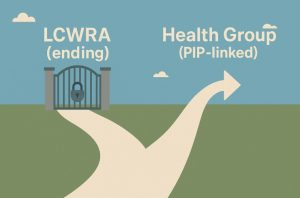
When the Work Capability Assessment (WCA) is abolished in 2028/2029, the LCWRA element will no longer exist. Instead, a new category called the Health Group will be introduced within Universal Credit. This marks a fundamental shift in how disability-related support will be assessed and awarded.
How Will the Health Group Work?
The Health Group will act as a replacement for LCWRA. Claimants will not be required to undergo the WCA. Instead, their entitlement to the Health Group will depend on their eligibility for the Personal Independence Payment (PIP) daily living component.
This means that claimants already receiving PIP will automatically qualify for extra Universal Credit support, reducing the need for two separate assessments.
What Are the Key Differences Between LCWRA and the Health Group?
- Assessment Method: LCWRA relies on the WCA, whereas the Health Group is linked directly to PIP.
- Eligibility: LCWRA is based on inability to work or do work-related activities; the Health Group is based on entitlement to PIP.
- Scope of Support: Some who currently qualify for LCWRA may not meet PIP criteria, which could reduce the number of people eligible for extra financial help.
What Are the Potential Benefits and Risks of the Health Group?
The Health Group is designed to streamline the benefits system, but it comes with both advantages and concerns:
Benefits:
- Fewer assessments for claimants.
- Simpler process for those already receiving PIP.
Risks:
- Some claimants could lose support if they fail to qualify for PIP.
- Increased reliance on a system already facing criticism for delays and appeals.
How Will These Changes Affect Current LCWRA Claimants?
One of the most pressing concerns for claimants is whether existing LCWRA recipients will lose their payments once the reforms take effect.
The government has stated that people already receiving LCWRA will not be immediately affected and will continue to receive their current entitlement.
Will Current Claimants Keep Their Payments?
Yes, existing claimants will continue receiving LCWRA at the current rate. They will not be reassessed under the Health Group unless they make a new claim or undergo a future reassessment after 2029.
What Impact Will the Payment Freeze Have?
Although claimants will retain their LCWRA, payments will be frozen until 2029/2030. This means:
- Payments will not increase in line with inflation.
- The real value of LCWRA will gradually fall compared to other benefits.
- Over several years, claimants could see reduced purchasing power even if their nominal amount remains the same.
Will Everyone Eventually Move to the New System?
While current claimants are protected for now, the long-term aim is for all claimants to transition into the new Health Group system. This could happen when:
- They undergo reassessment after 2029.
- They make a new claim for Universal Credit in the future.
What Should Current Claimants Do?
To prepare, existing LCWRA claimants may consider:
- Checking their eligibility for PIP, as this will determine access to the Health Group.
- Seeking advice from welfare rights organisations.
- Monitoring policy updates, since the timeline and rules could change depending on political or legal developments.
Why Has the Government Decided to Scrap LCWRA?
The government has argued that the WCA is outdated and burdensome, both for claimants and the system as a whole. By scrapping the WCA and linking extra support to PIP, ministers believe they can achieve several objectives:
- Simplifying the benefits system and reducing duplication of assessments.
- Reducing the administrative cost of running two separate assessment processes.
- Encouraging a focus on health-related support through PIP rather than work-related activity tests.
The reforms have been presented as part of a wider strategy to modernise welfare and make it more efficient. However, there is also a financial motivation.
Freezing LCWRA payments and reducing entitlements for new claimants will save the government significant amounts of money.
Critics argue that the decision is less about simplification and more about cost-cutting, with disabled people bearing the brunt of reduced financial support.
What Are the Concerns and Debates Around Scrapping LCWRA?
Disability organisations, charities, and political groups have raised a number of concerns about scrapping LCWRA. These include:
- Many claimants who rely on LCWRA may not qualify for PIP, leaving them without vital financial support.
- The PIP assessment process itself has been criticised as unfair, inaccurate, and stressful, meaning linking LCWRA support to PIP could create more problems.
- The freeze on payment levels will reduce the real value of support, potentially increasing poverty among disabled people.
The reforms are also being debated in Parliament and may be subject to legal challenges. Campaigners argue that the changes risk breaching equality duties by disproportionately affecting disabled people.
How Should Claimants Prepare for the End of LCWRA?
Although the changes are still several years away, claimants can take steps now to prepare for the transition. Practical actions may include:
- Checking eligibility for Personal Independence Payment, as this will be the main route to future health-related support.
- Seeking advice from welfare rights advisers or organisations such as Citizens Advice and Disability Rights UK.
- Keeping up to date with official announcements, as details of the reforms could still change.
- Planning personal finances to account for potential reductions in income, particularly if affected by the freeze or the new reduced rate for claimants after April 2026.
By being proactive, claimants can reduce uncertainty and ensure they understand how the reforms may affect them in the years ahead.
What Are the Alternatives and Support Options for Disabled Claimants?
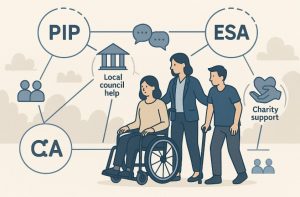
Even after LCWRA is phased out, several other benefits and support options remain available for disabled people. These include:
- Personal Independence Payment (PIP), which will become the gateway to the new Health Group within Universal Credit.
- Employment and Support Allowance (ESA) for some claimants who have not yet moved to Universal Credit.
- Discretionary housing payments and council tax support offered by local authorities.
- Grants, advice, and practical assistance from charities and disability organisations.
Exploring these options will be important for claimants who may not qualify for the new Health Group but still need additional support.
Conclusion
The decision to scrap LCWRA and replace it with a new Health Group marks one of the most significant changes to disability benefits in the UK.
Current claimants will continue receiving payments for now, but new claimants face reduced support, and the system will eventually shift to PIP-linked eligibility.
These reforms aim to simplify welfare but raise concerns about fairness and adequacy. Staying informed, checking eligibility, and seeking advice are crucial steps for anyone likely to be affected.
FAQs on LCWRA Changes and Universal Credit Reform
Will existing LCWRA claimants lose their payments immediately?
No, current claimants will continue receiving their LCWRA payments. The changes primarily affect new claimants and future assessments.
How much will new LCWRA claimants receive from April 2026?
From April 2026, new claimants who qualify for LCWRA will receive a reduced payment, although existing claimants will keep the higher rate.
What happens if someone qualifies for LCWRA but not for PIP?
Under the new system, additional support will be tied to PIP eligibility. This means people not qualifying for PIP may miss out on the Health Group support.
Will LCWRA payments increase with inflation before 2030?
No, LCWRA payments will be frozen until 2029/2030, so they will not rise in line with other benefits.
Can the timeline for scrapping LCWRA change?
Yes, while the government has set out key dates, reforms may be delayed or altered due to political debate, legal challenges, or changes in policy.
What is the difference between LCWRA and the new Health Group?
LCWRA is assessed through the WCA, while the Health Group will be based on receiving the PIP daily living component. This could narrow eligibility.
Where can claimants get advice about LCWRA changes?
Organisations such as Disability Rights UK, Citizens Advice, and local welfare rights services can provide guidance and support.