Last checked: 6 July 2026.
This is informational, not financial or legal advice.
DWP SP on a bank statement usually means a State Pension payment from the Department for Work and Pensions. “DWP” refers to the Department for Work and Pensions, while “SP” most commonly stands for State Pension.
It is normally a genuine government payment made to someone who has claimed State Pension and has enough qualifying National Insurance years.
The new State Pension is usually paid every four weeks, and the payment day depends on the last two digits of the person’s National Insurance number. GOV.UK explains the official State Pension payment schedule and National Insurance number payment days.
If the payment is unexpected, higher than usual, or appears in a shared bank account, the person should check their State Pension letter, recent DWP correspondence, or contact the Pension Service before spending the money.
What Does DWP SP Stand For On A Bank Statement?

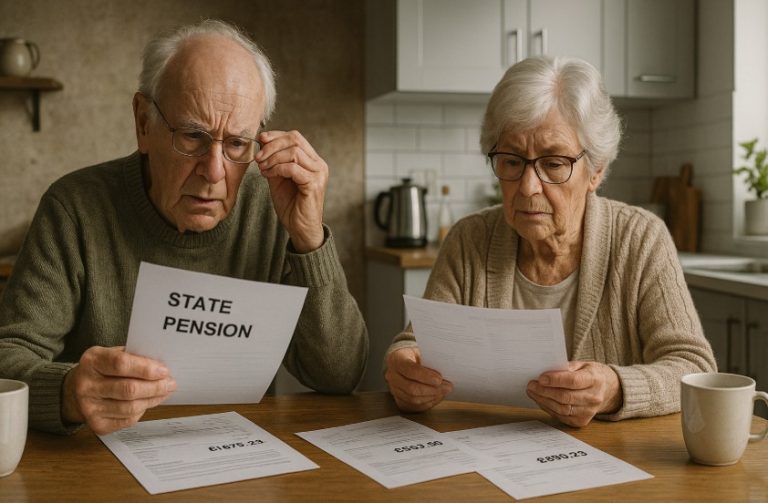
The code DWP SP on a bank statement indicates a payment from the Department for Work and Pensions (DWP) related to the State Pension.
This entry is typically seen by individuals who have reached the qualifying State Pension age and are receiving regular pension payments.
The abbreviation breaks down as:
- DWP: Department for Work and Pensions
- SP: State Pension
This is a standard government-issued code that appears on bank transactions as a way to identify the source and type of payment.
If a person is receiving State Pension payments, their bank will display this abbreviation alongside the deposited amount, helping account holders verify the nature of the transaction.
| Bank statement entry | Meaning | What it usually relates to | What to do |
| DWP SP | State Pension | Regular State Pension payment | Check against the State Pension award letter |
| DWP SP with larger amount | Possible adjustment | Backdated pension, correction or review | Do not spend until confirmed |
| DWP SP in joint account | Pension paid into shared account | A spouse, partner or relative may receive pension there | Check who nominated the account |
| Unknown DWP SP payment | Needs verification | Possible payment error or administrative update | Contact the Pension Service |
Who Sends The DWP SP Payments And Why?
The Department for Work and Pensions (DWP) is the UK government department responsible for administering a range of social security and welfare-related payments.
One of its key roles is to manage the delivery of the State Pension, and when you see “DWP SP” on a bank statement, it signifies a State Pension payment made directly by this department.
The DWP issues these payments as part of its legal and administrative obligation to support UK residents who have reached the State Pension age and have accumulated sufficient National Insurance contributions throughout their working lives.
These payments are made to eligible individuals to provide a reliable and stable income in retirement.
There are several reasons why DWP SP payments are made:
- To ensure citizens receive the pension they are entitled to under UK law
- To support the financial wellbeing of older individuals who may no longer be earning
- To reflect the individual’s contribution history to the National Insurance system
The DWP uses modern digital banking systems to make these payments directly into recipients’ bank accounts.
Once the pension is set up, the payments are usually made on a weekly or four-weekly basis, depending on the claimant’s preference and how their pension was initially arranged.
For pensioners living abroad, the DWP can still arrange for the State Pension to be paid into an overseas bank account, although payment frequency and currency exchange processes may differ slightly.
Because the DWP manages multiple benefits, it uses different codes for each type of payment. “DWP SP” is specific to State Pension, helping recipients and banks identify the source of the funds without confusion.
In short, the DWP sends SP payments as part of its commitment to honouring the pensions of citizens who have spent decades contributing to the UK’s social insurance framework. These payments form a critical part of the UK’s retirement income landscape.
What Is The SP In DWP SP Referring To?

The “SP” in DWP SP stands for State Pension, a government-provided retirement benefit designed to offer financial support to individuals who have reached a specific age and meet the required contribution criteria.
The State Pension is not a universal benefit. Instead, it is earned through years of contributions to the National Insurance system.
People who work in the UK and pay National Insurance accumulate credits that go towards their pension entitlement. The more qualifying years they have, the larger their pension is likely to be, up to a capped maximum.
There are two main types of State Pension currently in the UK system:
- Basic State Pension: Basic State Pension applies to men born before 6 April 1951 and women born before 6 April 1953. The number of qualifying years needed depends on the person’s date of birth and National Insurance record. Some people need 30 qualifying years for the full basic State Pension, while older cohorts may need more.
- New State Pension: This applies to those reaching pension age on or after 6 April 2016. It generally requires 35 qualifying years for the full weekly amount. The system is designed to be simpler and more transparent, especially for people with interrupted work histories or a mix of employment types.
The “SP” reference helps distinguish this type of payment from other benefits such as:
- PIP (Personal Independence Payment)
- UC (Universal Credit)
- ESA (Employment and Support Allowance)
This designation ensures that banks, account holders, and support services can quickly identify the nature of the payment.
In practice, the SP payment forms the backbone of retirement income for millions of UK residents. It is intended to ensure that those who have contributed to the economy and society through work and taxes are not left without basic financial support in later life.
The term SP is a simple abbreviation, but it carries significant meaning highlighting the result of decades of work and contribution.
When it appears on a statement, it confirms that the recipient is now drawing from the pension system they helped fund over their working lifetime.
Who Is Eligible To Receive DWP SP Payments?
DWP SP payments are usually made to people who have reached State Pension age, claimed their State Pension, and built up enough qualifying National Insurance years.
Eligibility is not based on savings in the same way as means-tested benefits, because the State Pension is mainly linked to a person’s National Insurance record.
For the new State Pension, GOV.UK says a person usually needs at least 10 qualifying years on their National Insurance record to receive any new State Pension, while 35 qualifying years are usually needed for the full amount if their National Insurance record started after April 2016. GOV.UK also lists the full new State Pension rate as £241.30 a week for the current 2026/27 rate.
A person may build qualifying years through paid work, National Insurance credits, or voluntary National Insurance contributions.
Readers who are unsure about older pension rules can also read the guide on DWP 649 State Pension for more context around State Pension-related payment references.
How Often Are DWP SP Payments Made?
DWP SP payments are normally paid every four weeks into the account chosen by the claimant. The payment day depends on the last two digits of the person’s National Insurance number, and payments may arrive earlier if the usual date falls on a bank holiday.
GOV.UK confirms that the new State Pension is usually paid every four weeks and that the payment day is based on the National Insurance number.
| Last 2 digits of National Insurance number | Usual payment day |
| 00 to 19 | Monday |
| 20 to 39 | Tuesday |
| 40 to 59 | Wednesday |
| 60 to 79 | Thursday |
| 80 to 99 | Friday |
For a deeper explanation of timing, readers can also check is State Pension paid weekly or monthly, especially if they are confused by four-weekly payments being different from monthly payments.
How Can Someone Confirm A DWP SP Payment?
Individuals can verify DWP SP payments through several reliable methods:
- Review the bank transaction label, which typically reads “DWP SP” followed by a code or reference number
- Log in to their State Pension account via GOV.UK to see recent payment history
- Check their State Pension award letter, which outlines payment frequency and expected amounts
If discrepancies arise or an unexpected amount is received, the person should contact the Pension Service for clarification.
In some cases, overpayments or backdated entitlements can result in adjustments to payment amounts. Being aware of how to verify these payments can help ensure transparency and prevent misunderstandings.
Can A DWP SP Payment Be A Back Payment Or Adjustment?
Yes, a DWP SP payment can sometimes be higher than usual because it relates to a backdated State Pension payment, correction, delayed claim, National Insurance record update, or another pension adjustment. This does not automatically mean the payment is wrong, but it should be checked before the money is spent.
A larger DWP SP payment may happen after the DWP reviews a person’s entitlement, processes a delayed claim, corrects a previous underpayment, or applies an annual pension increase.
If the payment appears after a bereavement or in a joint account, it is especially important to confirm who the payment belongs to.
Readers who have received a larger-than-usual amount can also compare the situation with the guide on DWP State Pension back payments, as backdated pension amounts can sometimes appear as unexpected bank deposits.
What Should You Do If You Receive An Unexpected DWP SP Payment?
If a person receives a DWP SP payment they do not recognise, they should take these steps:
- Check the amount against their State Pension award letter or recent DWP correspondence.
- Look at the usual four-weekly payment date and compare it with previous deposits.
- Do not spend the money immediately if the amount is much higher than expected.
- Check whether the bank account is shared with a spouse, partner, parent or relative.
- Contact the Pension Service if the payment still cannot be explained.
The Pension Service can help with State Pension payments, complaints, bank-detail updates and questions about someone’s State Pension. This step is important because DWP may ask for money back if a payment was made in error.
What Are The Other Common DWP Payment Codes?
The DWP uses several standard codes for different types of payments. Recognising these can help individuals manage their finances more effectively.
| Code | Benefit Type | Description |
| DWP SP | State Pension | Retirement income based on NI contributions |
| DWP UC | Universal Credit | Monthly payment for low-income households |
| DWP ESA | Employment and Support Allowance | Support for people unable to work |
| DWP PIP | Personal Independence Payment | Benefit for disabled individuals |
| DWP JSA | Jobseeker’s Allowance | Financial support while job hunting |
| DWP CA | Carer’s Allowance | For people caring for someone full-time |
By understanding these codes, individuals can quickly determine the nature of government deposits into their accounts.
Can DWP SP Payments Be Taxed?
Yes, State Pension is taxable income, but tax is not normally deducted by the DWP before the payment reaches the bank account. Instead, HMRC looks at the person’s total taxable income, including State Pension, private pensions, earnings and other taxable income.
GOV.UK says a person only pays Income Tax if their taxable income, including private pension and State Pension, is more than their tax-free allowances.
If tax is due and State Pension is the only income taking the person above the allowance, HMRC may issue a Simple Assessment tax bill.
Readers worried about this issue can also read Is State Pension taxed at source for a more focused explanation of why DWP payments may still count towards taxable income.
How Does DWP SP Differ From Other Government Benefits?

DWP SP differs in several major ways from other benefits administered by the Department for Work and Pensions:
- It is not means-tested, meaning it does not depend on your current income or savings
- It is a contributory benefit, earned through years of National Insurance contributions
- It is designed to provide a baseline retirement income, whereas benefits like Universal Credit or Housing Benefit support day-to-day costs based on financial need
Comparing key DWP benefits:
| Benefit Name | Means-Tested | Based on NI Contributions | Typical Purpose |
| State Pension (SP) | No | Yes | Retirement income |
| Universal Credit (UC) | Yes | No | General cost-of-living support |
| Carer’s Allowance | Yes | No | Support for carers |
| Jobseeker’s Allowance | Partially | Yes/No (depending on type) | Support during unemployment |
Understanding these distinctions helps individuals determine which benefits they may be eligible for and how those benefits are calculated.
What Help Is Available For Understanding DWP Bank Statement Entries?
Various tools and services are available to help individuals interpret DWP payment codes like DWP SP:
- GOV.UK Pension Tools allow users to check their pension forecast and view detailed payment schedules
- Citizens Advice offers free guidance for those confused by benefit payments or abbreviations
- Age UK provides support tailored to older adults dealing with pensions and benefits
- Pension Service Helpline can provide direct answers to queries about payment amounts and frequencies
These resources are valuable for anyone who needs help navigating the UK benefits system and understanding how government payments appear in their financial records.
Conclusion
DWP SP on a bank statement usually means a State Pension payment from the Department for Work and Pensions. For most people, it is a normal pension deposit paid into the bank account chosen when they claimed their State Pension.
However, if the amount is higher than expected, arrives on an unusual date, or appears in a shared account, it should be checked before the money is spent.
The safest step is to compare the payment with the State Pension award letter, recent DWP correspondence and previous bank deposits.
If the payment still looks unclear, the Pension Service can confirm whether it is a regular State Pension payment, a backdated amount, a correction or a possible error.
FAQs
What does DWP SP mean on a bank statement?
DWP SP usually means a State Pension payment from the Department for Work and Pensions.
Is DWP SP a genuine payment?
In most cases, yes. It is usually a genuine State Pension payment, but unusual amounts should be checked with the Pension Service.
Why have I received a larger DWP SP payment?
A larger DWP SP payment may be a back payment, correction, delayed claim payment or pension adjustment.
Is DWP SP paid weekly or monthly?
State Pension is usually paid every four weeks, not monthly. The payment day depends on the last two digits of the National Insurance number.
Is DWP SP taxable?
Yes, State Pension is taxable income, but DWP does not normally deduct tax before paying it. HMRC deals with tax if total taxable income is above the person’s allowances.
Who should I contact about a wrong DWP SP payment?
The person should contact the Pension Service if the payment is missing, wrong, unexpected or linked to a bank-detail issue.
Can DWP SP appear in a joint bank account?
Yes, it can appear in a joint account if the State Pension recipient chose that account for their payments.
Editorial Note
This article was reviewed and updated on 6 July 2026 to improve clarity around DWP SP bank statement entries, State Pension payment timing, unexpected pension payments, tax treatment and official verification steps. Official GOV.UK guidance was checked for State Pension payment rules, pension amounts, tax treatment and Pension Service contact details.
This content is for general information only and should not be treated as financial, legal or pension advice. Readers should contact the Pension Service, HMRC or a qualified adviser if they need guidance about their own circumstances.
Source Links
GOV.UK – New State Pension
https://www.gov.uk/new-state-pension
GOV.UK – What You’ll Get From The New State Pension
https://www.gov.uk/new-state-pension/what-youll-get
GOV.UK – When The New State Pension Is Paid
https://www.gov.uk/new-state-pension/when-youre-paid
GOV.UK – Contact The Pension Service
https://www.gov.uk/contact-pension-service
GOV.UK – Tax And National Insurance After State Pension Age
https://www.gov.uk/tax-national-insurance-after-state-pension-age
GOV.UK – Tax On Your Private Pension Contributions And Payments
https://www.gov.uk/tax-on-pension/how-your-tax-is-paid