A child with an EHCP does not automatically qualify for disability benefits simply because they have a plan.
However, the needs recorded in an EHCP may provide useful supporting evidence when claiming benefits such as Disability Living Allowance.
For the 2026/27 tax year, families may potentially receive DLA of up to £114.60 a week for care and £80 a week for mobility, while qualifying Universal Credit households may receive an additional £164.79 or £514.71 a month for a disabled child. An eligible parent or carer may also receive £86.45 a week in Carer’s Allowance.
Eligibility for each benefit is assessed separately.
Last Updated: 10.09.2026
What Benefits Can a Child With an EHCP Get in 2026?
An EHCP is primarily an education, health and social care document rather than a welfare-benefit award.
Families may nevertheless qualify for several forms of financial and practical assistance because of the child’s disability, care needs or household circumstances.
2026/27 Benefit Rates at a Glance
| Financial Support | 2026/27 Amount | Main Basis For Eligibility |
| DLA Care – Lowest Rate | £30.30 a week | Additional care needs |
| DLA Care – Middle Rate | £76.70 a week | Greater care or supervision needs |
| DLA Care – Highest Rate | £114.60 a week | Highest level of care or supervision |
| DLA Mobility – Lower Rate | £30.30 a week | Outdoor guidance or supervision |
| DLA Mobility – Higher Rate | £80.00 a week | Significant mobility difficulties |
| UC Disabled Child – Lower Addition | £164.79 a month | Qualifying disabled child |
| UC Disabled Child – Higher Addition | £514.71 a month | Higher qualifying disability criteria |
| UC Carer Element | £209.34 a month | Providing qualifying care |
| Carer’s Allowance | £86.45 a week | At least 35 hours of qualifying care |
These are separate entitlements. Having an EHCP alone does not mean a family will receive every payment in the table.
Does an EHCP Automatically Qualify a Child for Benefits?
No. There is no automatic benefit payment simply for having an EHCP.
An EHCP identifies a child’s special educational needs, the outcomes being worked towards and the education, health or social care provision required to support them.
A disability benefit assesses different criteria.
For example, DLA focuses on whether a child needs substantially more care, supervision or mobility assistance than another child of the same age would normally need.
This means:
- A Child Can Have An EHCP But Not Qualify For DLA
- A Child Can Receive DLA Without Having An EHCP
- An EHCP Can Provide Useful Evidence Of Day-To-Day Needs
- Benefit Applications Must Still Be Made Separately
- Benefit Decisions Are Made Under Their Own Eligibility Rules
Parents should therefore avoid treating the EHCP as proof of automatic entitlement.
Instead, it can form part of a wider evidence package alongside medical reports, school evidence, care records and examples of the assistance the child requires.
Disability Living Allowance for a Child With an EHCP
Disability Living Allowance is one of the main financial benefits available for disabled children under 16.
DLA is not means-tested, so a parent’s income and savings do not determine whether the child qualifies. Instead, the assessment concentrates on the child’s care and mobility requirements.
A child generally needs to have experienced the relevant difficulties for at least three months and they must normally be expected to continue for at least another six months.
Different rules can apply where a child is nearing the end of life.
DLA Care And Mobility Rates
The care component has three rates:
- Lowest Rate: £30.30 a week
- Middle Rate: £76.70 a week
- Highest Rate: £114.60 a week
The mobility component has two rates:
- Lower Rate: £30.30 a week
- Higher Rate: £80.00 a week
The lower mobility component is generally available from age five, while the higher mobility component can be available from age three where the qualifying conditions are satisfied.
Does a Child Need an EHCP to Claim DLA?

No. An EHCP is not a requirement for a DLA claim.
The important issue is how the child’s condition affects their everyday care, supervision and mobility compared with another child of the same age.
However, an EHCP can be useful evidence because it may document:
- One-To-One Supervision Needs
- Communication Difficulties
- Behavioural Support Requirements
- Personal Care Needs
- Mobility Difficulties
- Therapy Requirements
- Specialist Equipment
- Safety Risks
- Support Needed Throughout The School Day
Parents should explain what help is actually required rather than relying only on diagnoses or stating that an EHCP exists.
DLA should also be claimed promptly when a family believes a child qualifies because it cannot normally simply be backdated to cover a long period before the claim.
Universal Credit Support for a Child With an EHCP
Families receiving Universal Credit may qualify for additional support where a dependent child receives a qualifying disability benefit.
For 2026/27, the disabled-child addition is:
| Universal Credit Addition | Monthly Amount |
| Lower Disabled Child Addition | £164.79 |
| Higher Disabled Child Addition | £514.71 |
| Carer Element | £209.34 |
The higher disabled-child amount can apply where, for example, the child receives the highest rate of the DLA care component or meets other qualifying severe-disability criteria.
Families should tell Universal Credit when a child is awarded DLA or when the rate changes. An EHCP by itself does not trigger the disabled-child addition.
Older information about Child Tax Credit can now cause confusion. Tax credits ended on 5 April 2025, so families should not be directed towards making a new Child Tax Credit claim in 2026.
Income Support and income-based Jobseeker’s Allowance have also ended and been replaced by Universal Credit.
Can Parents Claim Carer’s Allowance?
A parent or another person providing substantial care may qualify for Carer’s Allowance.
For 2026/27, Carer’s Allowance is £86.45 a week and the earnings limit is £204 a week after specified deductions. The person normally needs to provide at least 35 hours of care each week.
For a parent caring for a child receiving DLA, the child normally needs to receive either the middle or highest rate of the care component.
Typical eligibility considerations include:
- Providing At Least 35 Hours Of Care Each Week
- Caring For Someone Receiving A Qualifying Disability Benefit
- Meeting The Earnings Limit
- Meeting Residence And Other Personal Eligibility Rules
Receiving Carer’s Allowance can affect other means-tested benefits.
For Universal Credit claimants, Carer’s Allowance is taken into account as income and can reduce the UC payment. However, an eligible claimant may also qualify for the separate Universal Credit carer element.
The carer element is not automatically added simply because Carer’s Allowance has been awarded, so claimants should make sure their caring responsibilities have been reported.
What Happens When a Child Turns 16?
Age 16 is an important point for both disability benefits and EHCP planning.
A young person receiving DLA will normally be invited to claim Personal Independence Payment (PIP) after turning 16. They do not automatically move from one benefit to the other without making a claim.
If the young person applies for PIP by the deadline shown in their invitation, their DLA can continue while the PIP claim is being assessed. If they fail to apply when required, their DLA payments can stop.
An EHCP does not automatically end at 16 either.
It can continue when the young person remains in qualifying education or training and the plan is still necessary.
Preparation for adulthood should already have become an important part of EHCP reviews from Year 9 onwards, considering areas such as:
- Further Education And Training
- Employment Aspirations
- Independent Living
- Community Participation
- Health And Adult Services
- Travel And Mobility
An EHCP can potentially continue until age 25, but this does not mean every young person automatically keeps one until their 25th birthday.
What Support Does an EHCP Provide?
The strongest financial value of an EHCP may not be a direct payment. It can be the specialist services and provision that the local authority is legally responsible for securing.
Provision may include:
- Specialist Teaching
- Individual Classroom Support
- Speech And Language Therapy
- Occupational Therapy
- Communication Support
- Specialist Learning Resources
- Assistive Technology
- Personal Care
- Behavioural Support
- Other Provision Required To Meet Identified Needs
Section F of an EHCP sets out the special educational provision required. The wording should be clear and specific enough for families and professionals to understand what support must be delivered.
Section I identifies the school, college or other educational institution named in the plan where applicable.
Families may also request a personal budget in connection with an EHCP.
Depending on the circumstances, funding can be managed through direct payments, arrangements where the authority retains the money, or other agreed arrangements.
A personal budget is not unrestricted household income. It must be connected to agreed support and used in accordance with the arrangements made for the child or young person.
School transport is another important area. An EHCP itself does not automatically give every child free transport.
For compulsory-school-age children attending their nearest suitable school, statutory eligibility can arise where the school is more than two miles away for a child under eight or more than three miles away for a child aged eight or over.
Eligibility can also arise where the child cannot reasonably walk because of SEND, disability or mobility problems, or where there is no safe walking route.
Other Financial Help Available to Families
Depending on the child’s needs and the family’s circumstances, other support may be available alongside an EHCP.
Motability Scheme
A child aged three or over may be able to use the Motability Scheme where they receive the higher-rate DLA mobility component.
Young people receiving the enhanced mobility component of PIP may also qualify.
Council Tax Reduction
Low-income households may qualify for Council Tax Reduction through their local council.
Rules vary because councils operate local schemes, and an EHCP does not automatically create entitlement.
Other council tax provisions may sometimes apply where a home has been adapted or additional space is required because of a disabled resident.
Free School Meals
Free school meal entitlement is generally determined by separate benefit and income rules rather than EHCP status.
Families should check current eligibility rather than assuming that having an EHCP means meals will automatically be free.
Short Breaks And Local Support
Local authorities can provide short breaks and other social care support for disabled children and their families.
The exact service available varies between councils and according to assessed need.
Support may include:
- Respite And Short Break Services
- Holiday Activities
- Personal Care Support
- Specialist Equipment
- Home Adaptations
- Travel Assistance
- Community Support
Families should check their council’s Local Offer because locally funded SEND and disability services can differ considerably between areas.
EHCP Reviews, Appeals And Important Deadlines
An EHCP must be reviewed regularly to ensure that the child’s needs, outcomes and provision remain appropriate.
Plans must generally be reviewed at least every 12 months.
After an annual review meeting, the local authority must communicate its decision to maintain, amend or cease the plan within four weeks.
Parents should use an annual review to raise issues such as:
- Support Written In The Plan Not Being Delivered
- Changes In Health Or Educational Needs
- New Professional Recommendations
- Inadequate Therapy Provision
- Problems With The Current Placement
- Preparation For A School Or College Transition
- Changes Needed To Outcomes Or Provision
If the council refuses an EHC needs assessment, refuses to issue a plan, decides to cease a plan or the family disputes certain parts of the plan, an appeal may be possible through the SEND Tribunal.
In most cases, mediation must at least be considered before an appeal.
The tribunal generally needs to receive an appeal within two months from the date of the local authority’s decision letter or one month from the mediation certificate, whichever is later.
These deadlines make it important to act quickly when a disputed decision arrives.
What Is Changing With EHCPs From 2026 Onwards?

SEND reform is an important issue for families, but proposed future changes should not be confused with the rules applying today.
In February 2026, the government published proposals for major changes to the SEND system in England.
These include developing Specialist Provision Packages intended to underpin future EHCPs for children and young people with the most complex needs.
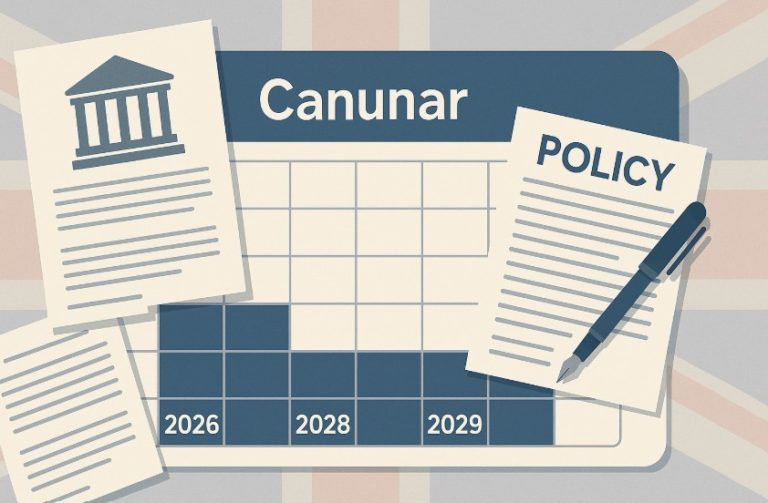
The current proposals indicate that assessments under the new system would begin from September 2029, with no changes to support received through existing EHCPs before at least September 2030.
The government has also stated that the existing system, including current duties, rights and funding routes, remains in place until new legislation takes effect.
This distinction matters. Parents should continue using the current EHCP system and current legal rights in 2026 rather than assuming proposed reforms have already replaced them.
Demand for EHCPs also remains high. Department for Education statistics recorded 718,838 active EHC plans in England in January 2026, an increase of 12.5% from January 2025.
Only 46.1% of qualifying new plans issued during 2025 were completed within the statutory 20-week timeframe.
Key Things Parents Should Remember
- EHCPs Apply In England: Other parts of the UK use different statutory SEND systems
- Benefits Are Separate: An EHCP does not automatically award DLA, Universal Credit or Carer’s Allowance
- Use the EHCP as Evidence: Detailed descriptions of supervision, care and mobility needs may support benefit applications
- Check Current Rates: Benefit amounts and earnings limits can change every tax year
- Report Benefit Awards: A DLA or PIP award may affect entitlement to additional Universal Credit support
- Review the EHCP Regularly: Make sure the written provision still reflects the child’s actual needs
- Check Local Support: Transport, short breaks and other council services can vary by area
- Act Quickly On Disputes: EHCP appeal and mediation processes have time limits
Conclusion
An EHCP can provide substantial educational, health and social care support, but families should not assume that it automatically unlocks welfare benefits.
A child who meets the relevant conditions may qualify for DLA, additional Universal Credit, transport assistance and other disability-related support.
Parents providing significant care may also qualify for Carer’s Allowance or the Universal Credit carer element.
The most effective approach is to consider the EHCP and welfare-benefit systems separately.
The EHCP should clearly record the child’s educational needs and required provision, while benefit claims should explain the child’s real day-to-day care, supervision and mobility requirements.
Families should also check their entitlements when circumstances change, particularly after a new DLA award, during an EHCP annual review and as the child approaches age 16.
FAQs About Benefits For A Child With An EHCP
Does An EHCP Mean My Child Automatically Gets DLA?
No. DLA is assessed according to the child’s additional care and mobility needs. An EHCP can provide useful evidence, but it does not guarantee an award.
How Much DLA Can A Child With An EHCP Receive?
For 2026/27, the DLA care component ranges from £30.30 to £114.60 a week, while the mobility component is £30.30 or £80 a week depending on eligibility.
Can Universal Credit Increase If My Child Has An EHCP?
An EHCP itself does not increase Universal Credit. However, if your child receives a qualifying disability benefit, you may be entitled to a disabled-child addition worth £164.79 or £514.71 a month in 2026/27.
Can I Claim Carer’s Allowance For My Child?
You may qualify if you provide at least 35 hours of care each week, your child receives a qualifying disability benefit and you satisfy the other conditions, including the earnings limit.
Does An EHCP Guarantee Free School Transport?
No. Transport eligibility is assessed separately. SEND, disability, mobility difficulties, walking safety and distance to the nearest suitable school can all affect entitlement.
Can An EHCP Personal Budget Pay For Therapy?
A personal budget may sometimes fund agreed therapy or other support where it forms part of the provision arranged for the child.
What can be funded depends on the EHCP, local authority arrangements and how the personal budget is managed.
What Happens To An EHCP When My Child Turns 16?
It does not automatically end. An EHCP may continue while the young person remains in qualifying education or training and still needs the plan, potentially up to age 25.