Employment and Support Allowance (ESA) provides vital financial assistance to individuals who are unable to work due to illness or disability.
However, continuing eligibility depends on keeping the Department for Work and Pensions (DWP) informed about changes in your circumstances.
Failing to do so could result in reduced payments, benefit overpayments, or even penalties. This guide explains when, why, and how to report an ESA change of circumstances correctly.
What Is A Change Of Circumstances For ESA And Why Does It Matter?
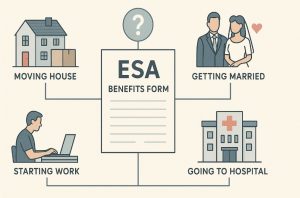
A change of circumstances refers to any alteration in the personal, medical, financial, or household status of an ESA claimant that might affect their eligibility or payment amount. This includes changes in income, address, medical condition, or who lives with you.
Reporting these changes is crucial because ESA is calculated based on specific factors. If your circumstances change and the Department for Work and Pensions (DWP) is not informed, you might receive incorrect payments. This could result in:
- Overpayments that must be repaid
- Reduction or stoppage of benefits
- Civil penalties or criminal investigations in serious cases
Notifying the DWP of changes helps ensure you continue to receive the correct level of support and remain compliant with benefit regulations.
When Should Someone Notify The DWP About A Change In Their Situation?
You should report a change as soon as it occurs. There is no formal grace period, and prompt notification is part of your legal obligation as a benefit claimant.
Time-sensitive examples include:
- Starting or leaving a job
- Changes in income
- Admission to hospital or a care facility
- Moving house
- Someone joining or leaving your household
If you are unsure whether a change affects your ESA, it is always safer to inform the DWP and let them decide.
How Do You Report A Change Of Circumstances To ESA?
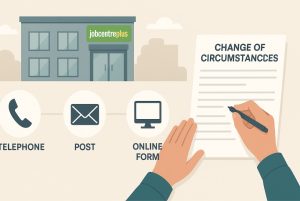
ESA changes must be reported directly to Jobcentre Plus using one of the following methods:
- Telephone: 0800 169 0310 (Textphone: 0800 169 0314)
- Relay UK: 18001 followed by 0800 169 0310
- British Sign Language video relay: Available for those who use BSL
- Post: Send a letter to the Jobcentre Plus office that handles your ESA
Have your National Insurance number ready and be prepared to explain the change in detail. You may also need to provide supporting documentation such as:
- Medical certificates or letters
- Payslips or contracts of employment
- Tenancy agreements or bills
It is recommended that you request confirmation from the DWP once the change has been recorded.
What Types Of Changes Must Be Reported To ESA?
The Department for Work and Pensions (DWP) requires all ESA claimants to report certain life changes that could affect the eligibility or payment amount of their Employment and Support Allowance.
These are known as “changes of circumstances”. Failing to report them can result in incorrect payments, overpayments, or even legal penalties.
The list of changes is extensive because ESA is means-tested benefit and based on personal, health-related, and financial factors. It’s essential to understand which specific changes must be reported and why each is important.
Personal And Household Changes
Changes in your personal life or living arrangements can impact your ESA entitlement. You must inform the DWP if:
- You move house: Even if you stay within the same town or city, the DWP must be updated with your new address to continue communication and assess any local authority-related benefits.
- Someone moves in or out of your household: This includes partners, children, lodgers, or family members, as their income and presence may affect your entitlement.
- You get married, divorced, or enter/leave a civil partnership: These changes could alter your benefit calculations, especially if your partner has income or savings.
- Your immigration status changes: If you or anyone in your household is not a British citizen, a change in immigration or residency status may affect eligibility.
- You go abroad: Any trips outside Great Britain, even temporary ones, must be reported. Staying outside the country can affect your ESA if the duration exceeds certain limits.
- You are sent to prison or held in legal custody: ESA may be reduced or stopped entirely if you’re in prison or remanded in custody.
- Someone in your household dies: The Tell Us Once service can be used to report a death, which will notify multiple government departments, including the DWP.
Medical And Disability-Related Changes
ESA eligibility is directly tied to your health and ability to work, so any changes in your medical condition or disability must be reported. This includes:
- Improvement or worsening of your health condition: If your condition changes significantly, the DWP may reassess your Work Capability Assessment status or ESA group.
- Admission to hospital, care home, or supported accommodation: Long-term stays, particularly over 4 weeks, can affect your entitlement.
- Change of doctor or GP practice: The DWP needs up-to-date information in case medical evidence is requested.
- You start or stop caring for someone: Whether you begin caring for someone or cease to, this can affect your benefit or entitle you to additional support.
Work, Training, And Education Changes
Starting or ending work, education, or training could have a direct impact on your ESA, especially if your income changes or you begin working more hours.
You must report if:
- You start or leave a job: Even if it’s part-time, temporary, or zero-hours contract work, it needs to be reported.
- Your working hours or role change: Working beyond the permitted limits can disqualify you from ESA.
- You begin or complete a course: This includes further education, university, apprenticeships, or even non-paid training programmes.
- You are part of a trade dispute: If you are not working due to a strike or trade-related issue, you must inform the DWP.
Income And Financial Changes
ESA payments are partially determined by your household income. Any changes to your earnings or regular sources of money must be reported to avoid miscalculations. You must inform the DWP if:
- You or someone in your household receives a pay rise or pay cut: Even if the change seems minor, it could influence your ESA amount.
- You receive back pay or arrears from an employer: This one-off payment can temporarily affect your total income calculation.
- You start or stop receiving another benefit: For example, if you begin claiming Universal Credit or stop receiving Carer’s Allowance.
- Your benefit amounts change: Any increase or decrease in a pension, grant, or regular support payments should be disclosed.
- Someone caring for you starts or stops receiving carer-related benefits: This includes Carer’s Allowance, Carer Support Payment, or the carer element of Universal Credit.
Assets And Savings
Your assets, including savings, investments, and property, can impact means-tested ESA (income-related ESA). You must report if:
- You or anyone in your household now has more than £6,000 in savings: This includes money in the bank, ISAs, stocks, or bonds.
- You receive a one-off payment: Inheritance, compensation, or a redundancy payout could increase your capital and affect ESA entitlement.
- There is a change in the value or ownership of property: Acquiring, selling, or changing ownership of a property needs to be reported even if the property is not your main home.
Categories Of Reportable ESA Changes
| Category | Examples Of Changes You Must Report |
| Personal and Household | Moving house, marriage, new household members, travel abroad |
| Medical and Disability | Health improvement, hospital stay, new carer, change of GP |
| Work and Education | Starting a job, increasing work hours, entering a course or apprenticeship |
| Income and Benefits | Change in salary, back pay, new benefit claim, change in carer’s benefit |
| Savings and Assets | Savings over £6,000, inheritance, selling or acquiring property |
In general, if you experience any life change and are unsure whether it affects your ESA, it is best to report it. The DWP can then assess whether further action is necessary. Keeping your benefit record up to date ensures that you are receiving the right level of support and avoids potential penalties.
What Are The Consequences Of Not Reporting A Change In Circumstances?

Failing to report changes in circumstances to the DWP can result in serious consequences. Even if the change seems small, it might have a larger impact on how your ESA Payments is calculated.
Consequences may include:
- Overpayment recovery: The DWP will require you to repay any excess ESA received
- Penalty charges: You may be fined £50 for not reporting or giving incorrect information
- Suspension of benefits: Payments may be paused until the situation is clarified
- Fraud investigation: Deliberate failure to report can lead to prosecution
These outcomes not only affect your current benefits but could also impact future applications for support.
How Does The DWP Verify The Reported Changes?
After you report a change, the DWP may take several steps to confirm the information:
- Requesting evidence: Documents such as GP letters, payslips, or housing agreements may be needed
- Conducting reviews: Your ESA claim might be re-evaluated, and a Work Capability Assessment could be triggered
- Home visits or phone interviews: In complex cases, the DWP may reach out for further details
Timelines vary depending on the type of change. Minor updates like a new phone number might be processed within days, while a change in medical condition could take several weeks due to the need for medical evidence or assessments.
Can ESA Payments Increase Or Decrease After Reporting A Change?
Yes, reporting a change can result in adjustments to your ESA payments. The DWP may reassess your situation and determine whether you qualify for a different ESA group or a revised amount.
Changes that could increase your ESA include:
- Worsening of a health condition
- Becoming eligible for the Support Group
- A reduction in other income sources
Changes that may decrease your ESA include:
- Returning to work or increasing hours
- Receiving inheritance or savings over £6,000
- Someone in your household starting work or receiving another benefit
Changes That Impact ESA Payments
| Change Reported | Potential Outcome |
| Deterioration in health | Possible increase in ESA |
| Start of part-time job under Permitted Work | ESA continues with limits |
| Receipt of inheritance over £6,000 | ESA may be reduced or stopped |
| Partner moves in and earns income | ESA amount could decrease |
| Ending of student loan payments | ESA may increase if income drops |
How Can Claimants Contact The DWP For ESA Updates Or Questions?
If you need to ask questions or report a change related to ESA, you can contact the DWP through Jobcentre Plus using the following contact details:
- Telephone: 0800 169 0310
- Textphone: 0800 169 0314
- Relay UK: Dial 18001 followed by 0800 169 0310
- Welsh Language Line: 0800 328 1744
- British Sign Language (BSL) Video Relay: Available on the GOV.UK site
Lines are open Monday to Friday, from 8am to 5pm. When calling, keep your National Insurance number and any relevant documents to hand.
What Are The Most Common Mistakes When Reporting Changes To ESA?
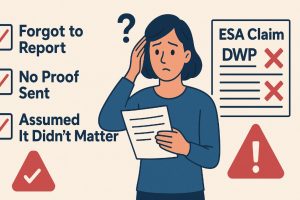
Many ESA claimants unintentionally make errors that could result in payment issues. The most frequent mistakes include:
- Not realising a minor life change needs to be reported
- Assuming that changes won’t impact ESA
- Delaying notification of changes
- Failing to retain copies of documents sent to the DWP
- Not checking if changes made by someone else in the household affect the benefit
Avoiding these mistakes is essential for ensuring uninterrupted support and remaining compliant with benefit rules.
Conclusion
Staying on top of ESA change of circumstances is essential for maintaining your entitlement and avoiding overpayments or penalties.
Report changes as soon as they occur, use the correct reporting channels, and always keep records. If you’re ever unsure whether something needs to be reported, it’s better to ask than risk a problem with your benefits.
FAQs about ESA Change of Circumstances
What happens if I forget to tell ESA about a change?
You could be overpaid, and the DWP may ask for repayment. In serious cases, you may face a penalty or legal action for benefit fraud.
Can I report ESA changes online?
Currently, changes must be reported via phone or post. Online reporting for ESA is not yet fully available.
Do I need to inform ESA if I move in with a partner?
Yes, because this change could affect your benefit entitlement, especially if your partner has income or savings.
Will ESA stop if I start working part-time?
Not necessarily. Under the Permitted Work rules, some part-time work is allowed. However, you must report it and stay within earnings limits.
How long does it take for ESA to process a change?
Usually between 2–6 weeks, depending on the type of change and how quickly supporting evidence is provided.
Can my ESA be backdated after a reported change?
It can be, especially if the change would have increased your entitlement and was reported in time.
Where can I get help with ESA change notifications?
Citizens Advice, local council welfare advisors, and disability support charities can assist with ESA-related updates and appeals.
Related Articles: