The Department for Work and Pensions (DWP) is currently transitioning people from older legacy benefits, such as Employment and Support Allowance (ESA), to Universal Credit (UC).
With a governmesnt deadline set for September 2025, most ESA claimants will eventually need to switch.
This transition process is known as managed migration, and it’s crucial that claimants understand what this means for their financial support.
This blog explains who needs to switch, when and how, alongside key advice on preparing for the move and protecting your income.
What Is The Difference Between ESA And Universal Credit?
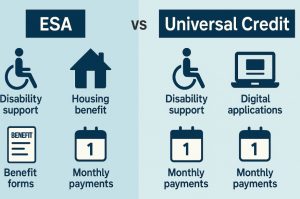
Employment and Support Allowance (ESA) supports individuals who are ill or disabled and unable to work.
It is available in two forms: income-related ESA, which is means-tested, and contribution-based ESA, which is based on National Insurance contributions. ESA is one of the six legacy benefits being phased out by the government.
Universal Credit (UC) is a single monthly payment that replaces multiple benefits, including income-related ESA, Housing Benefit, and Child Tax Credit.
It is designed to simplify the welfare system, offering one streamlined payment that can include housing, childcare, and support for those with limited capability for work.
Key differences include how the benefits are calculated, paid, and managed. Universal Credit is digital by default, requiring claimants to manage their accounts online. It is paid monthly, unlike ESA, which is usually paid fortnightly.
Why Are People Moving From ESA To Universal Credit?
The UK government is gradually moving people from legacy benefits, including income-related ESA, to Universal Credit through a process called managed migration.
This initiative aims to simplify the benefits system and ensure claimants receive all entitlements through a single, integrated system.
The Department for Work and Pensions (DWP) initiates the transition by sending out a migration notice.
This letter informs claimants that they must apply for Universal Credit by a specific date. The transition is mandatory for most people on income-related ESA.
Reasons for the switch include:
- Streamlining multiple benefits into one payment
- Increasing consistency in support delivery
- Enabling better alignment with employment and income changes
Managed migration is expected to be completed by September 2025.
Who Needs To Switch From ESA To Universal Credit?
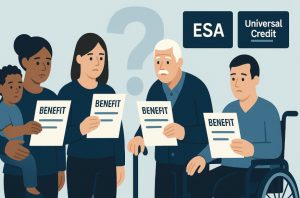
The transition from Employment and Support Allowance (ESA) to Universal Credit (UC) is not uniform for all claimants.
Whether or not an individual needs to switch depends largely on the type of ESA they receive and whether they claim other legacy benefits.
Understanding these distinctions is crucial, as applying at the wrong time or under the wrong circumstances could result in a reduction of financial support.
Types Of ESA And Their Role In Migration
There are two primary forms of ESA:
- Income-related ESA: This is a means-tested benefit for individuals with low or no income. It is one of the legacy benefits being replaced by Universal Credit.
- Contribution-based ESA: This is based on the National Insurance contributions a person has made. It is not classed as a legacy benefit and, on its own, does not trigger the need to switch to Universal Credit.
Those who receive only contribution-based ESA are not currently required to move to Universal Credit unless they are also receiving other benefits such as Housing Benefit or Child Tax Credit.
In contrast, individuals on income-related ESA, or a combination of both types, are likely to be migrated under the DWP’s managed migration process.
Who Will Be Affected By The Managed Migration?
The Department for Work and Pensions (DWP) is gradually identifying individuals on legacy benefits who will be required to move to Universal Credit by September 2025.
These individuals will receive a migration notice an official letter informing them that they must claim UC by a certain deadline.
The following groups are currently expected to make the switch:
- Claimants receiving income-related ESA
- Individuals receiving both ESA and Housing Benefit
- People who claim ESA along with other legacy benefits, such as Working Tax Credit or Child Tax Credit
The migration notice includes a date by which the individual must submit a Universal Credit claim. If they do not apply in time, their current benefits will stop, which may leave them without financial support until a new claim is made.
What About Contribution-Based ESA Only Claimants?
If a person is receiving only contribution-based ESA, and no other legacy benefits, they may not be required to switch at this time.
However, if they begin claiming additional benefits that are now part of UC, such as housing support or child tax credits or experience a change in their circumstances, they could be prompted to apply for Universal Credit sooner.
In cases where contribution-based ESA is combined with income-related ESA, the claimant will be required to move to UC.
What Happens If You Receive A Migration Notice?
Once a claimant receives a migration notice, they are legally required to apply for Universal Credit within the period specified in the letter, usually three months. Failure to apply within this timeframe can result in the termination of their income-related ESA and other linked benefits.
The notice is tailored to the individual’s situation and will state the benefits that will end, the deadline to apply, and what to expect during the migration process. It is essential that claimants do not delay their application once the notice is received.
Claiming Before Receiving A Migration Notice
It is possible for some ESA claimants to move to Universal Credit voluntarily before receiving a migration notice.
However, this is not recommended in most cases, as doing so will make them ineligible for transitional protection the safeguard designed to prevent a sudden drop in benefit income when moving to UC.
Voluntary transition may be triggered by:
- Moving to a new local authority area (affecting Housing Benefit)
- Forming a new household or separating from a partner who is a UC claimant
- Starting work and needing additional financial support such as childcare
If any of these changes occur before receiving a migration notice, the claimant may have no choice but to switch to Universal Credit.
It is strongly advised that individuals in this situation seek independent benefits advice before making any decisions, as early migration can lead to lower payments in the long term.
When Will ESA Claimants Be Asked To Move To Universal Credit?
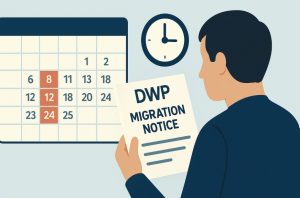
The timeline for the move is determined by the DWP. The department is gradually issuing migration notices to eligible claimants, with a full transition expected by September 2025. Each claimant receives a unique deadline in their notice, typically giving them three months to apply.
Once the letter is received, individuals must prepare documentation and apply within the specified window. Applying early can lead to financial loss as transitional protection is only available if the application is made after receiving the official notice.
Examples of when migration may be triggered early include:
- Moving to a different council area
- A partner moving in or out, changing household eligibility
- Claiming as a couple where one partner already receives UC
The DWP clearly outlines the deadline in the migration notice. Missing the deadline will result in loss of ESA and housing support.
What Happens To ESA Payments During The Transition To Universal Credit?
When someone applies for Universal Credit, their existing ESA and housing benefit payments typically continue for two more weeks. This is designed to cushion the financial gap during the transition. However, the first Universal Credit payment usually arrives around five weeks after a successful claim.
This means there may still be a three-week period with no income. To manage this, claimants can apply for an advance payment from UC. This advance is a loan and must be repaid over time, typically over 24 months, reducing future payments.
Limited financial support during this waiting period can create strain, especially for households with higher expenses. Therefore, it’s recommended to prepare in advance by saving money or seeking budgeting support.
Will Claimants Lose Money When Moving To Universal Credit?
Some claimants may find that their Universal Credit entitlement is lower than their previous ESA payments. To address this, the DWP provides transitional protection for those moving under managed migration. This protection ensures that no one loses money at the point of transfer.
However, transitional protection is only available under specific circumstances:
- The individual must wait to receive the migration notice
- They must apply for UC within the time frame given
- There must be no significant change in circumstances before applying
If someone applies for Universal Credit before receiving the migration notice, transitional protection is not provided. Similarly, if a change in household income or structure occurs before the transition, the entitlement may be recalculated, often resulting in a lower payment.
Claimants are advised to seek guidance if unsure whether a change in their situation could impact their eligibility or payment level.
How Do You Claim Universal Credit After Receiving The Migration Letter?

Once a migration notice is received, the claimant must begin the application process for Universal Credit online. The DWP outlines a clear process that includes setting up an online account, verifying identity, and submitting supporting documents.
Documents needed include:
- Valid ID such as a passport or driver’s licence
- Proof of address like an energy bill or council tax letter
- Bank account details
- Tenancy agreement or rent statement
In most cases, claimants do not need to undergo a new Work Capability Assessment, especially if they already had one under ESA. However, if their condition has changed or an assessment was due for review, the DWP may request a new evaluation.
The application must be completed online, and all correspondence with Universal Credit is managed through a digital journal. This means reliable access to the internet and a smartphone or computer is essential.
What Support Is Available For People Moving From ESA To UC?
Several services and tools are available to assist claimants during the migration. The most important are:
- Citizens Advice Help to Claim Service: Offers guidance with completing a UC application
- Shelter UK: Provides housing-related support and advice
- DWP Work Coaches: Available at Jobcentres to support complex or vulnerable claimants
- Online Calculators: ‘entitledto’ and ‘Better Off’ tools help estimate benefits and compare incomes
In addition, if a claimant needs help accessing the internet, local libraries, Jobcentres, and community organisations often offer internet access and digital support.
Support is also available for individuals who may struggle with the transition due to disability, mental health issues, or a lack of understanding of digital processes.
How Can People Prepare For The Switch From ESA To Universal Credit?

Preparing in advance is key to a smooth transition. The following steps can help individuals avoid delays and protect their entitlement:
- Wait for your migration notice before applying
- Open a bank account if you do not already have one
- Ensure you have online access and a working email address
- Gather necessary documentation, including ID and tenancy agreements
- Discuss UC payment arrangements with a partner if claiming jointly
The DWP advises that you should not rely on someone else’s phone or internet access, as Universal Credit requires ongoing management of your account.
Below is a helpful comparison of steps before and after receiving a migration notice.
| Task | Before Receiving Migration Notice | After Receiving Migration Notice |
| Check benefit entitlement | Use calculators | Review UC estimate |
| Prepare ID and documents | Yes | Yes |
| Apply for Personal Independence Payment (PIP) | Optional | Optional |
| Apply for Universal Credit | No | Yes, within 3 months of notice |
| Transitional protection available | No | Yes |
Another way to prepare is to apply for Personal Independence Payment (PIP) if not already receiving it. PIP is not affected by the move to Universal Credit and continues separately. The application process can take several months and involves an assessment, so starting early is recommended.
Additionally, claimants should plan financially for the five-week waiting period after applying for Universal Credit. If possible, set aside money to cover living costs during this time or speak with a Jobcentre advisor about advance payment options.
Conclusion
The move from ESA to Universal Credit is part of a major benefits overhaul set to complete by September 2025. Most people on income-related ESA will need to act when they receive their migration notice from the DWP.
By preparing early and following the proper steps, including waiting for your letter and gathering the required information, claimants can protect their income and transition smoothly. It’s important to seek expert advice if you are unsure how a change in circumstances might affect your entitlement.
Frequently Asked Questions
What is the “migration notice” from DWP and why is it important?
A migration notice is an official letter from the DWP informing ESA claimants they must apply for Universal Credit. It includes a deadline and instructions. You must follow it to continue receiving financial support.
Can I stay on ESA instead of moving to Universal Credit?
No. If you’re receiving income-related ESA, you will be required to move to Universal Credit by September 2025. If you don’t apply by the date in your migration notice, your payments will stop.
What happens if I miss the deadline to claim Universal Credit?
Missing the UC claim deadline could result in a complete loss of financial support. Contact the DWP or seek advice immediately if you think you’ll miss the deadline.
Is the transition automatic or do I have to apply for UC myself?
The transition is not automatic. Once you receive a migration notice, you must complete a Universal Credit application within the specified timeframe.
Can I appeal if my Universal Credit payment is lower than ESA?
You may be eligible for transitional protection, but if your payment is lower and you think it’s incorrect, you can request a mandatory reconsideration or appeal the decision.
What happens to my housing benefit when I move to UC?
Housing benefit ends and is replaced by the housing element of Universal Credit. You’ll need proof of rent or a tenancy agreement for this to be included in your payment.
Where can I get help if I’m struggling during the migration process?
You can contact Citizens Advice, Shelter UK, or use the DWP Help to Claim service. These organisations can assist with applications, documents, and understanding your entitlements.