Understanding when Child Benefit payments are made can be crucial for budgeting and managing family finances.
While the Department for Work and Pensions (DWP) and HMRC administer these payments consistently, the exact time funds appear in a bank account can vary depending on several factors.
This article outlines when Child Benefit typically arrives, how to track it, and what to do if a payment is delayed.
What Time Does Child Benefit Usually Arrive in Bank Accounts?
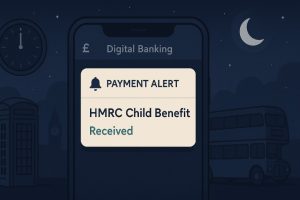
Child Benefit payments are processed by HMRC and are generally made on either a Monday or Tuesday, depending on the claimant’s schedule.
While the payment date itself is predictable, the time funds are credited to the bank account can differ significantly based on the financial institution used.
Many UK banks process incoming payments overnight. In most cases, the money is available shortly after midnight on the scheduled payment date.
Some banks may credit the funds slightly earlier, usually around 11:30 PM on the evening before. However, others may not release the funds until early morning on the day of the payment.
Here’s how the timing typically looks:
| Bank Name | Estimated Deposit Time |
| Barclays | Between 11:45 PM and 12:30 AM |
| HSBC | 12:00 AM to 1:00 AM |
| Lloyds Bank | 11:30 PM to 12:30 AM |
| Nationwide | 12:00 AM to 1:30 AM |
| Monzo | Around 1:00 AM |
| Starling Bank | By 12:00 AM |
| NatWest | Between 11:45 PM and 12:15 AM |
The actual time your payment appears in your account can vary depending on:
- Your bank’s internal processing system
- The day of the week
- Any technical delays
- Bank holidays or public events
These time frames apply only after HMRC has issued the payment on time. If there are any delays in processing from their side, the credit may appear later than expected.
How Often Is Child Benefit Paid in the UK?
In the UK, Child Benefit is designed to provide families with regular financial support to help with the cost of raising children.
For most claimants, this support is paid every four weeks, creating a predictable and manageable cycle for household budgeting.
This four-weekly schedule helps families align their benefit payments with other regular expenses such as rent, utility bills, and groceries.
However, there is flexibility built into the system for those who need more frequent access to funds.
Claimants may opt to receive Child Benefit on a weekly basis under specific circumstances. This option is particularly useful for families who depend on weekly income to manage their financial commitments.
Who Can Receive Weekly Payments?
Weekly Child Benefit payments are not automatically applied to all recipients.
To qualify for this payment frequency, the claimant must either:
Be a single parent, regardless of income level
Be receiving certain income-related benefits, such as:
- Income Support
- Income-based Jobseeker’s Allowance (JSA)
- Pension Credit
- Employment and Support Allowance (income-related)
Those eligible for weekly payments can request this option when applying for Child Benefit or by contacting HMRC to update their preference.
Here’s a summary comparing the two options:
| Payment Frequency | Eligibility | Ideal For |
| Every 4 Weeks | Default for most claimants | Families with stable monthly budgets |
| Weekly | Single parents or income-based benefit claimants | Those needing more frequent cash flow |
This flexibility allows HMRC to tailor the benefit to the financial needs of diverse households across the UK.
It’s worth noting that once a payment frequency is set, it remains in place unless the claimant updates their details or circumstances change.
Claimants who no longer meet the eligibility for weekly payments may be switched back to the standard four-week schedule automatically.
When Will You Receive Your First Child Benefit Payment?
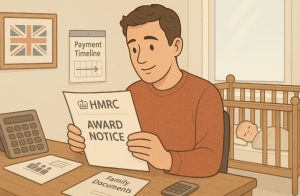
Once a Child Benefit claim is submitted and approved, the first payment typically takes up to 12 weeks to arrive.
This initial delay is not uncommon and is due to the time required for HMRC to process applications, verify information, and confirm eligibility.
For applicants who have recently moved to the UK, the process can take longer because additional documentation or checks may be required.
In these cases, claimants are often asked to provide proof of residence, immigration status, and other supporting documents.
Despite the potential delay, families do not lose out financially. HMRC offers backdated payments of up to three months from the date of the claim.
This means that even if the first payment takes several weeks, it may include a lump sum covering previous entitlement.
Example Scenario
If a claimant applied for Child Benefit on 1 January and their application was processed on 15 March, their first payment might arrive on 20 March.
However, that payment could cover the period from 1 January to 20 March, ensuring no loss of support during the processing time.
How to Find Your First Payment Date?
The official confirmation of the first payment date will be included in the award notice sent by HMRC once the application is approved.
This notice outlines:
- The amount you’re entitled to
- The date of the first payment
- The frequency of subsequent payments
Once the first payment is received, families can use that date as a reference point to work out future payments, typically every four weeks from that date.
If there’s a change in the family’s circumstances between the application date and the first payment, such as the child no longer living with the applicant, this could affect the amount or eligibility.
It’s important to report any such changes to HMRC as soon as possible to prevent overpayments or delays.
By being aware of the expected timeline and the process involved, families can better plan around the initial waiting period and avoid unnecessary concern if the payment doesn’t arrive immediately after applying.
How Can You Work Out Your Next Child Benefit Payment Date?
To calculate your next payment date, you can simply count forward four weeks from the date of your last payment.
It’s important to refer to a calendar to avoid miscounting and take note of any upcoming public holidays that may shift the schedule.
HMRC does not always send reminders about future payments, so keeping track manually is essential. If your last payment landed on a Monday, your next one should arrive four Mondays later.
In cases where a payment date falls on a bank holiday, HMRC typically issues the payment early to ensure funds are available beforehand.
Useful ways to calculate or confirm your next payment:
- Check the date of your last deposit via online banking
- Look at the payment reference, usually starting with “HMRC Child Benefit”
- Refer to the award notice for the scheduled dates
How Can You Check the Status of Your Child Benefit Payment?
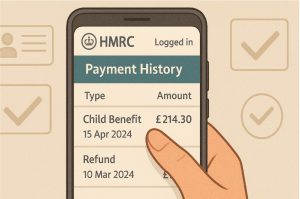
If you’re unsure whether your Child Benefit payment has been sent, there are a couple of ways to verify its status. This helps avoid unnecessary worry or delays in financial planning.
You can check:
- Your bank statement for the payment reference: ‘HMRC Child Benefit’
- Your HMRC online account, where up to five past payments can be viewed
To use the online service, you must sign in through the HMRC portal. If it’s your first time, you’ll be prompted to create login credentials and may need to verify your identity using photo ID such as a passport or driving licence.
This system helps ensure account security and allows claimants to track the flow of their benefits.
What Should You Do If Your Child Benefit Payment Is Late?
If a payment does not arrive on the expected date, there are a few checks you should make before contacting the Child Benefit Office.
Late payments can be distressing, especially for families relying on this support, but many delays can be explained by simple issues.
Initial steps to take include:
- Check your payment date against your calendar
- Confirm with your bank whether there have been delays in crediting the funds
- Review recent correspondence from HMRC for updates or requests
Common reasons for delayed or missing payments:
- HMRC has not received updated bank details following an account change
- You did not respond to a letter or request from the Child Benefit Office
- Your child has turned 16 and you haven’t updated their education status
- Your child is no longer living with you
- You are no longer eligible for Child Benefit
If none of these apply and the payment has still not arrived, you should contact the Child Benefit Office with your National Insurance number and claim details.
Can the Time of Deposit Vary Between Banks?
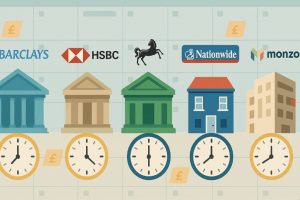
The time at which Child Benefit funds appear in your bank account can vary significantly depending on your financial institution.
Some banks release funds shortly after they receive the payment file from HMRC, while others may have scheduled batch processes that delay visibility.
Key factors that influence deposit timing include:
- Time of day HMRC sends the payment file
- Bank processing schedules (overnight vs. early morning)
- System maintenance or technical outages
- Type of account (personal vs. joint or business accounts)
Some digital banks, like Monzo and Starling, tend to make funds available slightly earlier due to faster processing systems. Traditional banks may take longer, especially over weekends and public holidays.
Tips to manage expectations:
- Monitor past payment patterns to establish a routine
- Note which time payments usually appear with your bank
- Allow for occasional delays during holiday seasons or system updates
What Happens If a Payment Falls on a Bank Holiday?
When Child Benefit payments are scheduled on a public or bank holiday, HMRC adjusts the deposit date to ensure families have access to funds when banks are closed. In most cases, payments are made on the last working day before the holiday.
This approach helps prevent delays that could otherwise leave families without necessary funds over an extended period. However, the change in schedule may impact your usual routine, so it’s important to plan ahead.
A few important notes:
- Always check the published HMRC holiday payment schedule
- Plan your finances around earlier payments when holidays approach
- Bank-specific delays may still apply even with early HMRC processing
In some cases, if there’s a delay or error during a holiday period, resolving the issue might take longer due to reduced staffing at both banks and HMRC.
How Can You Track and Manage Child Benefit Payments Efficiently?
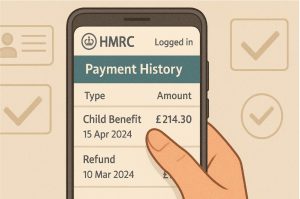
Staying organised and proactive can make managing Child Benefit payments easier. With a few simple tools and habits, you can avoid surprises or disruptions in your financial planning.
Recommended practices:
- Set calendar reminders for your payment schedule
- Regularly log in to your HMRC account to check for updates
- Keep a personal record of all payments received
- Update HMRC promptly if your personal, banking, or family circumstances change
By taking a proactive approach, you can ensure consistent access to your benefits and quickly address any issues that arise.
Conclusion
Child Benefit plays a vital role in supporting families across the UK. While payments are reliably scheduled, the exact time funds appear in your account can depend on your bank.
By understanding when and how Child Benefit is paid, and by using available tools to track payments, families can manage their finances more effectively and avoid unnecessary stress.
FAQs About Child Benefit Timing and Tracking
What does ‘HMRC Child Benefit’ look like on a bank statement?
It typically appears as a payment reference beginning with ‘HMRC Child Benefit’ followed by a unique 18-character alphanumeric code.
Can child benefit be paid weekly instead of every four weeks?
Yes, weekly payments are possible if the claimant is a single parent or if they or their partner receive certain income-based benefits.
How long does it take to receive the first child benefit payment?
Usually up to 12 weeks, but it may take longer for new UK residents. The payment can be backdated up to three months from the claim date.
Do all banks deposit child benefit at the same time?
No, different banks process payments at different times, typically between 11:30 PM and 1:30 AM on the payment date.
What if I changed my bank account recently?
You must inform HMRC of any changes to your bank details to avoid payment issues or delays.
Why was my child benefit payment delayed?
Delays may occur due to bank holidays, outdated account details, or pending information about your child’s circumstances.
How do I report a missing or incorrect payment?
If the payment hasn’t arrived by the expected time and your bank confirms no deposit was made, you should contact the Child Benefit Office for assistance.