Quick answer: Child Benefit usually goes into a bank account in the early hours of the scheduled payment date, often shortly after midnight, but there is no guaranteed exact time.
If your payment has not appeared, check your bank account, your HMRC online account and whether any bank holiday has changed the usual date.
- Last checked: 7 July 2026.
- This is informational, not financial advice. For personal payment problems, contact HMRC or check your Child Benefit account.
Key takeaways:
- Child Benefit is usually paid every four weeks on a Monday or Tuesday.
- Some single parents and people on certain benefits may be able to get weekly payments.
- The exact bank deposit time can vary, even when HMRC sends the payment on schedule.
- If your payment date falls on a bank holiday, it is usually paid on a different working day.
- If your payment is missing, check your bank, HMRC account, payment date and recent letters before contacting the Child Benefit Office.
What Time Does Child Benefit Usually Arrive in Bank Accounts?

Child Benefit usually arrives in the early hours of the scheduled payment date, but HMRC does not give a guaranteed deposit time for every bank.
Many banks process incoming payments overnight, so some claimants may see the money shortly after midnight, while others may not see it until later in the morning.
The most reliable detail is the payment date, not the exact hour. If your Child Benefit is due on a Monday or Tuesday, your bank may show the payment during its normal overnight or early-morning processing window.
If your household budget depends on the payment, avoid assuming the money will always appear at the same minute each cycle.
If your Child Benefit has not arrived because you recently changed account details, read our guide on how to change Child Benefit bank details so you can check whether your payment information is up to date.
The table below gives estimated deposit windows based on typical overnight bank processing. These times should be treated as general guidance only, not as official HMRC or bank guarantees.
| Bank Name | Estimated Deposit Time |
| Barclays | Late evening to early morning |
| HSBC | Around midnight to early morning |
| Lloyds Bank | Late evening to shortly after midnight |
| Nationwide | Around midnight to early morning |
| Monzo | Early morning, depending on payment processing |
| Starling Bank | Around midnight or early morning |
| NatWest | Late evening to shortly after midnight |
Last checked: 7 July 2026. These are estimated timings only. HMRC confirms the payment date, but the exact time funds appear depends on your bank’s processing system.
These estimated timings only apply when HMRC has issued the payment on schedule and your bank has no processing delays. If the payment does not appear at the usual time, wait until later in the banking day before assuming it is missing. You should also check for bank holidays, account changes or HMRC letters requesting more information.
How Often Is Child Benefit Paid in the UK?
Child Benefit is usually paid every four weeks. GOV.UK says payments are normally made on a Monday or Tuesday, although the exact date can depend on your claim schedule.
Some people may be able to receive Child Benefit weekly, including single parents or claimants who receive certain benefits.
Weekly payments can help households that manage bills, food and childcare costs on a shorter budget cycle. However, weekly payments are not automatic for everyone.
If you are a single parent or your family circumstances have changed, it may also be useful to read our guide on how much a single parent can get on benefits.
There is no limit on the number of children you can claim Child Benefit for, but the weekly rate is different for the eldest or only child and each additional child. For a wider explanation, see our guide on how many children you can claim Child Benefit for.
Who Can Receive Weekly Payments?
Weekly Child Benefit payments are not automatically applied to all recipients.
To qualify for this payment frequency, the claimant must either:
Be a single parent, regardless of income level
Be receiving certain income-related benefits, such as:
- Income Support
- Income-based Jobseeker’s Allowance (JSA)
- Pension Credit
- Employment and Support Allowance (income-related)
Those eligible for weekly payments can request this option when applying for Child Benefit or by contacting HMRC to update their preference.
Here’s a summary comparing the two options:
| Payment Frequency | Eligibility | Ideal For |
| Every 4 Weeks | Default for most claimants | Families with stable monthly budgets |
| Weekly | Single parents or income-based benefit claimants | Those needing more frequent cash flow |
This flexibility allows HMRC to tailor the benefit to the financial needs of diverse households across the UK.
It’s worth noting that once a payment frequency is set, it remains in place unless the claimant updates their details or circumstances change.
Claimants who no longer meet the eligibility for weekly payments may be switched back to the standard four-week schedule automatically.
When Will You Receive Your First Child Benefit Payment?

Your first Child Benefit payment may take longer than your regular payments. This is because HMRC needs to process the claim, check eligibility and confirm the payment details before sending money to your account.
Once your claim is approved, HMRC will usually send an award notice showing the amount, the payment date and how often you will be paid.
If your first payment takes several weeks, you may still receive money backdated for up to three months from the date of your claim, depending on your eligibility. GOV.UK confirms that Child Benefit claims can be backdated for up to three months.
After your first payment arrives, use that date as the starting point for calculating your next payment. For most claimants, the next payment should be around four weeks later, unless a bank holiday or change of circumstances affects the date.
How to Find Your First Payment Date?
The official confirmation of the first payment date will be included in the award notice sent by HMRC once the application is approved.
This notice outlines:
- The amount you’re entitled to
- The date of the first payment
- The frequency of subsequent payments
Once the first payment is received, families can use that date as a reference point to work out future payments, typically every four weeks from that date.
If there’s a change in the family’s circumstances between the application date and the first payment, such as the child no longer living with the applicant, this could affect the amount or eligibility.
It’s important to report any such changes to HMRC as soon as possible to prevent overpayments or delays.
By being aware of the expected timeline and the process involved, families can better plan around the initial waiting period and avoid unnecessary concern if the payment doesn’t arrive immediately after applying.
How Can You Work Out Your Next Child Benefit Payment Date?
To work out your next Child Benefit payment date, check the date of your most recent payment and count forward four weeks.
If your payment usually arrives on a Monday, your next payment will normally be four Mondays later. If it usually arrives on a Tuesday, check four Tuesdays ahead.
You can also confirm the payment by checking your bank statement for the Child Benefit reference, reviewing your HMRC online account or looking at your original award notice. GOV.UK also provides Child Benefit payment date guidance, including changes around bank holidays.
If your payment amount has changed as well as the date, this may be caused by eligibility, child age, education status, overpayment recovery or a change in claim details. For more detail, read our guide on why your Child Benefit has decreased.
How Can You Check the Status of Your Child Benefit Payment?
If you’re unsure whether your Child Benefit payment has been sent, there are a couple of ways to verify its status. This helps avoid unnecessary worry or delays in financial planning.
You can check:
- Your bank statement for the payment reference: ‘HMRC Child Benefit’
- Your HMRC online account, where up to five past payments can be viewed
To use the online service, you must sign in through the HMRC portal. If it’s your first time, you’ll be prompted to create login credentials and may need to verify your identity using photo ID such as a passport or driving licence.
This system helps ensure account security and allows claimants to track the flow of their benefits.
What Should You Do If Your Child Benefit Payment Is Late?

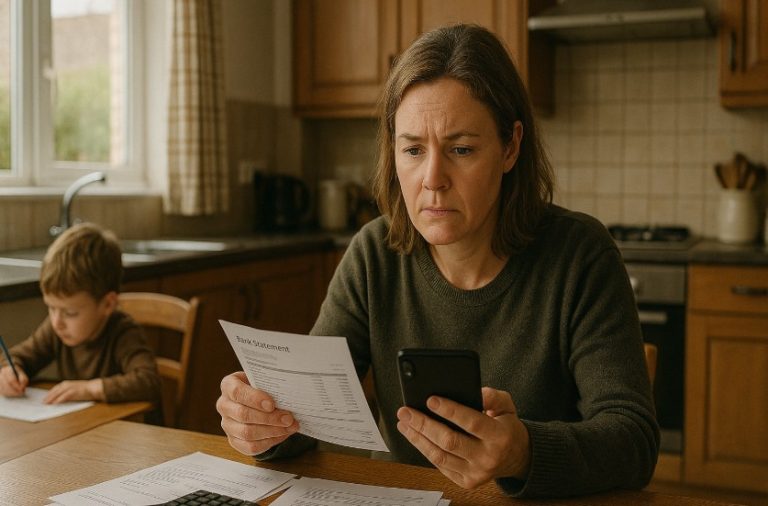
If your Child Benefit payment is late, do not panic straight away. The first step is to check whether the payment is actually due today, whether a bank holiday has changed the date, and whether your bank is still processing incoming payments.
Before contacting HMRC, check these points:
- Your last payment date and expected four-week cycle.
- Your bank account for the Child Benefit payment reference.
- Your HMRC online account for recent payment updates.
- Any letters or messages from HMRC asking for more information.
- Whether your bank details, address or family circumstances have changed.
A Child Benefit payment may be delayed or stopped if HMRC does not have your correct bank details, if you have not replied to a request, or if your child’s age or education status needs to be confirmed.
If your child is approaching 16, 18 or leaving approved education, read our guide on when Child Benefit ends before assuming the delay is a bank issue.
If your child is turning 18, the payment rules can become more specific depending on education or training. You can also read our guide on when Child Benefit stops after your child turns 18.
If none of these issues apply and the payment still has not arrived, contact the Child Benefit Office with your National Insurance number, Child Benefit number if available, payment date and bank details. GOV.UK lists the Child Benefit Office contact route for payment and claim enquiries.
Can the Time of Deposit Vary Between Banks?
Yes, the time Child Benefit appears can vary between banks. HMRC may send the payment on the correct date, but each bank has its own system for processing incoming funds. Some banks update balances shortly after midnight, while others release funds later in the morning.
The timing can also be affected by overnight maintenance, weekends, public holidays, internal bank checks or technical delays. This is why one claimant may see Child Benefit just after midnight while another claimant, paid on the same date, may not see it until several hours later.
The safest approach is to track your own bank’s usual pattern over several payment cycles. If the payment date is correct and your bank has no issue, the money should normally appear during the scheduled banking day.
What Happens If a Payment Falls on a Bank Holiday?
If your Child Benefit payment is due on a bank holiday, the payment date may change. GOV.UK says Child Benefit is usually paid on a different date when the normal payment date falls on a bank holiday.
In many cases, payments are made earlier, usually on the last working day before the bank holiday. However, it is still sensible to check the official Child Benefit payment date guidance before making financial plans.
Bank holiday changes can affect household budgeting because the payment may arrive earlier than expected. If you spend it early, you may need to wait longer until the next four-week payment cycle. Set a reminder for your normal schedule so you do not mistake an early bank holiday payment for an extra payment.
How Can You Track and Manage Child Benefit Payments Efficiently?

Staying organised and proactive can make managing Child Benefit payments easier. With a few simple tools and habits, you can avoid surprises or disruptions in your financial planning.
Recommended practices:
- Set calendar reminders for your payment schedule
- Regularly log in to your HMRC account to check for updates
- Keep a personal record of all payments received
- Update HMRC promptly if your personal, banking, or family circumstances change
By taking a proactive approach, you can ensure consistent access to your benefits and quickly address any issues that arise.
Conclusion
Child Benefit is usually paid on a regular schedule, but the exact time it appears in your bank account depends on your bank’s processing system. Most families are paid every four weeks, while some single parents or people on certain benefits may receive weekly payments.
If your payment is late, check your payment date, bank account, HMRC account and any recent letters before contacting the Child Benefit Office. Keeping your bank details and family circumstances up to date can help avoid delays, missed payments or overpayments.
FAQs About Child Benefit Timing and Tracking
What time does Child Benefit usually go into the bank?
Child Benefit often appears in the early hours of the scheduled payment date, but there is no fixed guaranteed time. Some banks may show the payment shortly after midnight, while others may process it later in the morning.
Is Child Benefit paid by DWP or HMRC?
Child Benefit is handled by HMRC. Some people search for DWP payments because many UK benefits are linked with DWP, but Child Benefit payment guidance and claim support come through HMRC.
Is Child Benefit paid weekly or every four weeks?
Child Benefit is usually paid every four weeks. Some single parents or people receiving certain benefits may be able to get weekly payments instead.
Why has my Child Benefit not gone in today?
Your payment may be delayed because of bank processing, a bank holiday, changed bank details, missing information, a child’s age or education status, or a change in eligibility.
What should I check before calling HMRC?
Check your bank account, payment date, HMRC online account, recent HMRC letters and whether your bank details are correct. If the payment still has not arrived, contact the Child Benefit Office.
Can Child Benefit be paid early?
Yes, Child Benefit may be paid earlier when the normal payment date falls on a bank holiday. Always check the official payment date guidance before relying on the usual date.
Editorial note: This guide is based on GOV.UK and HMRC Child Benefit guidance and is reviewed for accuracy. Child Benefit rules, payment dates and eligibility checks can change, so readers should confirm personal claim details through GOV.UK, their HMRC online account or the Child Benefit Office.
This is informational, not financial advice. If you are unsure about your own claim, payment delay or eligibility, contact HMRC directly.
How We Edited This Article?
We edited the article to make it more accurate, trustworthy and search-intent focused for the keyword “what time does Child Benefit go into bank.”
We changed the intro so it clearly says Child Benefit is handled by HMRC, not DWP, because GOV.UK Child Benefit guidance is published under HMRC and explains when and how payments are made.
We improved the payment-frequency section by adding the official rule that Child Benefit is usually paid every four weeks on a Monday or Tuesday, with weekly payments possible for single parents or people receiving certain benefits.
Source Links
GOV.UK – Child Benefit: When and how it’s paid
https://www.gov.uk/child-benefit/when-and-how-its-paid
GOV.UK – Child Benefit payment dates
https://www.gov.uk/child-benefit-payment-dates
GOV.UK – Child Benefit: Make a claim
https://www.gov.uk/child-benefit/how-to-claim
GOV.UK – Child Benefit enquiries
https://www.gov.uk/find-hmrc-contacts/child-benefit-general-enquiries
Citizens Advice – Payment of benefits and tax credits
https://www.citizensadvice.org.uk/benefits/benefits-introduction/payment-of-benefits-and-tax-credits/