When preparing for retirement, many wonder whether receiving Child Benefit has helped build their State Pension.
For those who’ve taken time off work to care for children, especially before their 12th birthday, this is an important question with long-term financial implications.
In the UK, Child Benefit can play a crucial role in ensuring National Insurance (NI) contributions remain intact during periods of lower or no income.
This article explores exactly how Child Benefit can contribute towards your State Pension and what steps you might need to take.
What Is Child Benefit And Who Can Claim It In The UK?
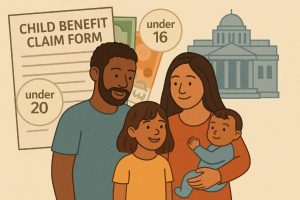
Child Benefit is a regular financial support provided to parents or guardians responsible for raising children. It’s not means-tested, but higher income levels may affect how much is retained after tax.
Eligibility criteria:
- The child must be under 16, or under 20 and in approved education or training
- The claimant must be responsible for the child
For the 2025/26 tax year:
| Child Benefit Type | Weekly Rate |
| First Child | £26.05 |
| Each Additional Child | £17.25 |
If a person or their partner earns more than £60,000 annually in adjusted net income, a portion of the benefit may be reclaimed through the High Income Child Benefit Tax Charge.
If income exceeds £80,000, the full amount is usually repaid through tax. Still, claiming is encouraged to secure associated National Insurance credits.
Does Claiming Child Benefit Help Build Your State Pension?
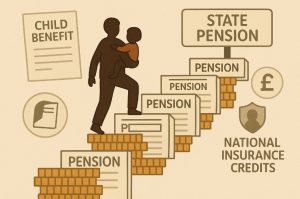
Claiming Child Benefit is not only about receiving financial support while raising children, it also plays a key role in helping build entitlement to the State Pension.
For individuals who are not employed or earning below the National Insurance threshold, this benefit helps maintain continuity in their National Insurance record, which is critical for securing a full State Pension.
How Child Benefit Links To National Insurance Credits?
When an individual claims Child Benefit for a child under the age of 12, they automatically receive National Insurance credits. These credits serve as substitutes for actual NI contributions and are added to the claimant’s NI record each qualifying year.
These credits:
- Are automatically applied as long as Child Benefit is claimed
- Count toward the 35 qualifying years needed for a full State Pension
- Do not require the claimant to be employed or earning
The credits stop once the child turns 12, so it’s essential for parents to understand how these early years are protected.
Why The Named Claimant Matters?
Only the person who is officially named as the Child Benefit claimant receives the National Insurance credits. In households with one working and one non-working parent, it’s often beneficial for the non-working parent to be the named claimant.
Otherwise, the working parent receives the credits even though they may already be paying NI through employment and may not need them.
Ensuring the right person is named on the claim is essential to avoid missed credits, especially if one partner is not earning or is earning below the threshold.
Long-Term Impact On Pension Entitlement
The long-term benefits of Child Benefit-linked credits are significant. Over a 12-year period, if the claimant remains eligible, they could gain up to 12 qualifying years towards their pension.
This can close gaps in their NI record, raise their projected State Pension amount, and even prevent them from falling below the minimum 10-year threshold required to receive any State Pension at all.
What Are National Insurance Credits And How Do They Work With Child Benefit?
National Insurance credits are a mechanism used by the government to help protect the State Pension rights of individuals who are not making contributions due to valid circumstances. One of the most common ways people receive these credits is through claiming Child Benefit.
What Are National Insurance Credits?
National Insurance credits are essentially contributions awarded to individuals who are not in paid employment but are in situations recognised as qualifying. They allow people to build their NI record without actually paying NI contributions.
Qualifying scenarios include:
- Being a carer or stay-at-home parent
- Receiving unemployment or sickness-related benefits
- Claiming Child Benefit for a child under 12
Each year of NI credits counts as a qualifying year toward the State Pension. Accumulating 35 of these qualifying years will allow an individual to claim the full State Pension, while 10 years is the minimum required to receive any amount.
Child Benefit As A Pathway To Credits
When a parent or guardian claims Child Benefit, and their youngest child is under the age of 12, they are awarded NI credits automatically provided they are the named claimant. These credits are granted by default unless the claimant is already paying sufficient NI through employment.
Key points include:
- Credits are added without needing to apply separately
- They apply each tax year the benefit is claimed
- They can only be claimed by one person per household
This system ensures that parents and carers can protect their future pension rights even if they take time off work or reduce their working hours during the child-rearing years.
Overlapping Entitlements And Eligibility
In some cases, individuals may be eligible for NI credits from more than one source for example, Child Benefit and Carer’s Allowance.
However, you can only receive one set of credits per year. If you are working and already meeting your NI contribution through earnings, you may not need additional credits from Child Benefit, which opens the opportunity to transfer those credits to someone else in the family who needs them.
This is especially useful in families where one partner is the sole earner, and the other is caring full-time for the child. Transferring NI credits can help balance pension entitlements across the household.
How Do National Insurance Credits Contribute To The State Pension?
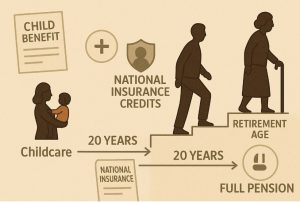
To qualify for the full State Pension, an individual must have 35 years of National Insurance contributions or credits. Each year of credited Child Benefit adds to this total, allowing parents and carers to maintain progress even when not working.
| Requirement | Details |
| Minimum Qualifying Years | 10 years |
| Full Pension Requirement | 35 years |
| Years Covered By Child Benefit | Until youngest child turns 12 |
| Type Of Contribution | National Insurance Credits |
If someone has fewer than 35 years of qualifying contributions or credits, their pension will be reduced proportionally. For example, 20 qualifying years may only provide slightly more than half of the full entitlement.
What Is Home Responsibilities Protection And Does It Still Apply?
Home Responsibilities Protection (HRP) was a scheme introduced in 1978 to safeguard State Pension rights for people who stayed home to care for children or elderly relatives. It applied to those receiving Child Benefit before 6 April 2010.
HRP was replaced by National Insurance credits. Past HRP years were converted into NI credits automatically if the individual was eligible. It is important to check one’s NI record to confirm these conversions have been applied accurately.
Can Stay-At-Home Parents And Carers Get National Insurance Credits Through Child Benefit?
Yes, stay-at-home parents and carers can receive NI credits automatically when they claim Child Benefits. This provision acknowledges the value of unpaid caregiving and ensures that individuals are not penalised in retirement for prioritising childcare.
Situations that qualify:
- The parent chooses to stay home during the early years
- The claimant is unemployed or earning below the NI threshold
- A part-time carer with insufficient income to pay NI contributions
These credits are valuable for building up qualifying years for the State Pension and require no additional paperwork beyond claiming Child Benefit.
What If I Opted Out Of Receiving Child Benefit Payments – Do I Still Get Credits?
Many higher-income earners opt out of receiving Child Benefit payments to avoid the tax charge. However, opting out of payments without officially claiming Child Benefit can result in missing out on National Insurance credits.
To receive credits without accepting payments:
- Submit a Child Benefit claim
- Select the option to stop payments
- Ensure the claimant is the person needing the credits
If no claim is made, even those who are eligible will not receive credits, and this could create gaps in their record. Backdating may be possible for up to three months but should be addressed promptly.
Can National Insurance Credits Be Transferred To A Partner Or Relative?

Yes, in certain situations, surplus NI credits from Child Benefit can be transferred. If the person claiming is already working and earning enough to pay NI contributions, they might not need the credits. These can be transferred to someone else who is eligible but not earning or contributing.
There are two main transfer types:
- Partner Transfers: Credits may be transferred annually to a partner who is not working or on a low income
- Specified Adult Childcare Credits: Credits can be given to grandparents or other relatives who provide regular childcare
This ensures that others contributing to a child’s upbringing are recognised in their pension records.
How Can You Check Your National Insurance Record And State Pension Forecast?
Keeping track of one’s NI contributions and future pension entitlement is straightforward and encouraged. Individuals can check their record to ensure credits are being applied correctly and identify any gaps early.
Key checks include:
- Total number of qualifying years
- Any missing years and reasons
- Eligibility for buying voluntary contributions
- Predicted weekly pension payment
People can also request a State Pension forecast which gives an estimate of how much they are likely to receive at retirement and how many additional years they may need to contribute.
How Much Is The Full State Pension And How Many Years Of Credits Do You Need?
The full new State Pension for the 2025/26 tax year is £230.25 per week, which amounts to £11,973 annually. This amount is available to those with 35 qualifying years.
If someone has between 10 and 34 years, they will receive a portion of the full amount. No State Pension is paid to those with fewer than 10 years, although voluntary contributions can sometimes fill the gap.
| State Pension Facts (2025/26) | Details |
| Full Weekly State Pension | £230.25 |
| Full Annual State Pension | £11,973 |
| Minimum Qualifying Years | 10 years |
| Years Needed For Full Pension | 35 years |
| NI Credits Via Child Benefit Ends At Age | 12 (of youngest child) |
Monitoring one’s progress can help avoid shortfalls and guide whether voluntary contributions or credit transfers may be necessary.
What Steps Should You Take If There Are Gaps In Your National Insurance Record?
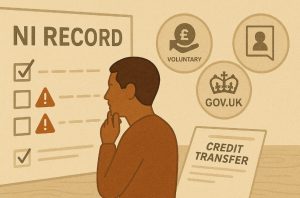
Gaps in your National Insurance record can reduce your pension entitlement. Fortunately, there are ways to identify and address these.
Recommended steps:
- Review your NI record regularly
- Check if you claimed Child Benefit during gap periods
- Apply for backdated Child Benefit if within the eligible time window
- Consider voluntary Class 3 contributions to fill missing years
- Contact HMRC to resolve any discrepancies or request advice
Acting early ensures your record remains accurate and that you are fully credited for any qualifying periods linked to Child Benefit or other allowances.
Conclusion – Does Child Benefit really help build your State Pension?
Yes, claiming Child Benefit can significantly contribute to your State Pension by providing vital National Insurance credits during the early years of child-rearing. For parents and carers, especially those not in paid work, these credits ensure they’re not penalised at retirement.
The system has been designed to protect future pension rights for those who dedicate time to raising children. However, ensuring you are the named claimant and checking your NI record regularly are key to making the most of these entitlements.
Frequently Asked Questions
What happens to my State Pension if I missed claiming Child Benefit?
You might have gaps in your NI record, which could reduce your pension. It’s important to claim—even if you opt out of payments—to receive credits.
Can grandparents really receive National Insurance credits?
Yes, through Specified Adult Childcare Credits. They must apply annually if caring for a grandchild under 12 while the parent works.
Is it possible to backdate Child Benefit claims to receive pension credits?
You can backdate a Child Benefit claim by up to 3 months. After that, you may miss out on credits unless special circumstances apply.
Will receiving Child Benefit affect my partner’s pension contributions?
No. Each individual’s State Pension is based on their own NI record. However, if the partner is not claiming and not working, they may lose out on credits.
How long do Child Benefit-linked National Insurance credits last?
Until your youngest child turns 12, as long as you are the one claiming Child Benefit.
Do foster carers automatically get pension credits?
No, they must apply separately to HMRC to receive NI credits for fostering.
Is there a deadline to apply for Specified Adult Childcare credits?
Yes, applications must be made within a specific time frame usually within a year after the end of the relevant tax year.
Related Articles: